

For decades, we’ve been warned about the "Silver Tsunami," a terrifying economic forecast where an aging population supposedly drains our resources and collapses the healthcare system. But a landmark study released today, March 5, 2026, from Yale University might just flip that entire script. The data reveals that nearly 45% of adults over the age of 65 are showing measurable improvements in cognitive or physical function over time. This directly challenges the depressing narrative of inevitable decline. We aren't just looking at a "Silver Tsunami" anymore; we are looking at a "Silver Asset."
The Evolutionary Puzzle of Longevity
If you look at the animal kingdom, humans are weird. Biologically speaking, most species die shortly after they can no longer reproduce. Once an animal passes its prime and can't pass on its genes directly, nature usually selects against its survival. It sounds harsh, but evolution is a numbers game. Yet, humans—and strangely enough, some species of whales—live for decades after our reproductive systems shut down.
For a long time, scientists were baffled by this. Why would nature waste energy keeping us alive for thirty or forty years after we stop having children?
Enter the Grandmother Hypothesis.
Proposed by anthropologist Kristen Hawkes, this theory suggests that menopause isn't a biological failure or an accident of aging. Instead, it is a deliberate, brilliant evolutionary strategy. The hypothesis posits that as women age, the risks associated with childbirth increase. At a certain point, it becomes more genetically advantageous to stop having your own children and instead focus on ensuring the survival of your grandchildren.
This is what biologists call "Indirect Fitness." You are still passing on your genes, but you are doing it by playing a support role. By "provisioning" their grandchildren—providing food, care, and safety—grandmothers allowed their daughters to wean their babies sooner and have more children, more quickly.
In the brutal calculus of early human history, having a grandmother present wasn't just nice; it was the difference between life and death. Research shows that in many historical and traditional societies, the presence of a maternal grandmother is associated with a significantly higher survival rate for grandchildren. We are here today because our ancestors had grandmothers who stepped in when the parents were overwhelmed.
The Evidence: Why Elders Matter Scientifically
We often make the mistake of thinking that the role of an elder is passive. We picture them sitting in a rocking chair, receiving care. But the data paints a picture of active, vital contribution. Elders aren't just consumers of resources; they are "surplus producers."
In hunter-gatherer societies, which give us the best window into our evolutionary past, older adults were often the ones keeping the tribe fed when times were lean. They might not have had the explosive speed to chase down an antelope, but they had something better: knowledge. They knew where the tubers grew during a drought. They knew how to process complex foods. They used "wits more than vigor" to support the group's caloric needs.
This biological reality is mirrored in our neurology. The Yale study released today highlights that while processing speed might slow down with age, other cognitive functions actually peak. Older brains often show increased emotional intelligence and a superior ability to reframe negative situations.
I have seen this dynamic play out in my own life, specifically within the Orthodox Christian tradition I follow. In our practice, we often stand for long periods in quiet contemplation and prayer. You might expect the young, fit people to handle this physical discipline the best. But often, it is the elders who possess a kind of stillness and stamina that I, even with my gym routine, struggle to match. They have a "spiritual reserve" that anchors the entire community. Their presence isn't just about longevity; it acts as a stabilizing force for everyone else in the room.
This is the "cognitive reserve" in action. The elder brain becomes a keel for the social ship. When the younger generation is freaking out—overwhelmed by the immediate stress of raising kids, building careers, or navigating social drama—the elders provide the emotional regulation necessary to keep the group from fracturing. They are biologically optimized to be the peacemakers and the strategists.
Practical Steps for an Intergenerational Future
So, if we accept that grandmothers (and grandfathers) are the secret weapon of human evolution, what do we do with that information in 2026? We have to stop warehousing our elders and start reintegrating them into the fabric of daily life.
1. Implement Intergenerational Programming
We need to actively mix the generations. This isn't just about family reunions once a year. It’s about structured community design. Communities that foster active engagement between youth and seniors report a massive 60% reduction in senior loneliness. But the benefits go both ways; children in these programs show drastically improved social skills.
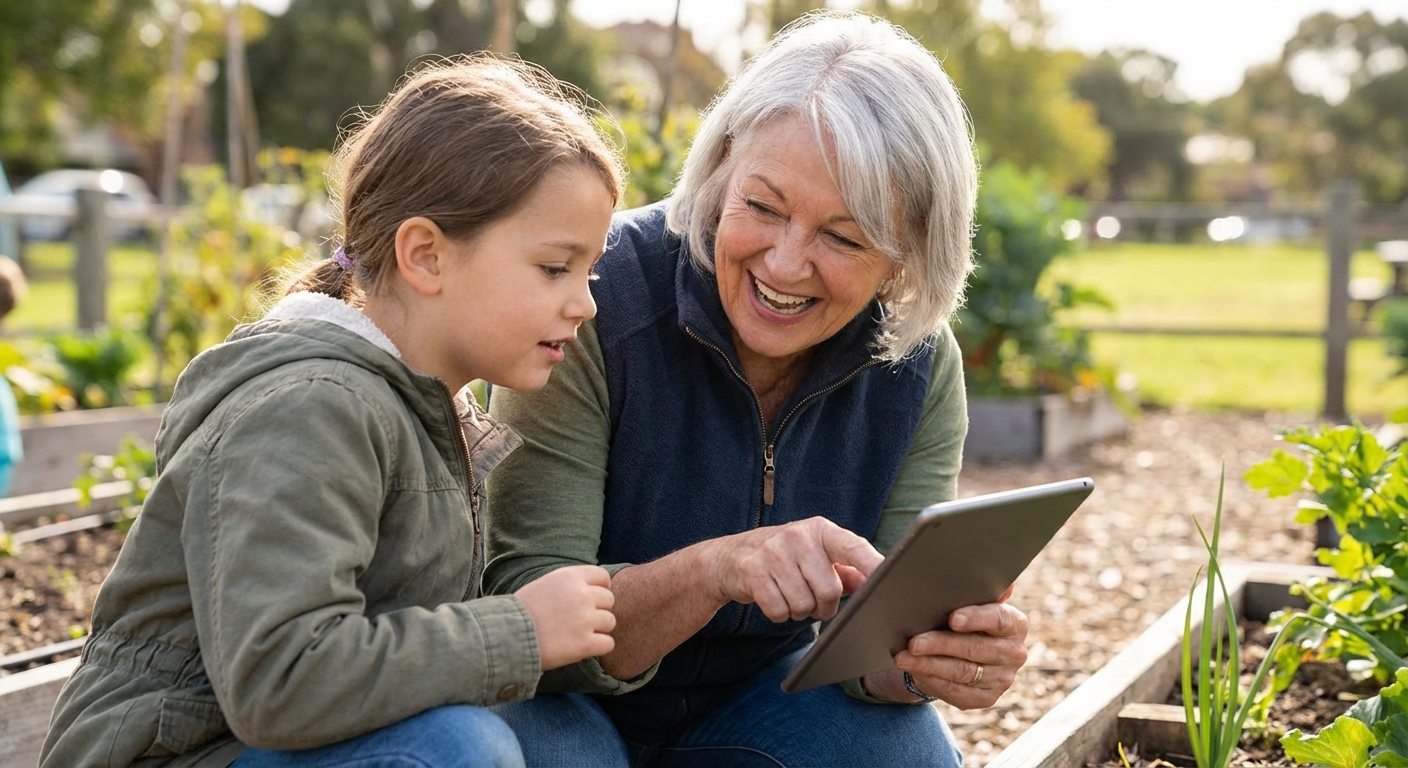
If you have kids, facilitate this connection. It doesn't have to be formal. If you don't have grandparents nearby, look for "adopted grandparent" programs in your neighborhood. The goal is to recreate the village dynamic where children learn patience and history from elders, and elders receive the vitality and purpose that comes from caring for the young.
2. Redefine the Workplace "Experience Asset"
The workplace is finally catching up to biology. In 2026, we are seeing more employers creating "Retiree Return" or "Mentorship Tracks." The old model was to push people out the door at 65. The new model realizes that losing that institutional memory is a disaster.
We need to treat experience as an asset class. If you are a business owner or a manager, look at your older employees not as liabilities on the health insurance plan, but as mentors who can stabilize your younger, high-turnover teams. They have the "crystallized intelligence"—the accumulated knowledge and verbal skills—that can solve problems faster than raw computing power.
3. Foster "Purposeful Aging" Mindsets
Finally, we have to change the story we tell ourselves. The Yale research emphasizes that positive beliefs about aging are a primary driver of cognitive health. If you believe aging is a disaster, your body will likely follow suit.
Public health campaigns are shifting from "treating illness" to "empowering contribution," and we need to do the same individually. We need to view the post-reproductive years not as a winding down, but as a shifting of gears into high-value, low-friction contribution. You aren't losing your value; you are specializing.
Conclusion
The "Grandmother Hypothesis" teaches us that we were never meant to go it alone. We are a cooperative species, designed to rely on the surplus wisdom and care of those who came before us.
Aging isn't a disease to be cured. It is a stage of life that, when leveraged correctly, provides the safety net for the next generation to thrive. Whether you are approaching that "Silver" stage yourself, or you are in the thick of raising a family, the takeaway is the same: We need our elders. We need their wits, their stillness, and their surplus. They are the reason we survived this long, and they are the key to thriving in the future.

See also in Personal Growth
20 Ways to Stay Motivated During Tough Times
Stop Waiting for Change: Here’s How to Grow Starting Today
The ‘Locus of Control’ Theory That Determines How You Handle Adversity
The Bystander Effect and Why You Shouldn’t Wait for Others to Act
The #1 Mistake People Make When Setting Goals
How Attachment Theory Developed from John Bowlby’s Work in Orphanages