

We used to look at people who lived to be 100 as genetic outliers. We assumed they won a biological lottery that the rest of us lost the moment we were conceived. But as we move deeper into 2026, the narrative has fundamentally shifted. We aren't just looking at isolated islands in Japan or Greece anymore; we are looking at major metropolitan areas that have engineered longevity into their pavement and policy. The focus has moved from "lifespan"—just staying alive—to "healthspan," which is staying capable, sharp, and mobile until the very end.
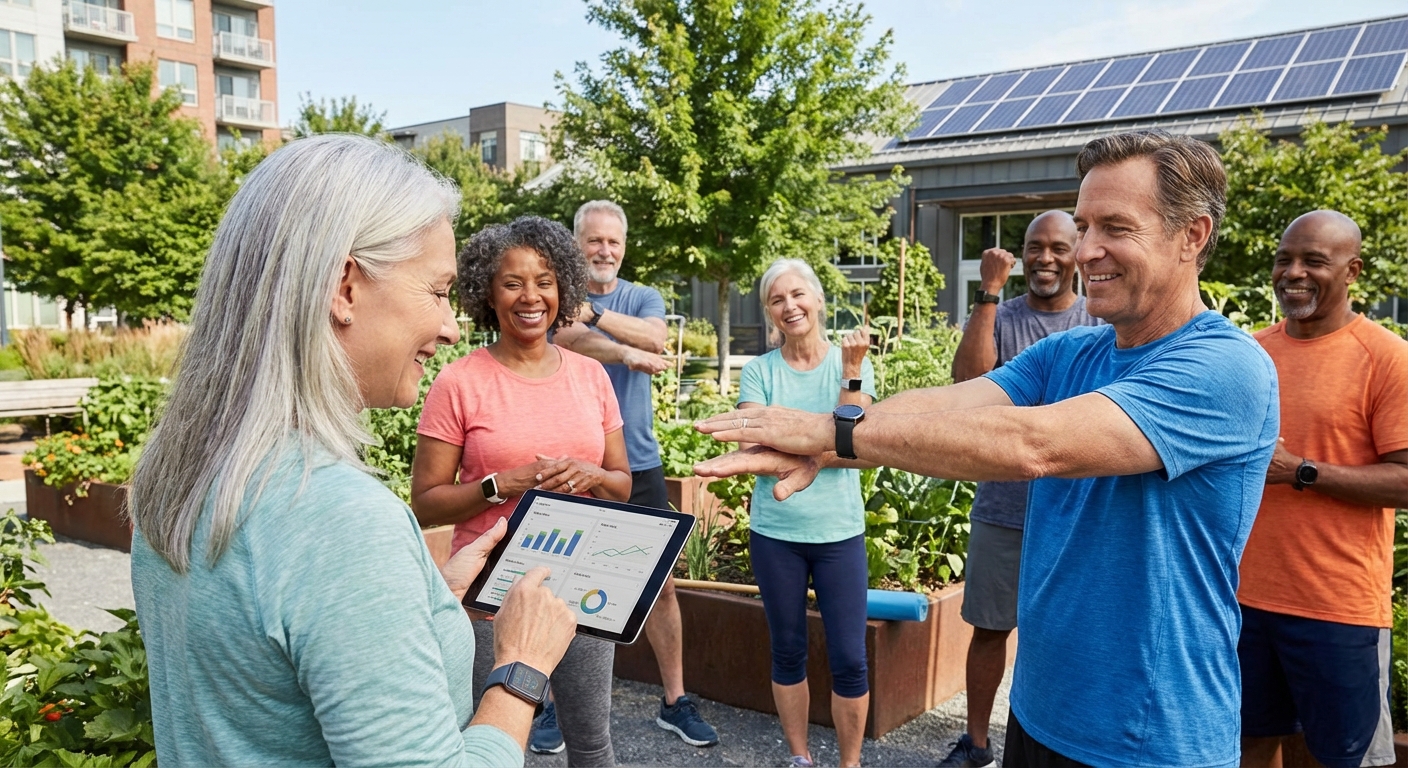
It turns out that living a long, healthy life isn't about having "good genes." It is about design. It is about the environment you build around yourself.
Redefining Aging in 2026
For decades, we operated under the assumption that aging was a slide into inevitable decline, governed almost entirely by our DNA. The original Danish Twin Study from the late 90s told us that genetics only accounted for about 20% of how long the average person lives. While newer research published in early 2026 suggests that while heritability might be higher regarding your absolute maximum lifespan, your lifestyle is the dominant variable in whether you actually reach that potential or cut it short with chronic disease.
This is the most empowering news you could possibly hear. It means the steering wheel is in your hands.
The concept of the "Blue Zone" was originally an observation of accidental longevity. People in Okinawa or Sardinia didn't try to live a long time; they just lived in a culture that made healthy choices automatic. But now, we are seeing the rise of "Blue Zone 2.0." Places like Singapore have proven that you don't need to live in a remote village to hit the century mark. They have increased life expectancy by 20 years through intentional urban design and policy.
If a city can re-engineer itself for health, so can you. You are the architect of your own personal ecosystem.
The Power 9 Framework
The researchers who identified the original Blue Zones boiled their findings down to nine specific habits. These aren't bio-hacks or expensive supplements. They are boring, consistent, ancient behaviors that compound over decades.
- Move Naturally: The world's longest-lived people don't pump iron for an hour and then sit at a desk for ten. They live in environments that nudge them into constant, low-intensity movement. They garden, they walk to the store, and they do their own housework.
- Purpose: The Okinawans call it Ikigai. It translates roughly to "the reason for which you wake up in the morning." Having a clear sense of purpose is worth up to seven years of extra life expectancy. It gives you a reason to keep pushing when things get hard.
- Downshift: Stress is the silent killer. It triggers chronic inflammation, which is associated with every major age-related disease. You have to have a daily routine to shed that stress. This isn't optional; it's physiological maintenance.
- The 80% Rule: This is a simple caloric restriction method. Stop eating when your stomach is 80% full. The 20% gap between not being hungry and feeling "stuffed" is often where the weight gain happens.
- Plant Slant: Beans are the cornerstone of the centenarian diet. Fava, black, soy, and lentils are the primary protein sources. Meat is treated as a celebratory side dish, eaten perhaps five times a month, not three times a day.
- Wine at 5: This is controversial for some, but the data showed that many Blue Zone residents drink moderately and regularly—usually with friends and with food. It’s not about the alcohol content; it’s about the ritual of slowing down and bonding.
- Belong: All but five of the 263 centenarians interviewed in the original studies belonged to some faith-based community. The denomination didn't matter, but the community did.
- Loved Ones First: Centenarians put their families first. They keep aging parents and grandparents nearby, commit to a life partner, and invest ample time in their children.
- Right Tribe: The world's longest-lived people chose social circles that supported healthy behaviors. If your three best friends are obese and smoke, there is a high statistical probability you will too. Longevity is contagious.
The Rise of Blue Zone 2.0
The most exciting development in 2026 isn't a new drug; it's the proof that we can manufacture these zones. Singapore has been labeled "Blue Zone 2.0" because they achieved these results through engineering.
They didn't just tell people to "move naturally." They designed the city so that walking to public transit was the easiest, fastest, and cheapest way to get around. They didn't just say "eat better." They incentivized healthier food options in hawker centers.
This proves a critical point for you: Willpower is a finite resource. Your brain's CEO gets tired, just like you do. If you rely solely on willpower to go to the gym or eat a salad, you will eventually fail. The secret is to engineer your life so that the healthy choice is the path of least resistance. You have to treat your home and your office like a mini-city that you are designing for longevity.
Practical Steps for a Blue Zone Life
You probably don't live in Ikaria or Nicoya. You likely live in a fast-paced environment filled with fast food and high stress. That means you have to be more aggressive in defending your healthspan. Here is how you apply these principles right now.
Engineer Your Movement
Stop looking for the closest parking spot. In fact, if you can, sell the car or commit to public transit. If that's not possible, create "movement snacks" throughout your day. I don't care about your one-hour gym session if you sit static for the other 15 hours. Get a standing desk. Walk while you take calls. Make movement the default state of your body.
Find Your Stillness
We live in a noise-polluted world. Your nervous system is constantly in "fight or flight" mode. You need a dedicated practice to downshift.
For a long time, I struggled to find a way to truly shut off my brain. I tried all the popular relaxation techniques, but they felt shallow. It wasn't until I reconnected with the Orthodox faith that I found a tool that actually worked. Standing in prayer, utilizing the silence and the discipline of the tradition, gave me a way to physically and mentally "downshift" that nothing else could touch. It wasn't about emptying my mind; it was about anchoring it. Whether you use prayer, deep silence, or simply staring at a wall for 15 minutes, you must find a way to lower the volume.
Curate Your Tribe
This is the hardest pill to swallow. You might need new friends. If your current social circle bonds exclusively over excessive drinking, junk food, and complaining, they are literally shortening your life. You need a "Moai"—a group of people who are committed to each other for life and who value health.
Eat Like a Peasant
Shift your grocery budget. Buy high-quality beans and vegetables. Treat meat like a garnish. The "80% Rule" is easier to follow when you are eating nutrient-dense, fiber-rich foods that actually signal satiety to your brain. Processed foods are designed to bypass that signal; beans are not.
The Science of Longevity
Why do these specific habits work? It comes down to inflammation and epigenetics.
Stress is a physiological response that dumps cortisol into your bloodstream. In short bursts, this is useful. Chronic exposure, however, destroys your tissues and confuses your immune system. The "Downshift" habits of the Blue Zones interrupt this cycle, allowing the body to repair itself.
Furthermore, we now understand the power of epigenetics. You might have a genetic predisposition for heart disease, but that gene is like a light switch. Your lifestyle—your diet, your movement, and your stress levels—determines whether that switch gets flipped on or stays off.
The social aspect is equally biological. Loneliness is as dangerous as smoking. Positive social interaction releases oxytocin and dopamine, which buffer the stress response. When you belong to a faith-based community or a tight-knit friend group, you aren't just feeling good emotionally; you are actively lowering your cortisol levels.
Conclusion
The year 2026 has taught us that longevity is not a mystery. It is a formula. It is not about buying the right supplements or affording the best doctors. It is about the relentless, daily application of simple habits.
You have the power to build a "Blue Zone" in your own living room. It starts with clearing out the junk food, prioritizing your sleep, finding a community that uplifts you, and moving your body the way it was designed to move.
Don't wait for the world to change around you. Build your own ecosystem. Start today.

See also in Self-Improvement
Why Learning a New Skill After 40 Is Better for Your Brain
How to Practice Self-Compassion
The Exact Words to Use When Setting a Boundary
10 Ways to Improve Personal Focus
20 Natural Ways to Increase Energy Levels
20 Ways to Improve Your Memory Naturally