If you have ever felt your pocket buzz when your phone wasn’t even there, or found yourself refreshing a feed that hasn't changed in the last thirty seconds, you know exactly what I am talking about. That itch isn't a glitch in your personality. It isn't a lack of willpower, and it certainly isn't a moral failing on your part. It is biology being exploited by engineering.
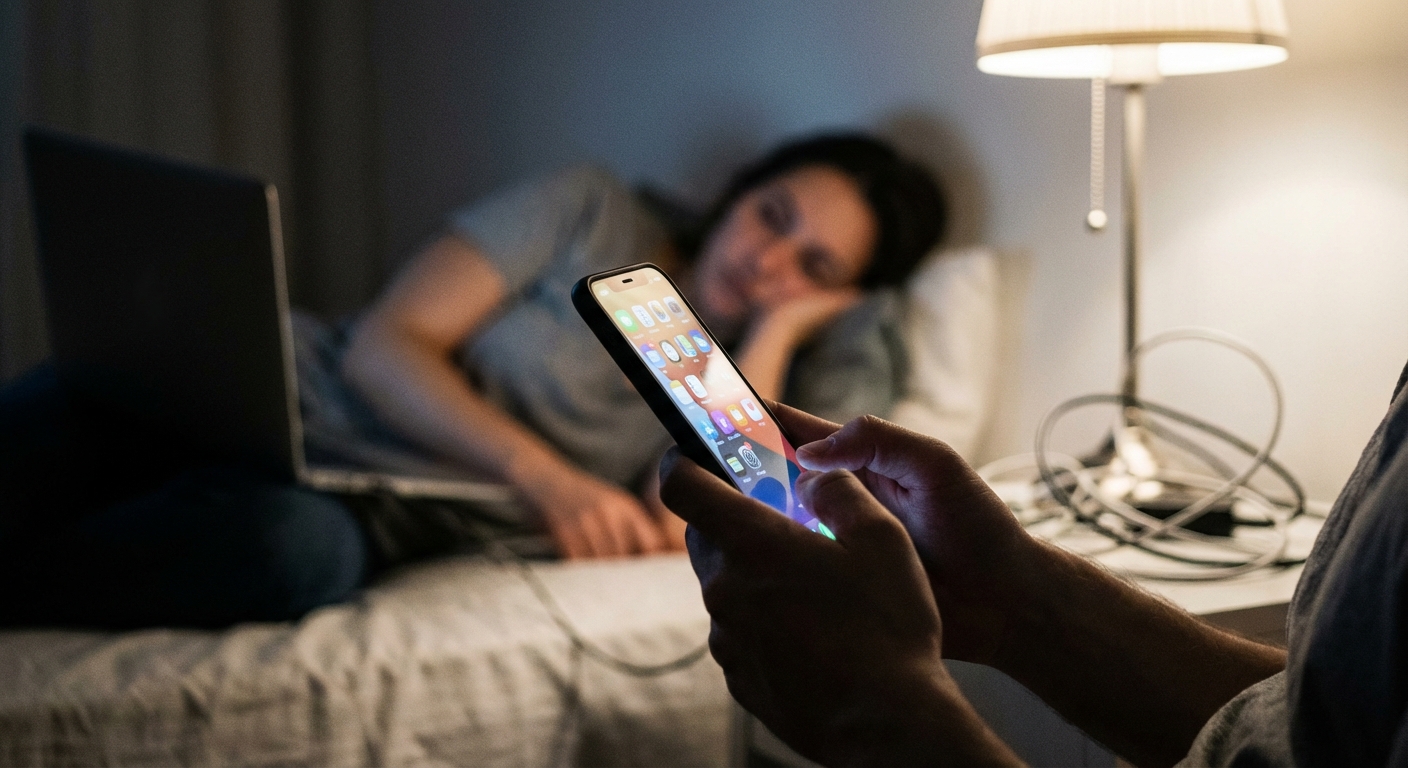
As of March 2026, the world is finally catching up to this reality. We are currently watching a massive legal reckoning unfold in California, where over 2,325 lawsuits have been filed against the titans of the tech industry—companies like Meta, TikTok, and Snapchat. The core allegation is simple but terrifying: these platforms are "addiction by design." We aren't just talking about people liking their phones too much; we are talking about a deliberate architectural choice to override your brain’s natural stop signs.
This legal scrutiny is shifting the conversation away from shaming users and toward understanding the neurological reality. To take back control of your time and your attention, you have to understand the mechanism of the trap. You need to understand how your brain’s reward system works and how it has been weaponized against you.
The Neurological Hook
To understand why you can't put the phone down, you have to look at the mesolimbic pathway. This is your brain’s primary reward circuit. It is ancient hardware. This system wasn't designed for Instagram reels or 24-hour news cycles; it was designed for survival. It evolved to help your ancestors find food, reproduce, and stay alive. When they found a bush full of berries or successfully hunted a buffalo, this pathway lit up with dopamine to say, "That was good. Do it again."
Social media platforms have hijacked this survival loop. Every time you see a red notification badge, get a "like," or see a new comment, your brain releases a hit of dopamine. It treats that digital validation with the same chemical urgency it used to reserve for finding water in a drought.
The problem is the intensity and frequency. Your brain is adaptable. It is constantly rewiring itself based on what you do the most. This is a process called neuroplasticity. When you engage with these platforms for hours a day, your brain physically changes structure. It "prunes" away neurons that it thinks are unnecessary and strengthens the connections that facilitate the behavior you are repeating.
Essentially, your brain builds a superhighway for scrolling and impulse checking, while the dirt roads leading to patience, emotional regulation, and deep focus get overgrown and neglected. You aren't just distracted; your brain is becoming specialized in distraction. This structural change explains why heavy users often struggle with impulsivity. You have trained your brain to be fast and reactive rather than slow and thoughtful.
The "Slot Machine" Design
If social media gave you a reward every single time you opened the app, you would actually get bored of it eventually. Predictability kills interest. The tech giants know this, which is why they leaned heavily on the research of psychologist B.F. Skinner.
Skinner discovered something fascinating about behavior reinforcement. He found that the most effective way to keep a subject engaging with a mechanism wasn't to reward them every time, but to reward them unpredictably. This is called "variable ratio reinforcement."
Think about a slot machine. You pull the lever (or press the button), and most of the time, you get nothing. But sometimes—just sometimes—you win. You never know which pull will be the winner. That uncertainty creates a massive spike in dopamine, not just when you get the reward, but in the anticipation of the reward.
Your social media feed is a digital slot machine.
When you use the "pull-to-refresh" feature, you are literally pulling the lever. You don't know what you're going to get. Will it be a funny video? A catastrophic news headline? A message from an old friend? Or nothing new at all? That split second of "loading" is the wheel spinning.
This design reduces decision friction. You don't have to decide to consume content; the infinite scroll makes that decision for you. It removes the natural stopping cues that exist in the physical world. When you read a book, you reach the end of a chapter. When you read a newspaper, you reach the edge of the page. The infinite feed has no edges. It is designed to keep you in a state of constant, low-grade anticipation, always hunting for the next hit of dopamine that might be just one thumb-flick away.
The Brain Under Stress
There was a period in my life where I had to learn this the hard way. I used to lose hours to gaming and doom-scrolling. It wasn't just a hobby; it was a way to numb out. I would sit down at my desk intending to work, and four hours later, I’d realize I hadn’t accomplished a single meaningful thing. I felt foggy, irritable, and anxious. Breaking that cycle was one of the hardest things I’ve ever done because my brain was screaming for that high-speed stimulation. I had to accept that my ability to sit in silence had atrophied. I wasn't just bored; I was experiencing a chemical withdrawal.
This is what happens when the brain is under the stress of constant hyper-stimulation. We develop "dopamine desensitization." Just like a person who drinks alcohol eventually needs more drinks to feel the same buzz, your brain builds a tolerance to digital stimulation.
At first, checking your phone once an hour feels fine. Eventually, you need to check it every ten minutes. Then, you need to be on it while you're watching a movie because the movie feels too slow. This is neural adaptation in real-time.
The consequences go beyond just wasting time. This constant state of high alert and reward-seeking leads to emotional dysregulation. When we overload the brain's "CEO" (the prefrontal cortex), we lose the ability to manage our moods. We become more reactive, more anxious, and less capable of handling the normal stresses of daily life. We use the phone to escape the anxiety, but the phone is the engine generating the anxiety. It is a perfect, vicious circle.
Reclaiming Focus
Understanding the trap is the first step, but you need a plan to get out of it. You cannot rely on willpower alone to fight a supercomputer designed to beat you. You need to change the environment and the rules of engagement.
Here is a practical, science-backed protocol to reset your reward system.
1. Eliminate the Dopamine Drip
You must turn off all non-human notifications. If a notification does not represent a real human being trying to speak to you specifically (like a text message or a phone call), it needs to go. Turn off likes, comments, news alerts, and app updates. These are the unpredictable rewards that trigger the slot machine effect. By silencing them, you move from a reactive state (checking because the phone buzzed) to an active state (checking only when you decide to).
2. Implement a Reset Period
You need to lower your tolerance. Call it a detox, a fast, or a reboot. You need a period of time—anywhere from one week to three months—where you step away from the algorithm entirely. This allows your dopamine receptors to recover. It will be uncomfortable at first. You will feel "bored." Embrace that boredom. Boredom is not a defect; it is the soil from which creativity and quiet contemplation grow.
3. Shift to Active Connection
Social media promises connection but often delivers isolation. The algorithm feeds you content, not relationships. Replace the passive scrolling of a public feed with active, direct communication. Send a text to a friend. Call your parents. Organize a group chat with your closest circle. This provides the social validation we are biologically wired to crave, but it does so through human connection rather than algorithmic manipulation.
4. Establish Tech-Free Zones
You must create physical sanctuaries where the digital world is not allowed to enter. The most critical zone is the bedroom. Using your phone before sleep blasts your brain with blue light and stimulating information right when it needs to be winding down. Buy an old-school alarm clock. Keep the phone in the kitchen overnight. Make the dinner table a phone-free zone. These boundaries prevent the "numbing" effect we use to escape intimacy or silence.
Conclusion
The lawsuits piling up in California are a validation of what many of us have felt for years: the deck is stacked. But knowing the game is rigged is the most powerful tool you have.
This isn't about becoming a Luddite and throwing your smartphone into the ocean. It is about agency. It is about deciding that your attention is your most valuable resource and refusing to let it be mined for profit by a variable reinforcement schedule.
By understanding the biology of the mesolimbic pathway and the psychology of the slot machine, you can stop fighting yourself and start outsmarting the design. You can retrain your brain to appreciate the slow, steady burn of real accomplishment over the cheap spark of a digital like. It takes discipline, and it takes patience, but the clarity you get in return is worth every bit of the struggle.