The 5:00 PM panic is a feeling we all know too well. You finish your workday, your brain is fried, and you walk into the kitchen only to stare blankly at a cupboard full of random ingredients. You have a can of pumpkin puree from three Thanksgivings ago, half a bag of stale quinoa, and a jar of capers you bought for a recipe you never made. Despite the shelves being full, there is nothing to eat.
In the current economic climate, this isn't just annoying; it is expensive. With food-at-home prices projected to rise by 2.5% this year and restaurant prices climbing even faster, the margin for error in our budgets is shrinking. We cannot afford to be disorganized anymore. We need a system that stops the financial bleed of food waste and the mental tax of decision fatigue.
Enter the capsule pantry. This is not about aesthetic organization videos you see on social media where everything is color-coded for show. This is a productivity tool. It is a logistics system for your home that applies the same "lean manufacturing" principles used by factories to save you time, money, and sanity.
The Foundation of a Capsule Pantry
Most people treat their pantry like a storage unit—a dark place where they shove things they might use someday. A capsule pantry is different. It is a curated, active collection of high-quality, interchangeable ingredients. Think of it exactly like a capsule wardrobe. In a capsule wardrobe, you don't own 50 shirts that only match one specific pair of pants. You own 10 shirts that match everything.
The goal here is versatility, longevity, and consistency. A capsule pantry prioritizes ingredients that serve as the foundation for hundreds of recipes rather than just one. When you limit your choices to a high-quality base, you actually expand your culinary potential because you remove the friction of starting.
We often confuse having "options" with having "freedom." In reality, too many options create paralysis. When you have five different types of distinct, non-interchangeable grains, you have a storage problem. When you have one or two staple grains that you know how to cook perfectly and pair with anything, you have a meal solution. This approach shifts your kitchen from a place of chaotic creativity to a center of calm execution.
Step-by-Step Implementation
Building this system requires a few hours of upfront work, but the return on investment is immediate. You are going to have to be ruthless. You are going to have to look at your shelves and admit that you are never going to cook that exotic specialty item you bought on impulse. Here is how we build the machine.
1. The Audit and Purge
Set a timer for 20 minutes. Go through every shelf. If something is expired, toss it. If something is still good but you haven't touched it in six months, donate it to a food bank immediately. You need to clear the noise to see the signal. You are looking for "capsule material"—the items you naturally reach for every single week. These are your heavy hitters. Everything else is just distraction.
2. Define Your Signature Style
You cannot build a pantry for a life you do not live. If you aspire to be a gourmet French chef but currently survive on toast, filling your pantry with duck fat and truffles is a waste of money. You need to be honest about how you actually eat.
I know this struggle personally. When I was 110 pounds heavier, standing in front of a jammed-full pantry was a trigger for me. I would stare at hundreds of "healthy" options I bought out of guilt, get overwhelmed by the decision-making process, and end up ordering takeout because I couldn't figure out how to put a meal together. It wasn't until I simplified my options and treated my nutrition with discipline—stocking only the simple proteins and vegetables I actually liked—that I stopped binge eating and finally lost the weight.
Identify 10 to 15 "go-to" meals that your household enjoys. Analyze the ingredients in those meals. You will likely find that 80% of the ingredients overlap. That overlap is your capsule.
3. Establish Par Levels
This is a concept borrowed from professional kitchens. A "par level" is the minimum quantity of an item you must have on hand to ensure you don't run out before the next delivery.
For example, if your family eats rice twice a week, your par level might be "one full bag plus one backup bag." You do not buy more until you break the seal on the backup bag. When you hit that minimum threshold, the item automatically goes onto your shopping list. This eliminates the need to "check the cupboard" every time you plan a meal. You trust the system. If it’s not on the list, you have it. If it is on the list, you buy it.
4. Organize for Visibility
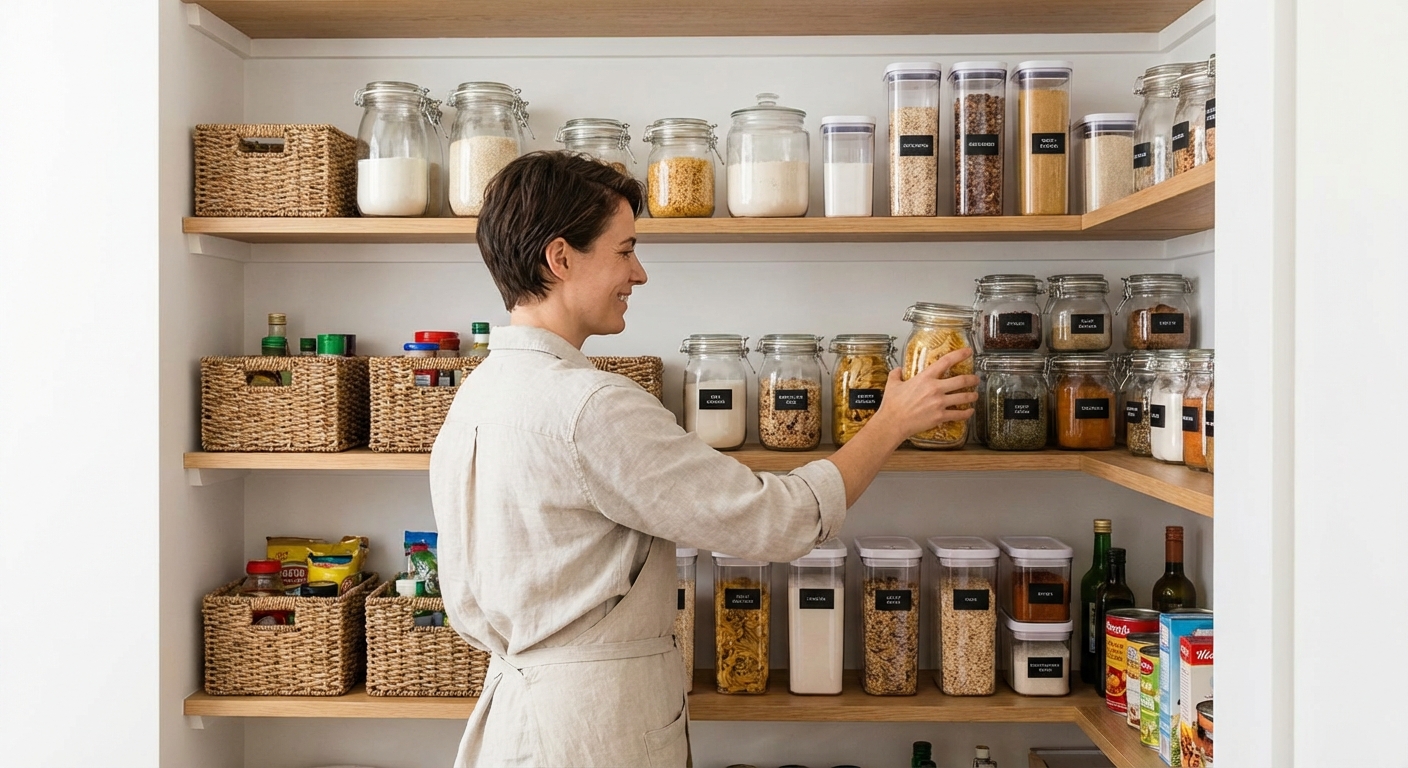
Inventory transparency is non-negotiable. If you cannot see it, it does not exist. Arrange your pantry into clear zones: grains, canned goods, baking, spices. Use clear containers if possible, not for aesthetics, but so you can instantly see volume levels. This physical setup reduces "searching time" and prevents you from buying a fifth jar of cumin because you couldn't find the other four hidden behind the cereal boxes.
The Efficiency Engine
The primary benefit of this system is not just a tidy kitchen; it is the reclamation of your time. We hemorrhage time in the grocery store because we wander. We browse. We wonder if we should try something new.
A capsule pantry turns grocery shopping into a tactical strike. You are not browsing; you are replenishing. You know exactly what you need because your par levels dictate your list. This can cut your shopping trips in half. Recent data indicates that primary shoppers spend approximately 63 hours and 24 minutes per year just inside the grocery store. By automating your list and removing the need to browse, you could easily reclaim 30 of those hours. That is nearly a full work week given back to you every year.
Furthermore, this system drastically reduces decision fatigue. Your brain's "CEO" gets tired, just like you do. Every decision you make throughout the day drains a finite tank of willpower. When you have to decide what to cook, check if you have ingredients, decide what to buy, and then figure out how to cook it, you are burning mental energy that should be used for your work, your family, or your prayer life.
A capsule pantry answers the first three questions for you.
- What to cook? One of your 15 signature meals.
- Do I have ingredients? Yes, because you maintain par levels.
- What to buy? Only what has hit the replenishment threshold.
Breaking the Cycle
The shift from a chaotic pantry to a capsule system is a shift from reactive living to proactive discipline. It acknowledges that your time is valuable and that your mental energy is a limited resource.
We often think that more choice leads to a better quality of life, but in the kitchen, more choice usually leads to more waste. By constraining your inputs, you streamline your outputs. You stop throwing away wilted produce and expired cans. You stop stress-ordering delivery because you don't have the energy to figure out dinner.
Start this weekend. Clear the shelves. Be honest about what you eat. Set your levels. It is a small act of order that brings a massive amount of stillness to your daily life.