You think you’re driving the car of your life, but most of the time, you’re just a passenger reacting to the road signs someone else painted.
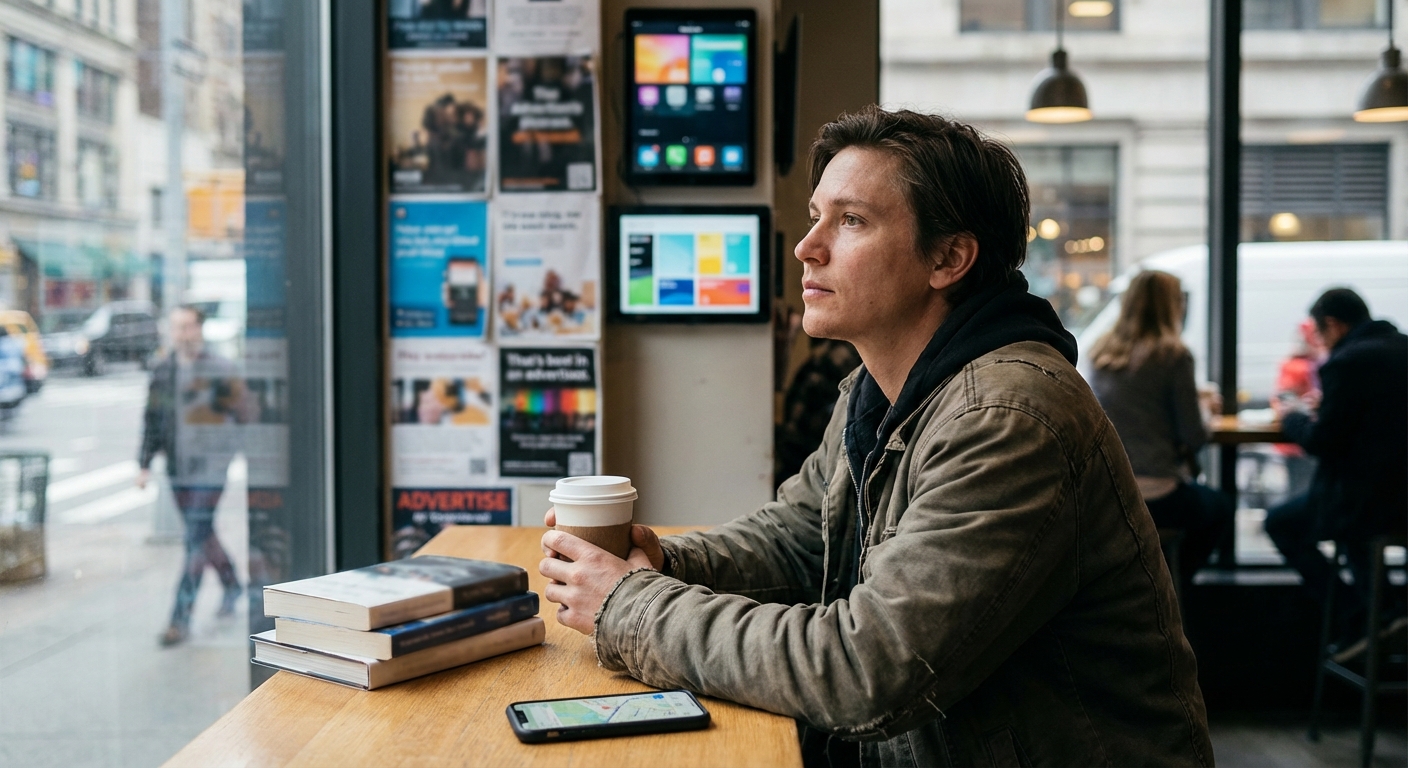
We like to believe we are rational, independent agents. We tell ourselves that every purchase we make, every meal we eat, and every subscription we sign up for is the result of a conscious, deliberate calculation. But the reality is much messier and, frankly, a little humbling. The truth is that your environment is making half of your decisions for you before you even realize you’ve made a choice.
This isn't a conspiracy theory; it is simply how the human brain is wired, and it is the foundation of a concept known as "Choice Architecture."
Recent global events have brought this conversation out of the psychology textbooks and into the headlines. On March 2, 2026, the Australian Government released an exposure draft for the "Competition and Consumer Amendment (Unfair Trading Practices) Bill 2026." That is a mouthful of bureaucratic language, but the implications are massive. This legislation is specifically targeting "dark patterns" and "unreasonable manipulation."
Essentially, governments are starting to admit that corporations have gotten too good at hacking our brains. They are moving to ban "sludge"—the evil twin of the "nudge." While a nudge helps you make a better choice (like putting fruit at eye level), sludge uses the same psychology to trap you in unwanted subscriptions or confuse you into spending money.
But you don't have to wait for a bill to pass to take control. By understanding the mechanics of choice architecture, you can stop being a pawn in a marketer's game and start designing a life that works for you, not against you.
The Hidden Designers
Let’s get one thing straight: there is no such thing as a neutral design.
Every time you walk into a cafeteria, log into an app, or fill out a form, someone has decided how those choices are presented to you. That person is the "choice architect." In the digital world, it’s a UX designer trying to keep your eyes on the screen. In the grocery store, it’s a strategist trying to move high-margin products.
The core principle here is that the way an option is presented inevitably influences the outcome. We like to think our preferences are rock-solid, but they are actually incredibly fluid and dependent on context.
Consider your lunch. Experts estimate that the average person makes over 200 food-related decisions every single day. Do I want a snack? Which snack? How much? Now or later? If you had to consciously deliberate over every single one of those 200 choices using logic and willpower, your brain would short-circuit by 10:00 AM.
To survive, your brain operates on autopilot. It scans the environment for cues. If the candy bar is at the checkout counter (high visibility, low effort), you are statistically much more likely to buy it than if it were on a bottom shelf in aisle four. You didn't necessarily "choose" the candy bar because you were hungry; you chose it because the architecture of the checkout line made it the path of least resistance.
This brings us to the concept of Libertarian Paternalism. It sounds like a contradiction, but it’s the philosophy behind "good" choice architecture. The idea is that institutions can and should influence behavior to help people live longer, healthier, and better lives (the paternalism part) while still preserving their ultimate freedom to choose otherwise (the libertarian part). It’s about making the good choice easy, not making the bad choice impossible.
The Mechanics of Influence
So, how exactly are these hidden designers pulling the strings? They aren't using mind control; they are using simple behavioral science. They rely on the fact that human beings have "bounded rationality."
Think of your brain’s decision-making center as a CEO. This CEO is brilliant but easily exhausted. To save energy, the CEO delegates most decisions to a lazy intern who just wants to get things done quickly. Choice architecture speaks directly to the intern.
Here are the three main tools in the architect's toolbox:
1. The Default Effect
This is the nuclear weapon of behavioral economics. The "Default Effect" describes our tendency to stick with whatever option has been pre-selected for us. It takes cognitive energy to uncheck a box or switch a setting. The lazy intern in your brain sees the pre-selected option and says, "Sure, looks good to me."
This is why "auto-renewal" is the standard for every subscription service on the planet. Companies know that if you have to actively choose to renew every month, you probably won't. But if you have to actively choose not to renew, you’ll likely stay subscribed for years.
2. Framing
How you say something matters just as much as what you say. This is the art of "Framing." The classic example is in medicine. If a doctor tells you that a surgery has a "90% survival rate," you are likely to feel reassured and consent to the procedure. If the same doctor tells you the surgery has a "10% mortality rate," your anxiety spikes, and you are far more likely to refuse.
The facts are identical. The math is the same. But the frame changes the emotional weight of the decision. Marketers use this constantly. "95% fat-free" sounds like a health food; "5% fat" sounds like a guilty indulgence.
3. Salience
Salience is just a fancy word for "what stands out." We act on what we can see. If an option is bold, bright, and at eye level, it is salient. If it is hidden in a drop-down menu or written in fine print, it is not.
This is why the "Buy Now" button is huge and orange, while the "unsubscribe" link is tiny, grey, and buried at the bottom of the email. The architect is directing your attention to the action they want you to take and obscuring the path to the action they want you to avoid.
Practical Steps for Autonomy
Now that you see the matrix, you can stop letting it control you. You can become the choice architect of your own life. You can use these same principles to trick your brain into doing the things you actually want to do.
Here is how you reclaim your autonomy:
1. Audit Your Digital Defaults
The new 2026 standards, like the FTC’s "Click-to-Cancel" rule, are a massive win for consumers. Companies are now required to make cancelling a subscription as easy as signing up. However, the law can only do so much. You still have to take the first step.
Go through your bank statement. Look at every recurring charge. Ask yourself: "Did I choose this, or did I just fail to say no?" Turn off auto-renewal on everything. Force yourself to make an active choice to pay for Netflix or Spotify every single month. If the service is valuable, you’ll pay. If it’s not, you’ll let it lapse. Shift the default from "pay" to "pause."
2. Use "Physical Salience" for Habit Building
If you want to change a habit, don't rely on willpower. Willpower is a finite resource. Instead, change your environment. Make the good habit impossible to miss and the bad habit a pain in the neck to access.
I know this works because it’s the only way I managed to lose 110 pounds and stop binge eating. For years, I thought I just lacked willpower and beat myself up every time I failed. Then I realized my environment was set up for failure. I stopped keeping junk food in the house entirely—if I wanted it, I had to drive to the store, which added enough friction to stop me. I put a massive water bottle right on my desk where I couldn't ignore it. I made the bad habits invisible and the good habits undeniable. I essentially rigged the game so I could win.
3. Implement "Pre-Commitment" Strategies
We are all better people in the future than we are in the present. In the future, we save money, eat salad, and wake up early. In the present, we spend money, eat pizza, and hit snooze.
Bridge this gap with pre-commitment. This aligns with the "Save More Tomorrow" model in finance. Commit to a course of action while you are in a "cool" state (calm, rational) that binds you when you are in a "hot" state (tempted, emotional).
If you want to save money, set up an automatic transfer that happens the second your paycheck hits your account. Don't wait to see what's left over at the end of the month. Make the decision once, automate it, and remove the option to spend that money from your daily view.
Conclusion
We live in a world designed to capture our attention and direct our wallets. From the layout of the grocery store to the color of the notification bubbles on your phone, you are being nudged thousands of times a day.
It is easy to feel resentful about this, but that doesn't help. The pragmatic approach is to accept that choice architecture is a reality of modern life. The question isn't whether your choices are being influenced—they are. The question is: who is doing the influencing?
By understanding the defaults, framing, and incentives that surround you, you can wake up from the autopilot. You can recognize when a company is trying to "sludge" you into a bad decision, and more importantly, you can "nudge" yourself toward a better one.
You cannot eliminate the influence of your environment, but you can certainly curate it. Clear the path to the life you want, and clutter the path to the life you don't. Be the architect, not the passenger.