

You sit down at your desk, open your laptop, and start your day. Maybe you have a salad for lunch. You go to the gym three times a week. You check your blood pressure. You take your vitamins. You think you are doing everything right to stay alive and healthy. But if you are doing all of that while feeling profoundly disconnected from the people around you, your body might as well be processing a pack of cigarettes every single day.
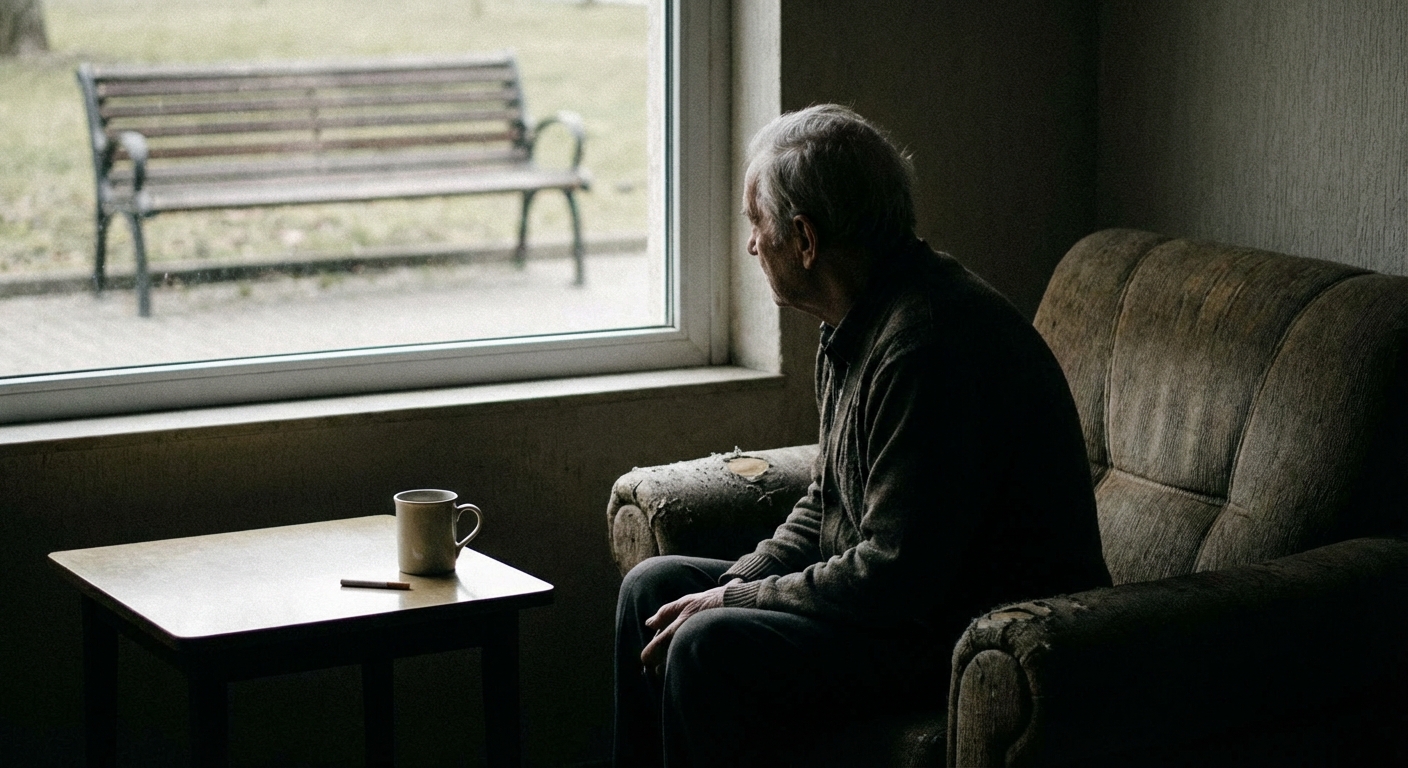
It sounds like hyperbole, doesn't it? It sounds like an exaggeration designed to scare you into calling your mother. But it isn't.
We have spent decades treating loneliness as a feeling—a sad, emotional state that we try to fix with distractions or entertainment. We treat it as a mental health issue, something to discuss in therapy or journal about. But the medical reality is much starker. Loneliness is a biological toxin. It is a physiological state of emergency that degrades your arteries, confuses your immune system, and shortens your life with the same ruthlessness as chain-smoking.
As of March 2026, the numbers are grim. New data from a nationwide AARP study reveals that 40% of adults aged 45 and older report persistent feelings of loneliness. That is a massive jump from just a few decades ago. We are living through a crisis of isolation, and for millions of people, this isn't just about feeling blue. It is about physical survival.
The Biological Mechanism of Isolation
To understand why loneliness kills, we have to stop looking at it through a modern lens and start looking at it through an ancient one. Your brain is not designed for the modern world of Zoom calls, self-checkouts, and solo apartment living. Your brain is a survival machine designed for a time when being alone meant death.
Thousands of years ago, if you were separated from your tribe, you were vulnerable to predators, starvation, and exposure. In response, the human body evolved a massive alarm system. When you perceive that you are isolated, your brain's CEO—the prefrontal cortex—signals a threat. Your body enters a state of hyper-vigilance.
This is where the "15 cigarettes" benchmark comes from. In a seminal meta-analysis, Dr. Julianne Holt-Lunstad crunched the numbers on mortality risk. She found that lacking social connection carries a mortality risk comparable to smoking up to 15 cigarettes a day. This makes it more dangerous than obesity. It makes it more dangerous than physical inactivity.
Here is what is happening under the hood:
- The Stress Response: Your body floods with cortisol. This is fine in short bursts, like when you need to run from a tiger or hit a deadline. But when you are chronically lonely, the cortisol never shuts off. You are marinating in stress hormones.
- Inflammation: This constant chemical bath triggers systemic inflammation. Your body is fighting a war against an invisible enemy. Over time, this inflammation damages your blood vessels and tissues.
- Sleep Disruption: Lonely people experience more "micro-awakenings" during the night. Your primitive brain is keeping you slightly awake to listen for predators because it knows you have no one watching your back.
It is not just "in your head." It is in your blood. It is in your heart tissue. The feeling of loneliness is actually a biological warning signal, much like hunger or thirst. Hunger tells you your body needs fuel; loneliness tells you your body needs safety through connection. Ignoring it causes just as much damage as starving yourself.
The Vital Statistics
When we talk about health risks, we usually look at cholesterol numbers or BMI. We need to start looking at our social calendar with the same level of scrutiny. The specific pathologies linked to isolation are terrifyingly specific.
If you are chronically lonely, your risk of stroke skyrockets by 32%. Your risk of coronary heart disease jumps by 29%. These are not marginal errors; these are massive statistical increases that should make every doctor in the world pause before writing a prescription for statins without asking about a patient's home life.
The damage extends to your immune system as well. Positive social interactions are linked to the regulation of specific proteins in the blood that boost immune function. When you are connected, your body is better at fighting off viruses. When you are isolated, that protection drops. You become more susceptible to infection, and your body struggles harder to recover.
We also see a direct link to cognitive decline. The brain is like a muscle; it requires friction and engagement to stay sharp. Social interaction is one of the most complex tasks your brain performs. It involves reading cues, listening, formulating responses, and empathizing. When you remove that stimulus, the brain begins to atrophy. Isolation is a fast track to cognitive deterioration.
This brings us to a hard truth about our current medical model. We treat the heart attack, but we ignore the heartbreak. We treat the stroke, but we ignore the silence in the house. If we want to live longer, we have to accept that social connection is not a luxury. It is a vital sign.
Actionable Reconnection
So, what do you do? If you are part of that 40% of adults feeling the weight of isolation, you cannot simply "snap out of it." Building social muscle is just like building physical muscle. It requires discipline, repetition, and a plan. You cannot wait for inspiration. You have to treat this like a workout.
Here is how you start building "social fitness" in a world designed to keep you apart.
1. Leverage Social Infrastructure
You do not need to become the life of the party overnight. Start with "low-stakes" interactions. Physical community spaces—parks, libraries, civic groups—are critical. These places offer what sociologists call "loose ties."
Chatting with a librarian, nodding at a regular at the dog park, or saying hello to a cashier might seem trivial, but these micro-interactions signal to your brain that you are part of a tribe. They lower the threat response. They tell your nervous system, "You are safe. You are seen."
2. Prioritize Peer Support
If you are managing a chronic illness or a specific struggle, do not do it alone. Peer-led support groups are incredibly effective. This is "Peer-to-Patient" support.
When you share a burden with someone who understands exactly what you are going through, the emotional load lightens. This improves medication adherence and health outcomes. It turns a solitary battle into a shared mission.
3. Intentional Digital Hygiene
This is the big one. We often use our phones to numb the pain of loneliness, but they usually make it worse. Passive consumption—scrolling through feeds, watching other people live their lives—is linked to a doubled risk of feeling isolated. It is junk food for the soul.
I know this trap well. A few years ago, I fell into a heavy cycle of gaming and doom-scrolling. I would sit in my room for hours, convinced I was "relaxing," but in reality, I was hiding. I felt safe in that digital bubble, but my health was deteriorating, and my anxiety was spiking. I had to make a hard rule: I quit the aimless scrolling and the hours of gaming. I forced myself to replace that screen time with face time, even when it felt awkward. It was the hardest discipline I’ve had to implement, but it cleared the fog.
You have to move from passive consumption to active communication.
- Don't comment on a post; Do call the person.
- Don't watch a story; Do send a video message asking how they are.
- Don't text back and forth for two hours; Do meet for coffee for twenty minutes.
The Path Forward
The World Health Organization now classifies social connection as a "defining challenge of our time." They are telling us that building bonds is a mandatory medical necessity.
We have to stop viewing friendship as something we do when we have free time. We need to view it as something we do to stay alive. You wouldn't skip eating for a week because you were "too busy." You shouldn't skip connecting for a week either.
Your body keeps the score. It knows when you are alone. It reacts with inflammation and stress. But the reverse is also true. When you reach out, when you shake a hand, when you laugh with a friend, your body releases a cascade of healing chemicals. Your heart rate slows. Your immune system strengthens.
Put down the phone. Go outside. Look someone in the eye. It might just save your life.

See also in Personal Growth
15 Techniques for Better Negotiation
Why the Most Meaningful Friendships Start After 30
15 Team Building Skills for Success
Why Taking a Walk Is the Best Thing You Can Do for Your Brain
The Unspoken Rule of Meaningful Conversations
10 Steps to Create a Vision for Your Future