That initial gasp when you hit the water isn’t just panic; it is the sound of your brain waking up from the slumber of modern comfort and chemically shifting into a state of high-performance clarity.
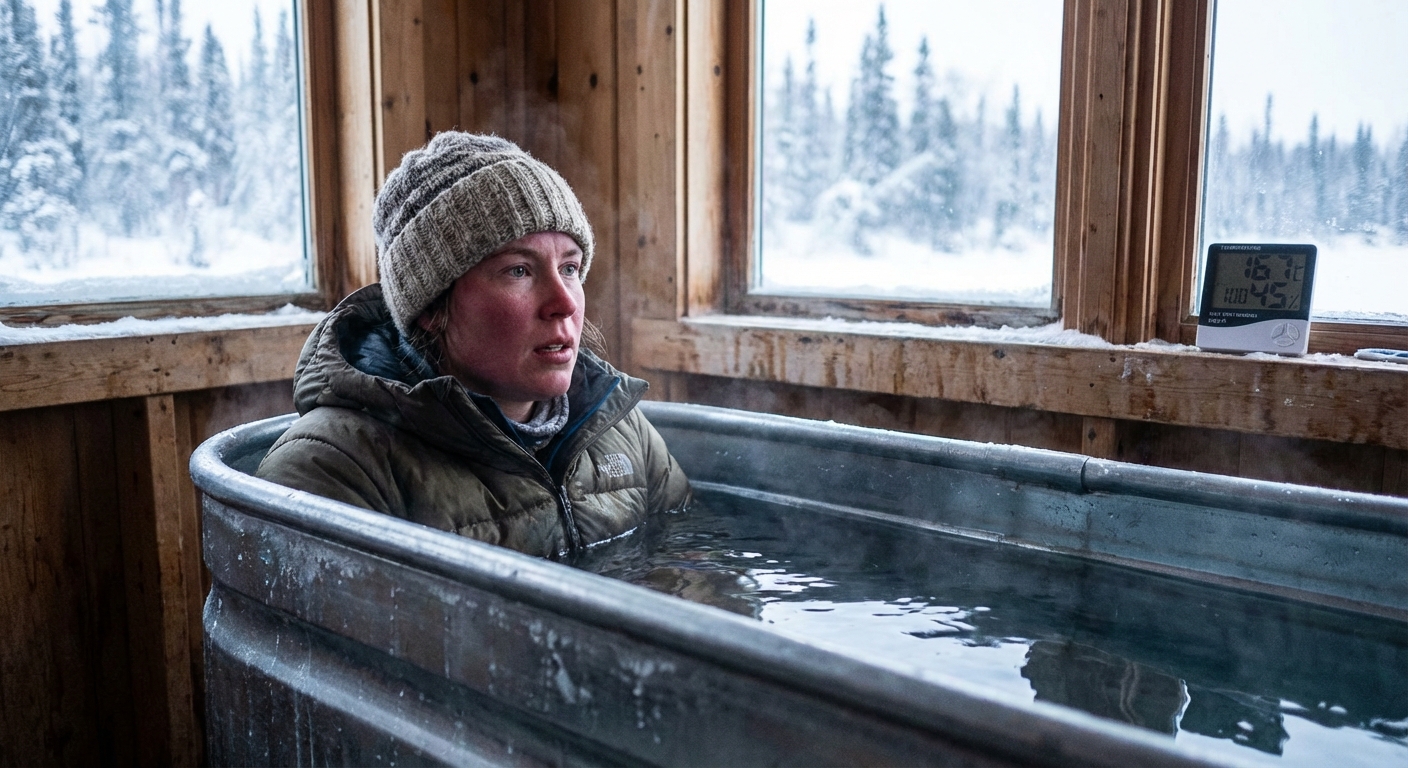
The Core Idea: Why We Need the Shock
We live in an era defined by comfort, yet we are plagued by a persistent, low-grade exhaustion. As we move through early 2026, the "wellness coming home" movement has reached a fever pitch. You see it everywhere—cold plunge tubs sitting on suburban patios and in garage gyms, right next to the lawnmowers. It is no longer just a tool for elite linebackers or eccentric billionaires. It has become a necessary countermeasure for the rest of us.
Why the sudden shift? Because the modern work environment, characterized by relentless digital notifications and screen fatigue, has left us with a collective case of "brain fog." We are overstimulated but under-engaged. We feel tired, yet wired. The antidote to this specific type of lethargy isn't more relaxation or another cup of coffee. The antidote is a shock to the system.
The concept here is hormetic stress. It is the biological principle that brief, controlled exposure to a stressor—in this case, freezing water—triggers a cascade of adaptive responses that make you stronger. When you step into that water, your body doesn't know you are doing it for "health." It thinks you have fallen through a frozen lake. It immediately prioritizes survival. It shuts down non-essential functions and floods your system with the chemicals necessary to focus, move, and survive. This is the "hard reset" we are chasing. It is a way to manually override the sluggishness of a sedentary life.
The Landmark 530% Study
If you have spent any time reading about cold exposure, you have likely seen the number "530%" thrown around. It sounds like marketing hype, the kind of exaggerated figure used to sell supplements. However, this number comes from legitimate, peer-reviewed science that has stood the test of time.
The data originates from a landmark study by Srámek et al., published in the European Journal of Applied Physiology back in 2000. In this study, researchers took a group of young men and immersed them in water that was 14°C (about 57°F). This isn't ice water, but it is certainly cold enough to be uncomfortable. The subjects stayed in the water for one hour.
The results were staggering. The researchers observed that plasma norepinephrine concentrations increased by 530%. Dopamine, the neurotransmitter associated with drive and motivation, increased by 250%. These are not small bumps; these are massive pharmacological shifts produced entirely by the body's own machinery.
To put this in perspective, getting a 530% increase in any performance-enhancing neurochemical usually requires powerful drugs. Here, it required nothing but water and the discipline to stay in it.
It is important to look at this pragmatically. Most of us are not going to sit in 57°F water for an hour every day. Who has the time? Furthermore, sitting still in cold water for that long carries risks if not managed correctly. However, the study proves the mechanism. It proves that the human body has a reserve tank of energy and focus that can be unlocked through thermal stress.
It is also worth noting the nuances we are seeing in 2026 regarding gender. While the original study focused on men, recent analysis suggests that women may have different baseline responses to cold stress. The physiological reaction is universal—vasoconstriction and metabolic shift—but the duration required to hit that peak might vary. This reinforces the idea that you must listen to your own body rather than blindly following a stopwatch based on a study from two decades ago.
Beyond the Numbers: The Chemistry of Focus
So, what does a 530% spike in norepinephrine actually feel like?
Norepinephrine acts as both a hormone and a neurotransmitter. It is the chemical of attention. When your norepinephrine levels are low, you feel lethargic, distracted, and unmotivated. You scroll through your phone without really seeing anything. You stare at your computer screen, unable to start the report.
When norepinephrine floods your system, that fog evaporates. It is the "fight or flight" chemical, but when triggered in a controlled environment like a cold plunge, it doesn't lead to panic—it leads to laser focus. It quiets the noise. It is effectively a natural alternative to the mechanisms targeted by many antidepressant medications (SNRIs) and ADHD treatments.
Then there is dopamine. We often mistake dopamine for the "pleasure" molecule, equating it with the hit you get from eating sugar or getting a like on social media. But dopamine is actually the molecule of drive. It is the chemical that pushes you to go out and do things. A 250% increase in dopamine combined with a massive surge in norepinephrine creates a state of alert calmness.
I know this feeling well. I juggle a lot of projects between web development and writing, often staring at code or drafts for ten hours a day. There are days when my brain feels like mush, and no amount of caffeine fixes it. I have found that a quick plunge snaps me out of that lethargy faster than anything else. It forces a hard reset on my system. I go from feeling sluggish and overwhelmed to feeling sharp and ready to attack the workload. It isn't magic; it's just biology.
This chemical shift also plays a role in emotional regulation. By repeatedly exposing yourself to the stress of the cold and forcing yourself to remain calm—using breath control and will—you are training your nervous system. You are improving your vagal tone. You are teaching your body that it can endure stress and return to a baseline of peace. This resilience carries over. The traffic jam, the rude email, the spilled milk—they stop feeling like catastrophes because you have voluntarily endured something much harder earlier that morning.
Practical Protocols for 2026
You do not need to replicate the Srámek study to get the benefits. You do not need to sit in a tub for an hour. In fact, for most people, that is counterproductive. Here is a pragmatic, safety-first approach to integrating this into your life.
1. The 11-Minute Standard
Current consensus among experts suggests that you don't need extreme duration to get the metabolic and neurochemical effects. A cumulative total of 11 minutes per week is a solid target. You can break this down however you like.
- Two sessions of 5.5 minutes.
- Four sessions of roughly 3 minutes.
- Daily dips of 90 seconds.
The goal is consistency, not heroism. Doing 11 minutes once and then quitting for a month won't help you. It needs to be a practice.
2. Master the Entrance
The most critical part of the immersion is the first 30 to 90 seconds. This is when the cold shock response hits. You will gasp. Your heart rate will spike. This is the sympathetic nervous system firing all guns.
- Do not fight it, but do not let it control you.
- Focus entirely on your exhale.
- Long, slow exhalations through the nose signal to your brain that you are safe.
- This is not about "emptying your mind" in some mystical sense; it is about physiological control. You are using your breath to manual-override the panic button.
3. Gradual Acclimation
If you have never done this before, do not jump into 34°F water. You will likely hyperventilate and have a terrible experience. Start with "cool" water.
- Aim for around 60°F (15°C) initially.
- It should feel uncomfortably cold—you should want to get out—but it should be safe.
- As you build tolerance (which happens surprisingly fast), you can lower the temperature.
- The goal is the shivering response and the mental hurdle, not seeing how low the thermometer can go.
4. Safety and Rewarming
Never do this alone in a natural body of water like a lake or river. The risk of cold water shock is real. If you are using a home unit, ensure it is set up safely.
- When you get out, your body temperature will continue to drop for a few minutes (the "afterdrop").
- Do not immediately jump into a hot shower. That stops the metabolic process too early.
- Instead, let your body rewarm naturally. Use light movement. I often use a "horse stance" (a wide-legged squat hold) or simple arm swings to generate internal heat. This extends the benefits and teaches your body to regulate its own temperature.
Conclusion: Building Armor
The world is not getting any slower. The demands on our attention and our energy are only increasing. If we want to navigate this environment without burning out, we need tools that work on a biological level.
Cold water immersion is not a cure-all. It won't fix a bad diet, and it won't solve your financial problems. But it is one of the most potent tools we have for regulating our internal state. It builds a callous over the mind. It teaches you that you can feel discomfort and simply… stay.
When you step out of that water, drying off in the morning air, you aren't just cold. You are flooded with the chemistry of resilience. You are awake. And in a world that profits from your sedation, being truly awake is a powerful thing.