

It is March 2026, and if your social media feeds look anything like mine, you have noticed something strange happening. Between the theatrical release of the Devil Wears Prada sequel and the return of Buffy the Vampire Slayer to television, we are living through what cultural critics are calling the "Millennial Renaissance." But the most telling sign isn't on the movie screen; it is in the palm of your hand. The "Great Meme Reset" is in full swing. People are flooding their timelines with the grainy, chaotic aesthetics of 2016 to drown out the polished, uncanny valley of AI-generated content that has taken over the internet.
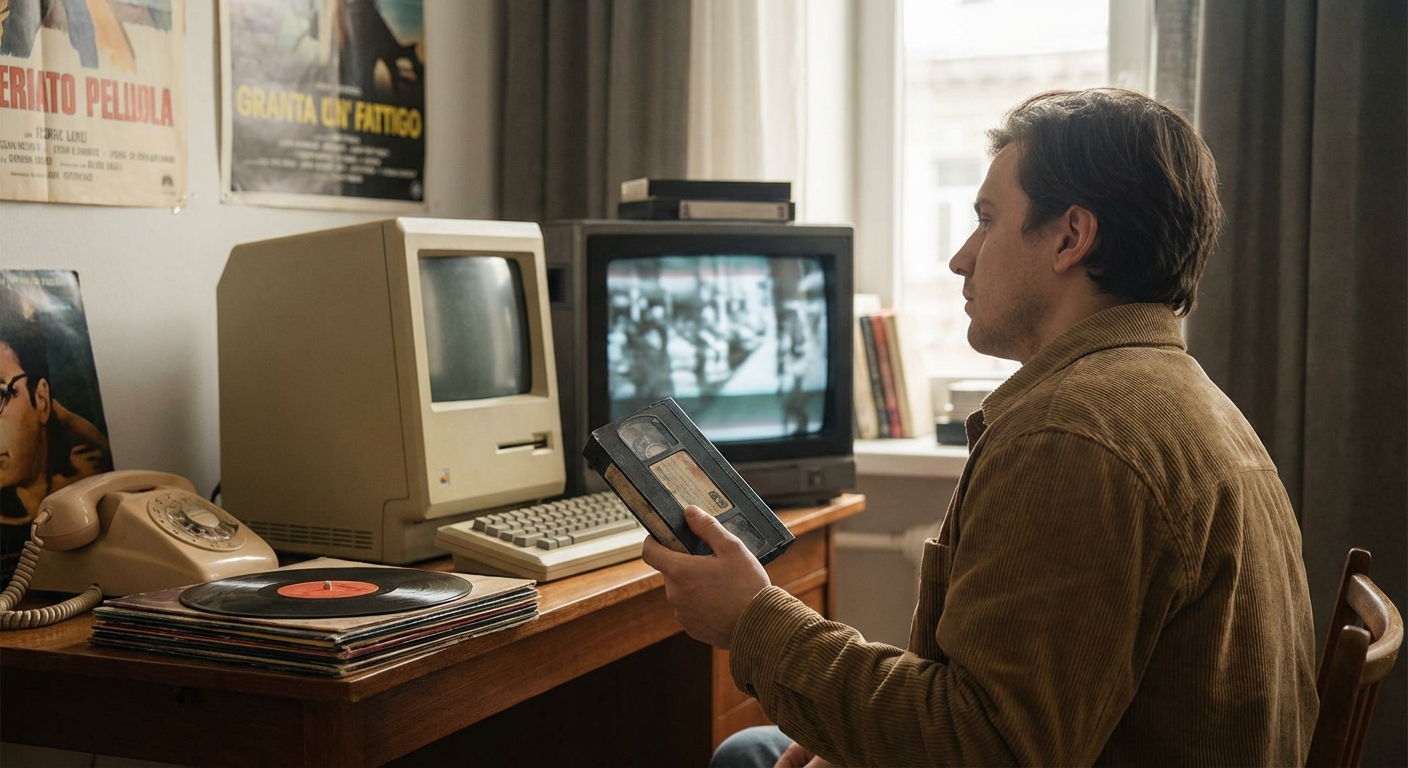
At first glance, this looks like pure escapism. It is easy to write off this surge in "retro-engagement"—from Fortnite integrating The Office to grown adults buying LEGO sets of 1950s Cadillacs—as a collective refusal to grow up. But that is a cynical take, and frankly, it is wrong. This isn't about hiding from the future. It is about stabilizing the present.
We are living in an increasingly complex, digital, and often artificial landscape. The data is clear: we aren't retreating. We are using the past as a psychological anchor. We are using nostalgia not as a sofa to sleep on, but as a battery to recharge our resilience.
The Social and Existential Shield
For a long time, the history books were unkind to the concept of nostalgia. In the 17th century, it was actually classified as a "disease," a neurological disorder of the Swiss mercenaries who missed home so badly they became physically ill. Even recently, people who spent too much time looking back were labeled as stuck, regressive, or unable to cope with reality.
We have to flip that script, because the science has completely changed. Modern research has rehabilitated nostalgia’s reputation, moving it from a pathology to a vital psychological asset. It turns out that looking back is one of the best ways to move forward.
A major study conducted in March 2025 involving 1,500 participants blew the "lonely dreamer" stereotype out of the water. The data found that individuals who are prone to nostalgia actually have significantly more close friends than those who aren't. But here is the kicker: they also put about 18% more effort into nurturing those relationships. When you remember the good times you had with people, you are more motivated to keep those people in your life today. Nostalgia doesn't isolate you; it acts as a bridge to others.
There is a deeper layer here called "self-humanity." In a world where we are constantly interacting with bots, algorithms, and automated customer service, we can start to feel a little mechanical ourselves. Recent research suggests that nostalgia serves as a reminder of our uniquely human qualities, specifically our moral reasoning and emotional complexity. When you remember a complicated, messy, beautiful moment from ten years ago, you are reminding yourself that you are human. That internal validation boosts your social efficacy. It makes you a better friend and a more empathetic partner today because you are grounded in your own humanity.
The Bridge of Self-Continuity
Life is full of transitions that can rattle your sense of who you are. Maybe you are changing careers, moving to a new city, or watching your kids leave home. These are moments of "flux," where the ground feels unstable. This is where nostalgia functions as a tool for "self-continuity." It provides a sturdy connection between who you were then and who you are now.
I know this feeling well. A few years ago, I lost 110 pounds. It was a long, grueling process of discipline and changing my entire relationship with food. I stopped binge eating and started lifting weights. Physically, I became a different person. But mentally, it was jarring. I would look in the mirror and not fully recognize the guy staring back. I felt a strange disconnect, like I had killed off my old self.
I found myself looking at old photos—not to shame myself for being heavy, and not to wish I was back there, but to bridge the gap. I needed to remember that the guy in the "before" picture was the same guy who had the grit to do the work. I needed to see the continuity of my own character. That is what nostalgia does. It tells you that despite the changes, the losses, and the new phases of life, there is a core "you" that remains intact.
Research published between late 2024 and 2025 highlights that nostalgia is frequently triggered by "meaning deficits" or "existential threats." When we feel like our current life lacks purpose, our brains automatically reach back to meaningful moments to prove to us that our lives do have value. It acts as a buffer. It mitigates the negative consequences of feeling lost.
For older adults or anyone facing a massive identity shift, this "mental time travel" isn't a distraction. It is a stabilization technique. It helps you weave a coherent story of your life, rather than seeing it as a series of disconnected, chaotic events.
Practical Steps to Harness Nostalgia
So, how do we use this? You don't want to just sit around getting misty-eyed and missing the "good old days" without a purpose. You want to use nostalgia as a tool for psychological strength. Based on the latest findings, here are three concrete methods to use this "mental time travel" in your daily life.
1. The Event Reflection Task
This is about moving from passive daydreaming to active processing. The research shows that specific, written reflection increases feelings of social connectedness and optimism much more effectively than just thinking about your grocery list or the news.
Take ten minutes. Sit in silence—no phone, no music. Choose one personally significant event from your past. It could be a specific holiday, a triumph at work, or a quiet moment with a grandparent who has since passed. Write it down. Describe the setting, the people, and most importantly, how it made you feel. By externalizing the memory onto paper, you solidify it as a resource you can draw from. You are proving to yourself that you have a history of connection and success.
2. Sensory Anchoring
Have you ever walked past a bakery and suddenly been transported back to your childhood kitchen? That is spontaneous nostalgia, and it is powerful because it bypasses your logical brain and hits your emotional center immediately.
You can engineer this. This is called Sensory Anchoring. If you are going through a high-stress period, curate your environment. Use scents, music, or photographs to trigger these states intentionally. Maybe it’s a playlist from your college years or a specific cologne or perfume. Because these anchors are rooted in deep memory rather than just "time," they act as an immediate coping mechanism. When the world feels too fast, use a sensory anchor to slow it down.
3. Communal Sharing
Nostalgia is most potent when it is shared. This is why the "Great Meme Reset" is happening—it is a collective activity.
engage in "collective memories" with friends or family. Don't just reminisce silently; talk about it. "Remember that road trip when the car broke down?" "Remember that concert in 2016?" Group-level nostalgia has been shown to boost community belongingness and interpersonal trust. If you are feeling isolated, call an old friend and start a sentence with "Remember when…" It is a shortcut to intimacy and trust that cuts through the noise of modern life.
Why the Bittersweet is Necessary
There is a reason why nostalgia often feels like a mix of happiness and sadness. It is "bittersweet." And frankly, that is exactly why it works.
If nostalgia were only happy, it would be a delusion. If it were only sad, it would be grief. The "bitter" element is the acknowledgment of loss—the realization that that specific time is gone forever. The "sweet" element is the joy of the memory itself.
This duality is essential. It prevents nostalgia from becoming mere escapism. It forces a healthy engagement with your own resilience. You are acknowledging that time passes, that things end, but that the meaning of those things remains. It helps you process negative emotions while fostering optimism for the future.
We don't look back because we are afraid of the future. We look back to remind ourselves that we have survived, that we have loved, and that we have been human before—and that we can do it again. So, go ahead and post that 2016 meme. Listen to that old album. It’s not just a trend. It’s a survival strategy.

See also in Mindset
20 Ways to Build Decision Confidence
10 Techniques for Managing Anxiety in Daily Life
The Reticular Activating System Explains Why You See What You Focus On
How to Find Peace in Troubled Times: Staying Calm in Chaos
20 Strategies for Adaptive Solutions
30 Cognitive Enhancement Techniques