It is finally official. As of March 5, 2026, the FDA has formally launched its "Added Sugar Reduction Strategy" under the broader "Make America Healthy Again" initiative. But the headline isn't just about labeling laws or school lunches. The real shift—the one that changes everything for people like you and me—is the language they are using. Officials are now explicitly classifying excessive sugar consumption as a "glycemic addiction."
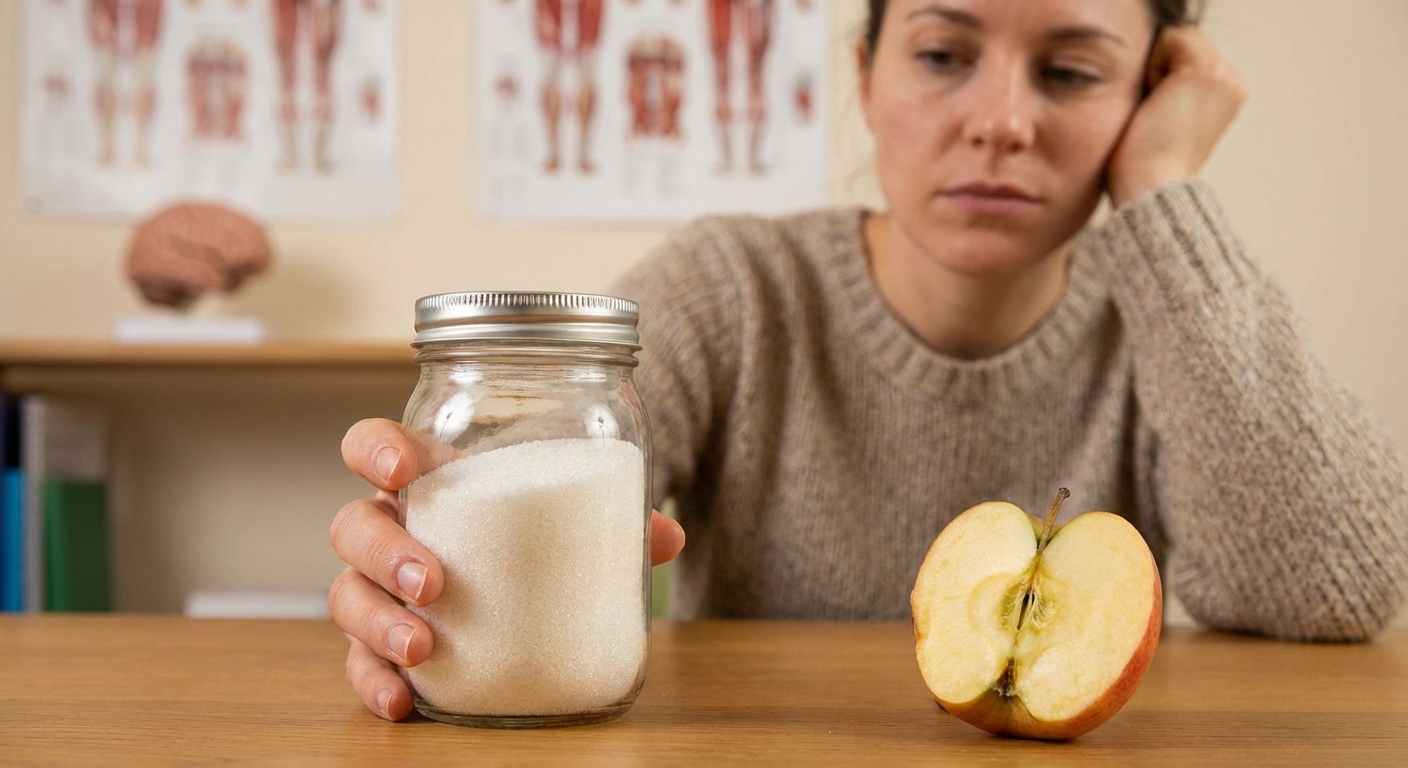
For years, if you told a doctor you felt "addicted" to sugar, you might have received a polite nod and a lecture on willpower. You were told it was a habit, a lack of discipline, or an emotional crutch. But this new policy shift validates what many of us have known in our guts (literally and figuratively) for decades. Sugar impacts the brain's reward system in ways formerly associated only with controlled substances.
We now have the clinical evidence to back this up. It is not just about calories. It is about chemistry. When you try to quit sugar and feel like you are falling apart, you aren't imagining it. You are going through a legitimate, physiological withdrawal process that mirrors, in a milder but mechanism-identical way, withdrawal from opioids. Understanding this is the first step to breaking the cycle without hating yourself in the process.
The Neurobiology of Sugar Addiction
To understand why you can't just "eat just one" cookie, we have to look at what is happening under the hood. Your brain is wired for survival, and in ancient times, calorie-dense foods were rare. When you found them, your brain needed to ensure you ate as much as possible.
Today, that survival mechanism has been hijacked. When you consume high-sugar foods, it triggers a massive release of dopamine in the nucleus accumbens. This is the same part of the brain that lights up when someone uses cocaine or heroin. But it goes deeper than just dopamine.
The consumption of sugar stimulates the production of beta-endorphins. These are your body's natural opioids. They are painkillers and pleasure-givers. This is why a bowl of ice cream actually makes you feel "better" after a hard day—it is providing a literal, chemical numbing effect.
Here is the problem: the brain strives for balance (homeostasis). If you constantly flood it with sugar-induced dopamine and opioids, the brain protects itself by down-regulating its receptors. It essentially turns down the volume dial.
This means you now have fewer dopamine and mu-opioid receptors available. You are chemically deaf to normal pleasures. A sunset, a walk, or a healthy meal doesn't register anymore. To feel "normal"—not even good, just normal—you need a bigger hit of sugar. This is the definition of tolerance and neurochemical dependence.
Research has shown that this dependency is terrifyingly real. In studies where sugar-dependent subjects were given naloxone—a drug used to reverse opioid overdoses by blocking opioid receptors—they immediately went into withdrawal. We are talking about teeth chattering, tremors, and head shakes. The sugar had hooked into the exact same systems that morphine does.
The Symptoms of Withdrawal
If you have ever tried to cut out sugar and felt like you had the flu, you know what I am talking about. The physical "crash" is not in your head. It is a biological revolt.
The timeline usually mimics a drug detox. The symptoms tend to peak in the first 3 to 5 days. During this window, your blood glucose levels are fluctuating wildly, and your brain is screaming for its fix. You might experience pounding headaches, deep muscle aches within your legs and back, and a fatigue so heavy it feels like you are walking through wet cement.
But the physical symptoms are often easier to manage than the psychological ones. This is where the "DA/ACh Imbalance" comes into play.
When you stop eating sugar, your extracellular dopamine levels plummet. Your brain's "happy chemical" has left the building. At the same time, there is often a spike in acetylcholine. Acetylcholine is a neurotransmitter involved in muscle action and arousal, but in this context, a spike causes anxiety, agitation, and aggression.
This specific neurochemical shift—low dopamine, high acetylcholine—is nearly identical to the signature of morphine withdrawal.
This explains the mood swings. It explains why you snap at your spouse or feel a sudden, crushing wave of sadness. You aren't just "cranky" because you missed dessert. Your brain chemistry is temporarily broken. You are operating with a deficit of reward chemicals and a surplus of agitation chemicals. Knowing this helps you give yourself some grace. You aren't a bad person; you are a recovering person.
Practical Steps for Mitigation
We know the "why" and the "what." Now we need the "how." The goal here isn't to be perfect; it is to be effective. We need to outsmart the biology.
1. Gradual Titration Over Cold Turkey
The instinct when we decide to get healthy is to throw everything out of the pantry and start fresh on Monday. I appreciate the enthusiasm, but biologically, this is a setup for failure.
Quitting "cold turkey" causes a severe neurochemical shock. It maximizes the dopamine crash and the acetylcholine spike. Instead, experts and the new 2026 guidelines recommend a gradual reduction over 2 to 3 weeks.
This allows your dopamine receptors to "up-regulate" or grow back slowly. Think of it like walking down a mountain instead of jumping off a cliff. Start by cutting your sugar intake in half for a week. Then half again. Give your brain's CEO time to adjust to the new budget before you cut off the funding completely.
2. Prioritize Protein and Fiber
This is the single most important tool in your arsenal. You cannot fight a chemical urge with willpower alone. You need to fight it with satiety.
When I was 110 pounds heavier, I was caught in a vicious cycle of binge eating. I would try to starve myself or eat only "clean" salads, and by 8:00 PM, the cravings were so intense I would find myself driving to the convenience store in a trance. I felt weak and pathetic. It wasn't until I stopped trying to use discipline and started using biology that I broke free. I started prioritizing massive amounts of protein—chicken, beef, eggs—and suddenly, the voice in my head screaming for sugar got quieter. It didn't disappear overnight, but for the first time, I could ignore it.
You need to aim for high protein intake—over 100g daily for most adults—and high fiber (30-50g). Protein and fiber stabilize your insulin levels. When your blood sugar is stable, you don't get the hypoglycemic crash that triggers the opioid-like panic signal in your brain. You are essentially putting a governor on the engine.
3. Hydration and Sleep
This sounds basic, but it is non-negotiable. Dehydration makes every single symptom of withdrawal worse. The headaches become migraines; the fatigue becomes exhaustion.
Your body is processing a metabolic shift. You need to flush out the system. Aim for 8 to 10 glasses of water daily. If you have a headache, drink two glasses of water before you reach for a pill.
Furthermore, you must protect your sleep. Your brain recovers and repairs receptors during deep sleep. If you are sleep-deprived, your prefrontal cortex—the part of your brain responsible for saying "no"—is weakened. A tired brain craves quick energy (sugar). Go to bed an hour early. Create a routine of silence and darkness. Give your body the fighting chance it deserves.
Conclusion
The shift we are seeing in 2026 is a victory for truth. By understanding that sugar functions as a mild but persistent opioid agonist, we can finally stop treating this struggle as a character flaw.
If you are struggling to cut back, stop beating yourself up. You are dealing with a complex physiological response that has been engineered into our food supply. The withdrawal is real. The pain is real. But the recovery is real, too.
You don't need magic. You need a plan. You need to taper slowly, fuel your body with protein, and respect the biology of what is happening to you. The headaches will pass. The receptors will heal. And eventually, the silence in your head where the cravings used to be will be the sweetest thing you have ever tasted.