

We have all been there. You are sitting at your desk, or maybe you are lying in bed at 3 a.m., and your heart is hammering against your ribs like a trapped bird. There is no tiger in the room. There is no immediate physical danger. Yet, your body is reacting as if you are about to be eaten alive.
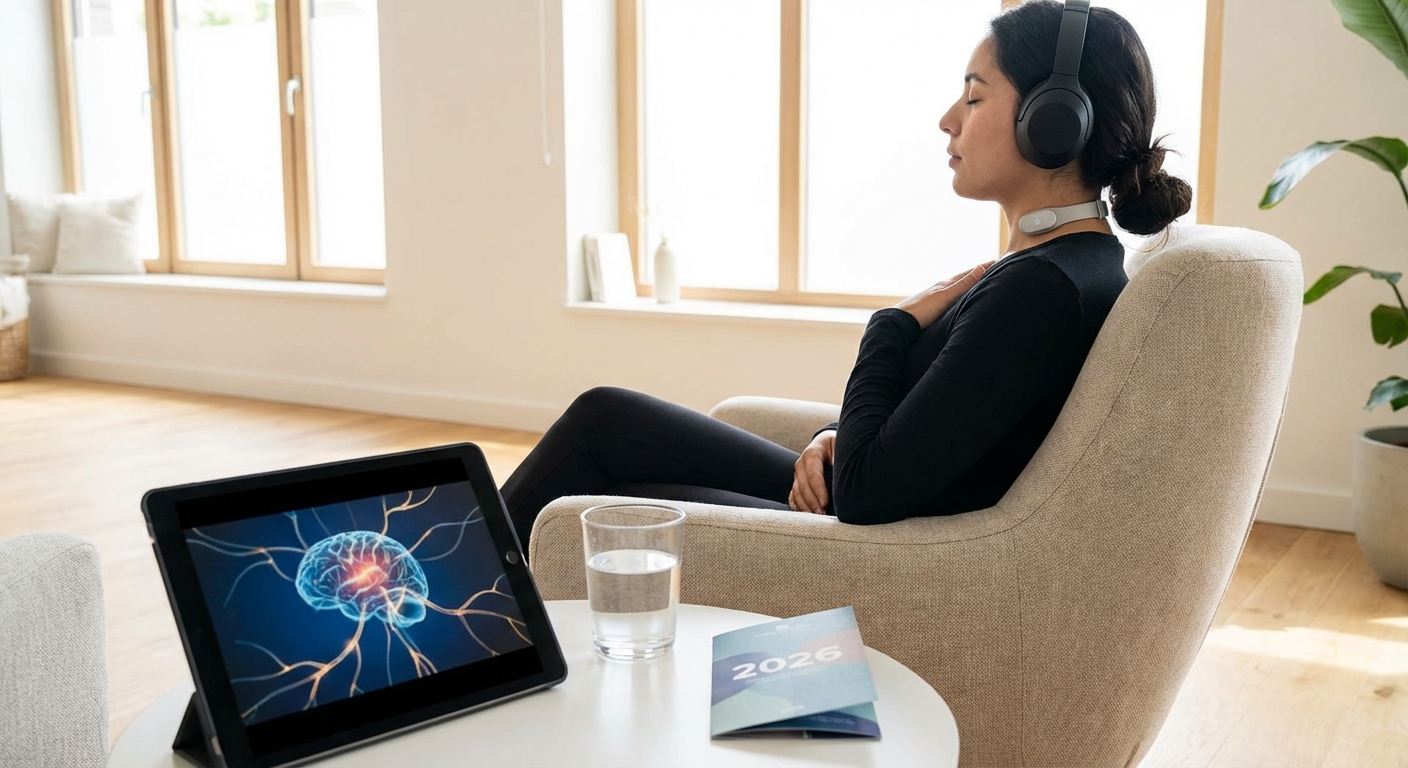
For years, we were told this was just "stress" or a lack of willpower. We were told to just "calm down," as if that were a switch we could flip. But thanks to a massive shift in medical understanding that has culminated recently in 2026, we now know there actually is a switch.
It is called the vagus nerve.
This wandering bundle of fibers is the longest cranial nerve in your body. It is the superhighway that connects your brain to your heart, your lungs, and your gut. And here is the kicker: it is the physical mechanism that turns off your anxiety.
On March 3, 2026, healthcare providers announced a breakthrough that many of us in the wellness space have been watching for years: the widespread clinical availability of FDA-approved vagus nerve stimulation (VNS) systems for stroke rehabilitation. This isn't just about stroke recovery. It is a signal fire. It means that bioelectronic medicine—using electricity to heal the nervous system—has officially gone mainstream.
We are moving past the era where we just count our steps or track our sleep. In 2026, the primary metric for wellness is nervous system regulation. We are finally looking under the hood to see how the engine actually works.
The Biological Brake Pedal
To understand why you feel anxious, you have to understand the two main modes of your autonomic nervous system.
First, you have the sympathetic nervous system. This is your "fight or flight" mode. It is the gas pedal. When you get a stressful email or hear a loud noise, this system dumps adrenaline into your blood. It is designed to save your life.
Then, you have the parasympathetic nervous system. This is the "rest and digest" mode. This is the brake pedal. The vagus nerve is the leg that stomps on that brake.
When the vagus nerve is stimulated, it releases a neurotransmitter called acetylcholine. This chemical tells your heart rate to slow down. It lowers your blood pressure. It tells your body to stop pumping out inflammatory cytokines—those nasty little proteins that cause "brain fog" and make you feel sick and tired.
The problem for most of us is that our brake pedal is rusty. We are stuck with our foot on the gas.
This is where the concept of "vagal tone" comes in. High vagal tone means your brake works instantly. You get stressed, you react, and then you bounce back to a state of calm. Low vagal tone means you stay stressed. You stay in that high-alert state long after the email is sent or the argument is over.
There is also the gut factor. We often think anxiety starts in the brain, but the traffic on the vagus nerve is a two-way street. In fact, 80% of the fibers are sensory, meaning they send messages from your body up to your brain.
I learned this the hard way. Years ago, before I got my health in order, I was carrying an extra 110 pounds. My diet was terrible, and my gut health was non-existent. I didn't realize it at the time, but my inflamed gut was constantly screaming "danger" up the vagus nerve to my brain. It wasn't until I lost the weight and cleaned up my diet that the constant background noise of anxiety finally went quiet. It wasn't just psychological; it was biological.
Physical Techniques to Stimulate the Nerve
You do not need a prescription to tap into this system. Because the vagus nerve is a physical part of your body, you can manipulate it with physical actions. You can manually pump the brakes.
Here are three reliable ways to stimulate the vagus nerve without spending a dime.
1. Breath Control (The Physiological Sigh)
Forget complex routines. The biology here is simple: when you inhale, your heart rate speeds up. When you exhale, it slows down. To trigger the vagus nerve, you need to spend more time exhaling than inhaling.
The most effective method is the "longer exhale" technique.
- Inhale through your nose for a count of 4.
- Exhale through your mouth for a count of 6 or 8.
Do this for two minutes. This specific rhythm signals the brainstem that you are safe. You cannot hyperventilate and exhale slowly at the same time. It is physiologically impossible to be in a full panic state while breathing this way. You are hacking the system from the bottom up.
2. Cold Water Immersion
This is not comfortable, but it works instantly. The vagus nerve mediates something called the "mammalian dive reflex." When cold water hits your face (specifically the area around your eyes and nose), your body instinctively slows your heart rate to conserve oxygen.
You don't need an ice bath. At the end of your shower, turn the water to cold for the last 30 seconds. Or, if you are in the middle of a panic attack, splash ice-cold water on your face. The shock interrupts the anxiety loop immediately.
3. Vocal Vibration
The vagus nerve passes right through your vocal cords. This means that using your voice creates internal vibrations that physically stimulate the nerve.
This explains why so many cultures throughout history have used chanting or singing in their traditions. You don't need to do anything complicated. A deep, resonant hum works wonders. Hearty, deep belly laughing does the same thing. Even singing loudly in the car can help. The key is the vibration in the throat, which massages the nerve and signals safety to the brain.
The Rise of VNS Technology
While natural methods are powerful, 2026 has ushered in a new era of technology that does the heavy lifting for you. We are seeing a boom in bioelectronic medicine, specifically in the form of non-invasive transcutaneous vagus nerve stimulation (tVNS).
Devices like Pulsetto and Nurosym have become household tools for people dealing with chronic stress. These aren't just fancy Fitbits. They are wearable devices that send gentle electrical pulses through the skin to target the vagus nerve, usually via the ear or the neck.
The data backing this is becoming undeniable. Recent reports from the Massachusetts League suggest that consistent use of these devices can increase Heart Rate Variability (HRV) by 20–30% within a month.
HRV is the gold standard for measuring vagal tone. A higher HRV means your nervous system is adaptable and resilient. A low HRV means you are brittle and stressed.
What is fascinating about this tech is how it recalibrates "interoception." Interoception is your brain's ability to sense what is happening inside your body. When you have anxiety, your interoception is often faulty. You interpret a slight rise in heartbeat as a heart attack, or a butterfly in your stomach as impending doom.
New research from March 2026 indicates that these devices help fix that signaling. They help the brain interpret signals from the gut and heart correctly, preventing those "false alarm" anxiety attacks before they spiral out of control.
Nervous System Hygiene
We need to stop treating anxiety solely as a defect of character or a failure of positive thinking. It is often a mechanical issue. Your biological brake pedal is jammed, and you need to grease it.
The concept of "nervous system hygiene" is the next frontier of personal wellness. Just as you brush your teeth to prevent decay, you need to engage in daily practices—whether that is breath control, cold water, or using VNS technology—to keep your vagus nerve functioning.
This is about resilience. It is about building a body that can handle the weight of the world without breaking.
You have more control than you think. You possess a superhighway of calm inside your own chest. You just have to learn how to drive it.

See also in Self-Improvement
Improve Every Moment
15 Ways to Enhance Empathy
12 Ways to Find Joy in Everyday Moments
15 Ways to Build Mental Stamina
20 Lessons You Can Learn from Failure
The Actual Health Benefits of Intermittent Fasting Backed by Research