We spend a staggering amount of time, energy, and money trying to optimize our own existence. We track our sleep cycles, we measure our macros, and we obsess over morning routines designed to maximize personal productivity. We treat our bodies and minds like high-performance machines that constantly need tuning, upgrading, and servicing. There is nothing inherently wrong with this discipline; taking care of the temple you live in is a duty. However, in this hyper-focused pursuit of self-improvement, we often overlook the most potent, scientifically backed "hack" for happiness and longevity available to us. It isn't a supplement, and it doesn't cost a dime. It’s the simple, ancient act of looking outward.
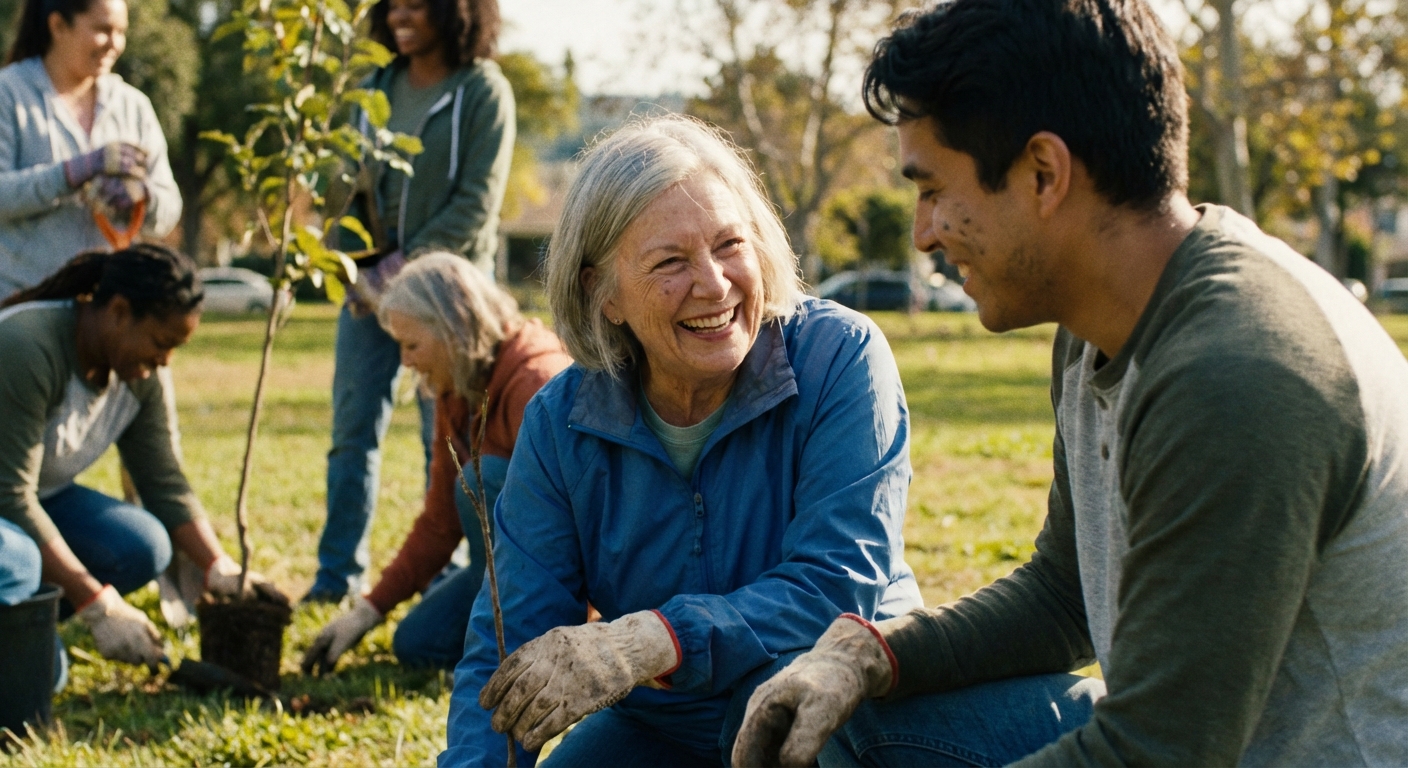
The modern wellness industry sells us the idea that peace is found solely within—through isolation, expensive retreats, or complex self-care rituals. But the data tells a different story. Real, enduring mental resilience isn't just about what you do for yourself; it is about what you do for others. Volunteering and service are not just "nice things to do" for the community; they are physiological switches that rewire your brain, lower your blood pressure, and buffer you against the crushing weight of modern stress.
The Trap of Internal Optimization
We are living through a paradox. We are more connected digitally than ever before, yet we are suffering from a profound fragmentation of actual human connection. We have optimized our lives for convenience and independence, but the cost has been our sense of belonging. This isolation is not just a social issue; it is a public health crisis.
The Surgeon General has explicitly labeled this disconnectedness an epidemic of loneliness, stating that lacking social connection is as damaging to your health as smoking 15 cigarettes a day.
That statistic stops me in my tracks every time I read it. I spent years battling my own vices, eventually managing to quit smoking and vaping because I knew I was slowly killing myself. I remember the withdrawal, the irritability, and the immense discipline it took to finally clear my lungs and get my health back on track. To think that simply sitting alone in my house, disconnected from my community, could be doing the same amount of damage to my body as that old addiction is a sobering realization. We treat diet and exercise as non-negotiables, but we treat service and community as optional hobbies. If we want to live good lives, that priority list has to change.
When you shift your focus from "How do I feel?" to "How can I help?", you break the loop of rumination. Anxiety thrives on self-obsession. It feeds on the constant analysis of your own problems, your own future, and your own shortcomings. Service forces you out of your head and into the reality of the moment. It demands that you pay attention to someone else's needs, which provides an immediate, tangible respite from your own internal noise.
The Biology of the Helper’s High
This isn't just sentimental advice; it is hard biology. When you engage in altruistic acts—whether that is mentoring a teenager, sorting cans at a food bank, or helping a neighbor fix a fence—your brain undergoes a specific chemical change. Scientists call this the "Helper's High," but that term almost trivializes what is actually happening.
When you help others, your brain triggers the mesolimbic reward system. This is the same system that lights up when you eat a delicious meal, win money, or finish a tough workout. Specifically, the ventral striatum releases a cocktail of neurochemicals, including dopamine and oxytocin.
Dopamine is your driver; it gives you that sense of reward and motivation. Oxytocin, often called the "bonding hormone," is the chemical of trust and connection. Empathy elevates oxytocin levels, creating a positive feedback loop: oxytocin makes you more generous, and being generous produces more oxytocin. Unlike the cheap dopamine hits you get from scrolling through social media—which leave you feeling empty and anxious moments later—the reward from service is sustainable. It builds a sense of deep satisfaction rather than fleeting pleasure.
Furthermore, this habit protects your brain as you age. Research indicates that regular volunteering (roughly two to four hours per week) is associated with a 15-20% slower rate of age-related cognitive decline. By engaging with others, solving problems in real-time, and navigating social dynamics, you are giving your brain a complex workout that keeps the neural pathways firing efficiently. You are literally keeping your mind sharp by using it to lift up others.
Stress, The Heart, and The Cortisol Drop
We all know what stress feels like. It’s the tight chest, the racing thoughts, the inability to sit in stillness. Biologically, this is largely driven by cortisol, the stress hormone. Chronic cortisol exposure is a wrecking ball for the body; it drives up inflammation, disrupts sleep, and tears down your immune system.
Service acts as a biological buffer against this stress. When you connect with others in a meaningful way, your body downregulates that cortisol response. It signals to your nervous system that you are safe and that you belong to a tribe. This has massive implications for your physical health, particularly your heart.
The stats on this are incredibly compelling. People who volunteer regularly are 40% less likely to develop hypertension (high blood pressure) over time compared to those who don't. Think about that. We spend billions on blood pressure medication, yet we have a natural intervention that cuts the risk nearly in half.
Regular volunteers also report 27% lower levels of depression. This makes sense when you consider the "social fabric" framework. Depression often convinces us that we are useless, isolated, and a burden. Service provides immediate, irrefutable evidence to the contrary. You cannot feel useless when you are actively being useful. You cannot feel isolated when you are working shoulder-to-shoulder with others toward a common goal. It anchors you in the reality that you have value and that your presence matters to the people around you.
How to Start Without Burning Out
I know what you are thinking. You are already busy. You are juggling work, family, finances, and trying to squeeze in a gym session. The idea of adding "volunteer work" to your calendar feels like just another chore on an already overflowing to-do list.
This is where the "Pragmatic" part of my approach comes in. You do not need to quit your job and move to a remote village to build an orphanage. In fact, sporadic, grand gestures are often less effective for your brain than consistent, small acts of service.
The research suggests a "sweet spot" for mental health benefits: approximately two hours per week. That is it. That is one movie you didn't watch. That is two hours of doom-scrolling replaced with action. Here is how to structure it so it adds energy to your life rather than draining it:
1. Audit Your Skills, Not Just Your Time
Don't just look for "warm body" roles if they make you miserable. Match your service to your natural interests or professional skills. If you are a marketer, help a non-profit with their newsletter. If you are good with your hands, look for Habitat for Humanity builds. When you use skills you have already mastered, the friction is lower, and the sense of competence is higher.
2. Look for the "High-Impact" Needs
As of March 2026, many communities are desperate for specific roles that require emotional maturity. For example, local Sheriff's offices often look for "Victim Advocates" to provide support during crises. These roles are intense, but they are deeply meaningful. They strip away the superficiality of daily life and put you right at the heart of human connection. If you have the capacity for it, stepping into the fire where help is needed most can be transformative.
3. Start Small and Local (Micro-Volunteering)
If two hours feels like too much right now, start with "informal helping." This is valid and powerful. Check on an elderly neighbor. Pick up trash in your local park without being asked. Participate in community events like a "Baton of Hope" relay. These small interactions knit the social fabric back together. They train your brain to see yourself as a contributor rather than just a consumer.
4. Commit to the Schedule
Treat this time with the same discipline you treat a work meeting. Put it on the calendar. If you wait until you "feel like it" or until you "have free time," it will never happen. You have to prioritize it. The irony is that once you start, you will likely find that you have more energy for the rest of your week, not less.
Conclusion
We are built for purpose. We are designed to function best when we are part of a whole, contributing to the welfare of the tribe. The modern world has tricked us into thinking that happiness is a solitary pursuit, something we acquire or achieve on our own. But the science confirms what the wisdom of the ages—and traditions like the Christian Orthodox faith—has always taught: we find ourselves by losing ourselves in service to others.
You have a choice. You can keep trying to optimize your internal state, tweaking your routine in isolation, hoping to finally feel "enough." Or, you can look outward. You can step into the messiness of the real world and offer a hand. You might be surprised to find that in the process of helping someone else heal, you are actually healing yourself.
Don't overthink it. Find a place where there is a need, show up, and get to work. Your brain, your heart, and your community will thank you.