

Have you ever experienced that eerie feeling where you learn a new word or hear about an obscure topic for the first time, and suddenly, within twenty-four hours, you see it everywhere? Maybe you just read an article about the new "minimally burdensome frameworks" regarding AI regulation that are dominating the news cycle right now. It is March 5, 2026, after all, and the federal deadlines for AI compliance are the talk of the town. Before this morning, you had never strung those three words together. Now, they are in your news feed, on the radio, and overheard in the coffee shop line.
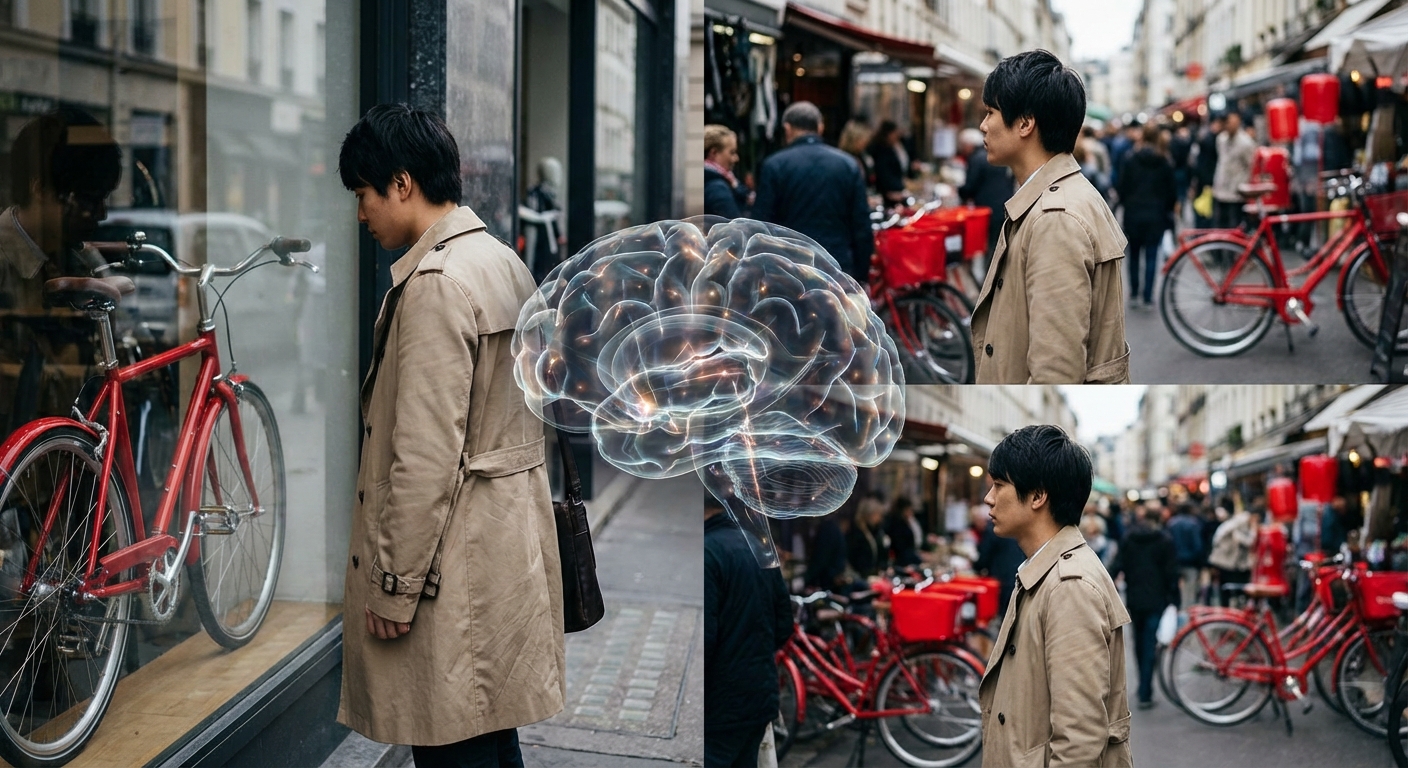
You might feel like the universe is playing a trick on you, or that the world has suddenly shifted its axis to focus on this one specific thing. I am here to tell you that the world hasn't changed at all. Your brain has.
This phenomenon is so common it has a name: the Baader-Meinhof phenomenon, also known as the Frequency Illusion. It is a glitch in your matrix, a fascinating intersection of psychology and neuroscience that convinces us that something is happening more frequently simply because we have started paying attention to it.
Understanding this isn't just a fun party trick. When you understand how your brain filters reality, you gain a massive advantage in how you learn, how you work, and how you perceive the truth.
The Core Idea: Why Your Brain Lies to You
The Baader-Meinhof phenomenon is a cognitive bias. It is the false impression that a specific thing—a word, a car model, a concept—is occurring more frequently than it actually does. This illusion is fueled by two distinct psychological processes working in tandem: selective attention and confirmation bias.
Let’s break down the first part: Selective Attention.
Your brain is constantly bombarded with an overwhelming amount of sensory data. If you consciously processed every sound, color, smell, and movement around you, you would be paralyzed. To function, your brain ignores almost everything. It filters out the noise to focus on what it deems relevant.
I learned this lesson the hard way, but it changed my life. Years ago, I was carrying an extra 110 pounds. I was trapped in a cycle of binge eating and sedentary living. During that time, my "selective attention" was tuned to comfort. I noticed every fast-food billboard, every bakery, and every reason to stay on the couch. But when I finally committed to the discipline of losing that weight—dropping 110 pounds and reclaiming my health—my brain’s filter shifted. Suddenly, without me trying, I started noticing healthy options. I saw walking paths I had driven past for a decade without registering. I noticed the nutritional content on labels that used to just be blur of text. The city hadn't built new paths overnight; my brain had simply stopped filtering them out.
That is selective attention in action. When you learn a new term or buy a new car, you are tagging that item as "important." Your brain stops filtering it out and starts serving it up to your conscious mind.
The second part of the equation is Confirmation Bias. This is the tendency to notice and remember information that supports what you already believe or have recently experienced. Once you spot that new car or hear that new AI regulation term, your brain says, "Aha! See? It’s everywhere!" You ignore the thousands of other cars or news headlines that aren't related to your new interest, reinforcing the illusion that the frequency has spiked.
The Gatekeeper: Your Reticular Activating System
While selective attention and confirmation bias are the psychological concepts, there is a physical mechanism in your brain that makes this happen. It is called the Reticular Activating System, or RAS.
Think of the RAS as the bouncer at an exclusive club. Located in the brainstem, this bundle of nerves is the gatekeeper of your consciousness. Its job is to review the millions of bits of data flooding your senses every second and decide what gets through the velvet rope and what gets kicked to the curb.
The RAS is programmed to let in things that are critical for your survival or things that you have specifically told it to look for. If you are in a crowded, noisy room and someone says your name, you hear it instantly. That is your RAS cutting through the noise because "your name" is high-priority data.
When you learn something new—like the history of the German militant group Baader-Meinhof, which Terry Mullen discussed in 1994, giving the phenomenon its name—you are essentially handing a new photo to the bouncer. You are telling your RAS, "Hey, if you see this, let it in."
Before you primed your RAS, references to that topic were filtered out as background noise. You likely saw them and immediately forgot them because they held no value to you. But once the bouncer has the photo, every instance gets flagged. This is why the frequency illusion feels so potent. It feels like a statistical anomaly, but it is actually just your physiological gatekeeper doing exactly what you asked it to do.
Practical Applications: Hacking Your Perception
Knowing that your brain works this way allows you to move from being a passive observer of this phenomenon to an active user of it. You can leverage the frequency illusion to accelerate your learning, improve your work, and even understand how you are being marketed to.
Here is how you can apply this to your daily life:
1. Accelerated Learning and Skill Acquisition
When you are trying to learn a new skill—whether it is a new programming language, a marketing concept, or a foreign language—you can intentionally prime your RAS.
- Review before engagement: Before you watch a movie in a foreign language or read a technical manual, skim through a vocabulary list or a summary of key concepts.
- The result: By introducing these terms to your brain beforehand, you move them from "noise" to "signal." You will catch them in context much faster than if you went in cold. This reinforces the learning loop, making the new information stick because you are "seeing it everywhere."
2. Strategic Content Creation
If you create content, you can use the Baader-Meinhof phenomenon to build trust and authority.
- The "Omnipresent" Strategy: Smart creators use consistent hooks, phrases, or visual themes. By planting a specific idea or phrase early in a campaign, you prime your audience’s brain to notice that theme.
- The effect: When they see a similar concept later in their day—perhaps in a news article or a competitor’s post—they connect it back to you. You feel like you are "everywhere" in their world, which builds a sense of momentum and authority around your message.
3. Understanding Marketing Tactics
Have you ever looked at a pair of boots online, only to have those exact boots follow you around the internet for the next two weeks?
- Retargeting: Marketers know that the first time you see a product, your RAS might filter it out. But if they can get you to stop and look, they have tagged it as relevant.
- Multichannel momentum: By showing you the same product on social media, in your email, and on sidebar ads, they are artificially creating a frequency illusion. They want you to feel like the product is popular, trending, and meant for you. Recognizing this helps you keep your wallet in your pocket and realize that the "sign" to buy something is just an algorithm leveraging your biology.
Conclusion
The next time you learn a new word and hear it three times in the same afternoon, don't look for a glitch in the simulation. Don't assume it is a sign from the universe. Smile, because you know it is just your Reticular Activating System doing its job.
The Baader-Meinhof phenomenon serves as a humbling reminder that our perception of reality is subjective. We do not see the world as it is; we see the world as we are tuned to see it.
This is powerful news. It means that if you want to change your world, you don't necessarily need to move to a new city or change your entire life circumstances. Sometimes, you just need to change what you are priming your brain to look for. If you look for problems, your RAS will ensure you find them in abundance. If you look for solutions, opportunities, and reasons to be grateful, your brain will filter the noise and deliver those to your front door instead.
Control the gatekeeper, and you control your experience.

See also in Mindset
The Nocebo Effect Proves That Negative Expectations Create Real Symptoms
The Scientific Reason We Love Holiday Lights and Decorations
The Childhood Wound That Causes Adult Overthinking
20 Strategies for Building Confidence
10 Mindset Tricks for Christmas Magic
20 Techniques for Outlook Shifts