It is 6:00 PM on a Tuesday. You just walked in the door, your brain feels like it has been run through a blender, and you are staring into the open refrigerator hoping a fully formed, healthy, delicious meal will magically materialize on the middle shelf. It won’t. This moment is where the battle for your health and your wallet is usually lost. You end up ordering takeout or boiling pasta for the third time this week, not because you can’t cook, but because you are too exhausted to make another decision.
We need to talk about a better way to handle the most relentless task of your life: feeding yourself.
The economic landscape of 2026 has changed the game. We are looking at grocery prices that have stabilized but are sitting about 30% higher than they were five years ago. That is a massive hit to the wallet. The old advice of "just cook at home" doesn't feel as helpful when a bag of groceries costs a fortune and you are working longer hours to pay for it. You need a system that respects your time and your budget.
Most people try "meal prepping" and fail within two weeks. Why? Because eating the same soggy container of chili or rubbery chicken breast five days in a row is miserable. It feels like punishment.
There is a secret used by restaurant kitchens and smart home cooks that solves this. It isn't about cooking recipes. It is about cooking modules. This shift in thinking is the difference between dreading dinner and saving five hours of your life every single week.
The Core Idea: Modular Component Prep
The biggest mistake you are making is thinking about "meals." When you decide to make a lasagna on Sunday for the week, you have committed your future self to eating lasagna until Thursday. By Wednesday, you are bored. By Thursday, you are ordering pizza.
The solution is Modular Component Cooking.
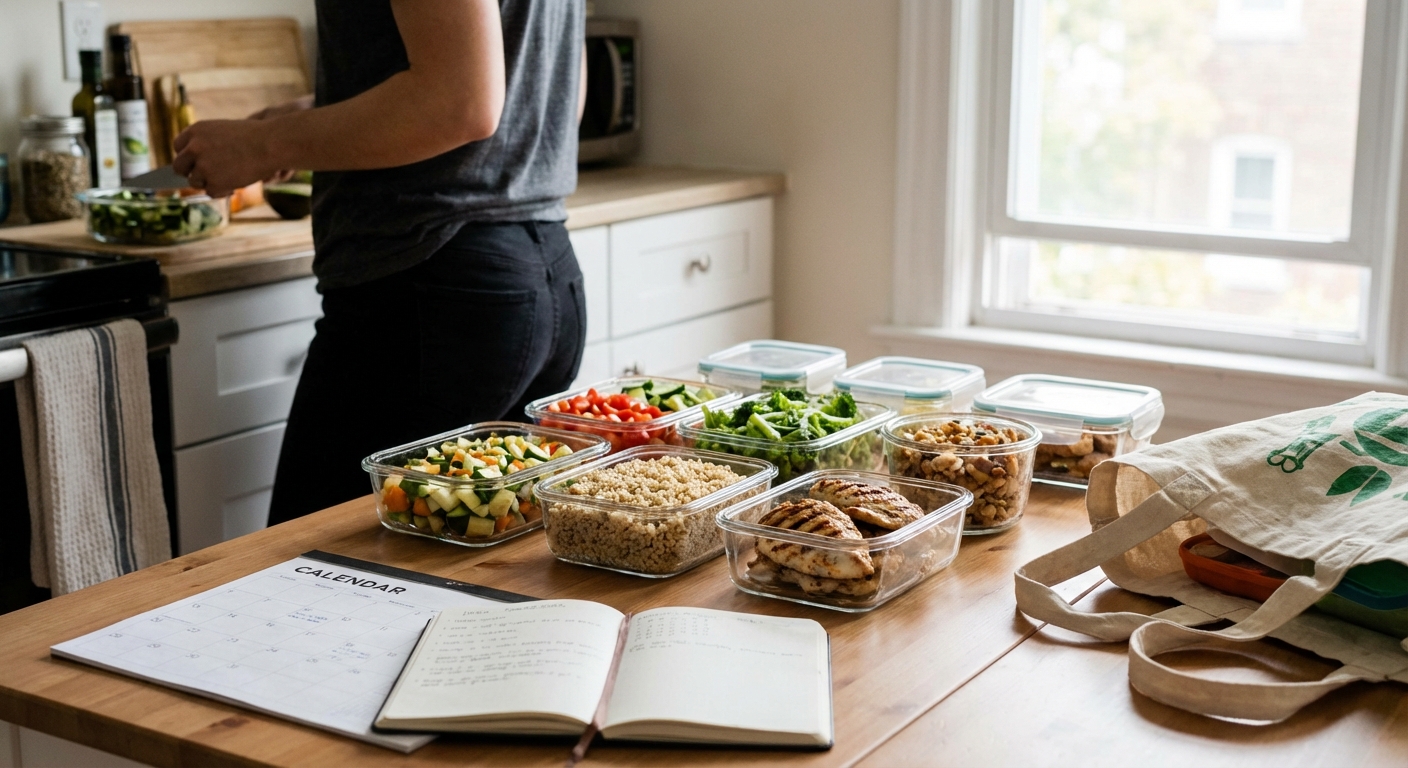
Instead of cooking full recipes, you prepare versatile building blocks. You don't make a stir-fry; you prep a tray of roasted vegetables, a container of protein, and a batch of grains. These are modules. They are the Lego bricks of your diet.
When you cook this way, you are not locking yourself into a flavor profile. A container of simply roasted chicken thighs can be a taco on Tuesday, a grain bowl on Wednesday, and thrown into a pasta sauce on Thursday. You separate the ingredients from the identity of the dish.
This eliminates flavor fatigue because the final decision—what the food actually tastes like—happens in the last five minutes before you eat, not three days prior. You get the convenience of "fast food" in your own kitchen, but with the quality of a home-cooked meal.
The 5-Hour Savings Breakdown
You might be skeptical that you can actually save five full hours. I get it. We are all busy. But let’s look at the math of where your time actually goes.
The time drain of cooking isn't just the time the food spends in the oven. It is the setup, the teardown, and the mental spin-cycle of decision-making.
- Eliminate the Daily Setup and Cleanup: Every time you cook a standard dinner, you have to get out the cutting board, knife, pans, and spices. Then you have to wash them. If you do this five times a week, that is easily 2.5 hours of pure maintenance time. With modular prep, you dirty the kitchen once. You wash the pans once. That is massive.
- Stop the Grocery Store Wander: How many times do you run to the store "real quick" on a Wednesday for one ingredient? Those trips take 45 minutes door-to-door. By planning modules, you shop once.
- The "What's for Dinner?" Stare: The average person spends an embarrassing amount of time just thinking about what to eat. It creates anxiety. By having components ready, that decision time drops to zero.
When you add up the physical labor and the mental wasted time, five hours is a conservative estimate. Imagine what you could do with five extra hours. That is time for stillness, for a hobby, or just for sleeping.
Practical Steps for Implementation
You don't need a degree in culinary arts to do this. You just need a little bit of discipline and a plan. Here is how you execute the modular system.
1. Prep Building Blocks, Not Recipes
Stop looking for "meal prep recipes" on the internet. Instead, look at your oven capacity. Roast three sheet pans of different vegetables at once. Do a tray of broccoli, a tray of sweet potatoes, and a tray of peppers and onions.
At the same time, cook two distinct proteins. maybe baked tofu and roasted chicken, or ground beef and hard-boiled eggs. Season them simply—salt, pepper, garlic powder. Do not add heavy sauces yet. If you sauce them now, you limit their potential later.
2. Triple Your Basics
If you are going to take the time to boil water for rice or quinoa, it makes zero sense to cook one cup. It takes the exact same amount of time to cook three cups as it does to cook one.
Triple your grains. Brown rice, quinoa, and farro hold their texture incredibly well for 3 to 4 days in the fridge. This becomes your base. On Tuesday night, you scoop out a cup of rice, throw in your prepped veggies and chicken, and you have a meal in 3 minutes.
3. The Flavor Savings Account
This is a habit that will save you money immediately. Keep a large gallon freezer bag in your freezer. Every time you chop an onion, carrot, or celery stalk, throw the skins, ends, and trimmings into that bag. If you eat meat, throw the bones in there too.
When the bag is full, dump it into a pot with water and simmer it for a few hours while you watch a movie. Strain it, and you have free, high-quality stock. This turns "waste" into a rich base for soups or sauces with zero active prep time.
4. Use Pantry-First Scheduling
Before you look at a grocery flyer, look at your cupboard. Build your weekly plan around what you already own. This saves you 30 minutes of wandering the aisles and 15 minutes of digging through your pantry later wondering where the pasta sauce went.
5. Modularize the Finish
This is the pro move. Keep your "finishers" separate. Store your dressings, toasted nuts, fresh herbs, or pickled onions in their own small containers.
When you reheat your chicken and rice module, adding fresh cilantro and a squeeze of lime at the very end makes the meal taste fresh. If you had mixed those in on Sunday, they would be slimy and gross by Wednesday. The "finish" is what makes leftovers taste like a fresh meal.
Why It Works: The Psychology of the "CEO Brain"
This system works because it respects human biology. Your brain is not designed to make high-quality decisions when it is low on glucose and high on stress.
I know this from experience. When I was in the process of losing 110 pounds, the hardest battles weren't fought in the gym; they were fought in the kitchen at 7:00 PM. If I had to decide what to eat when I was already hungry and tired, I would fail. I would grab the easiest, most comforting thing, which was usually processed garbage. But when I had modules ready—when the chicken was already cooked and the veggies were already roasted—eating the right thing was actually the path of least resistance.
Your brain is like a CEO. It has a limited amount of decision-making energy every day. This is called "decision fatigue." By the time you get home from work, your CEO is exhausted. If you ask it to plan a menu, check inventory, and execute a cooking sequence, it will quit on you.
Modular cooking front-loads that work. You do the thinking on Sunday (or whenever your day off is) when you are calm, caffeinated, and have music playing. You take the burden off your Tuesday-night self. You are essentially being a good friend to your future self.
Reclaiming Your Weeknight Freedom
We often overcomplicate health and productivity. We think we need a complex app or a specialized diet. Usually, what we need is simpler than that. We need preparation.
The goal here isn't to become a master chef. The goal is to make the mechanics of existence easier so you can focus on what actually matters. When you aren't stressing about dinner, you are more present with your family. You have time to sit in silence. You have time to breathe.
By adopting a modular approach, you aren't just organizing your fridge. You are organizing your life to protect your energy. In a world that is getting more expensive and more demanding, that kind of efficiency is the ultimate asset. Start this week. Buy three staples, roast them all at once, and watch how much lighter your week feels.