You know that person in the office who is consistently wrong but never in doubt? That isn’t just arrogance; it’s a psychological blind spot called the Dunning-Kruger effect, and it explains why the least competent among us often shout the loudest.
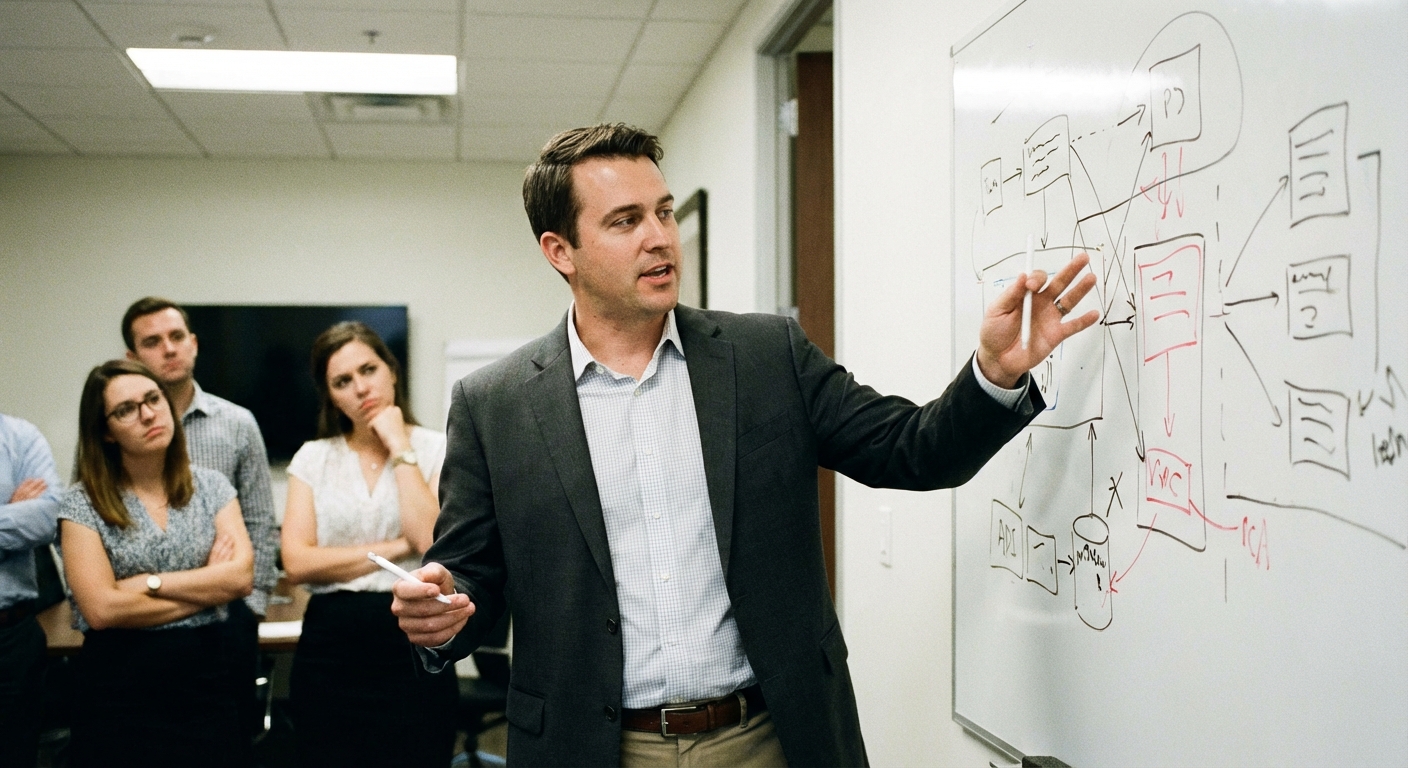
We have all encountered this phenomenon. It’s the manager who has never written a line of code dictating technical architecture to senior engineers. It’s the relative at Thanksgiving who read two headlines and now lectures the table on geopolitical strategy. It is frustrating, baffling, and, frankly, dangerous. But here is the uncomfortable truth I need to start with: if you are human, you are susceptible to this too. We all are.
The Dunning-Kruger effect is a cognitive bias where people with low ability at a task overestimate their ability. It is not just about being bad at something; it is about being bad at knowing you are bad at it. In our modern world, where information is infinite and instant, this bias has mutated into a full-blown crisis of expertise. We are drowning in confidence while gasping for actual competence.
The Core Idea: The "Double Burden" of Incompetence
To understand why this happens, we have to look at the mechanics of the human brain. The effect is rooted in a lack of what psychologists call "metacognition." Simply put, metacognition is your brain’s ability to check its own work. It is the voice in your head that says, "Wait, does that make sense?" or "I should probably double-check those numbers."
The tragedy of the Dunning-Kruger effect is what researchers call the "Double Burden." The theory posits that the specific skills you need to be good at something are the exact same skills you need to recognize that you are bad at it.
Think about grammar. If you don't know the rules of grammar, you cannot construct a proper sentence. But because you don't know the rules, you also cannot look at your bad sentence and see the error. You lack the measuring stick required to judge your own performance.
In the original 1999 study by David Dunning and Justin Kruger, the results were staggering. Participants who scored in the bottom 12th percentile on logic and grammar tests estimated their performance to be in the 62nd percentile. They didn't just think they were "okay"; they thought they were above average. They were failing, but their internal dashboard was telling them they were winning.
I have felt this sting personally. I started Muay Thai recently, though I have been inconsistent lately. Before I walked into that gym, I felt confident. I lift weights three times a week to manage my back pain, so I assumed I was "fit" and "strong." I figured fighting was just moving your arms and legs, and I knew how to do that. I walked onto the mats with a swagger that was completely unearned. Within ten minutes, I was gasping for air, tripping over my own feet, and getting absolutely dismantled by people half my size. I didn't just lack the skill of Muay Thai; I lacked the framework to even understand what good movement looked like. My confidence wasn't based on reality; it was based on ignorance.
This is the trap. When you are at the bottom of the competence ladder, you are standing on the "Peak of Mount Ignorant." The view is great, but the ground is unstable.
The 2026 AI Paradox: A New Wave of Illusion
If the Dunning-Kruger effect was a fire in 1999, the technology of 2026 has poured gasoline on it. We are currently living through a unique moment in history that I like to call the "Expertise Inflation."
By March 2026, generative AI tools have become seamlessly integrated into our daily workflows. We have tools that can write business plans, debug code, and compose sonnets in seconds. A landmark study published earlier this year in Computers in Human Behavior titled "AI Makes You Smarter, But None The Wiser" highlighted a frightening trend. The research found that while AI tools drastically improve task performance, they worsen the Dunning-Kruger effect.
Here is the problem: when an AI generates a professional-sounding output for you, your brain plays a trick on you. You confuse the machine's competence with your own. You prompt the bot, it gives you a brilliant analysis of a legal contract, and you feel like a lawyer. You aren't a lawyer. You are just a person who knows how to type a prompt.
This creates a dangerous disconnect. We are seeing a rise in "semi-literate" users—people who can generate high-level work but cannot verify it. They lack the foundational knowledge to spot "hallucinations" or subtle errors in the AI's logic. Because the output looks perfect, their confidence skyrockets.
In previous generations, if you wanted to fake expertise, you had to memorize facts. Now, you don't even have to do that. You just have to hold a smartphone. This confidence heuristic—using confidence as a proxy for competence—is causing chaos in workplaces. We have junior employees submitting AI-generated strategies they don't understand to bosses who are too overwhelmed to check the details. We are building a house of cards on a foundation of borrowed intelligence.
Practical Steps to Guard Against the Bias
So, how do we fight this? How do we climb down from "Mount Ignorant" without breaking our necks? The answer lies in cultivating intellectual humility and enforcing systems that value truth over feeling good. We cannot trust our gut, because our gut is often the thing lying to us. We need external anchors.
Here are four strategies to ground your self-assessment in reality.
1. Implement 360-Degree Feedback
We are terrible at judging ourselves. Research suggests only about 15% of people are truly self-aware. You cannot fix a problem you don't see. The most effective tool for this is objective, brutal feedback. You need a mirror. In your personal life or career, stop asking friends "How was that?"—they will lie to protect your feelings. Ask mentors or colleagues for specific critique. Ask, "What is the one thing I did poorly in that meeting?" This invites truth. You need to triangulate your competence by getting data points from people above you, below you, and beside you.
2. Use "Work Breakdown Structures" for Verification
If you are a leader, you must change how you verify skills. The worst question you can ask a confident employee is, "Can you do this?" The Dunning-Kruger effect ensures they will say "Yes" even if they can't.
Instead, use a Work Breakdown Structure approach. Ask them to walk you through the methodology. Ask, "Walk me through the first three specific steps you will take to solve this."
If they cannot explain the granular "how," they likely lack the underlying expertise. A true expert can explain the process in simple terms. A novice masking as an expert will speak in buzzwords and generalities.
3. Foster Psychological Safety
We often fake expertise because we are terrified of looking stupid. In many organizations, saying "I don't know" is treated as a weakness. This culture fuels the Dunning-Kruger fire. We must create environments where admitting a lack of knowledge is celebrated as a sign of intellectual humility.
When a leader admits they are unsure, it gives permission for the team to be honest about their own gaps. This reduces the pressure to "fake it" and clears the path for actual learning. You cannot fill a cup that is already full; you have to empty it first.
4. Continuous Peer Calibration
Isolation breeds delusion. If you work alone or in a silo, your internal standard for "good" drifts away from reality. You need regular calibration. This means engaging in peer reviews, blind testing, or competitive analysis.
If you are a writer, read the best writers in your field daily. If you are a coder, read open-source code from senior developers. Constantly comparing your work to a high-quality standard is painful, but it is necessary. It forces cognitive dissonance—the uncomfortable feeling of seeing the gap between where you are and where you want to be. That discomfort is the feeling of growth.
The Peak and the Valley
There is a flip side to this effect that is worth noting: the "Expertise Reversal." Often, true experts underestimate their standing. They assume that because something is easy for them, it must be easy for everyone else. This is the "curse of knowledge." It is why brilliant professors often struggle to teach beginners; they have forgotten what it feels like to not know.
Ultimately, the journey of competence follows a curve. We start at the peak of ignorance, confident and wrong. As we learn, we crash down into the "Valley of Despair," where we realize just how much we don't know. This is a painful place, but it is the only place where real learning happens. From there, we slowly climb the "Slope of Enlightenment," gaining true skill and realistic confidence.
The goal isn't to feel smart. The goal is to be effective. In an era where AI can fake intelligence and social media amplifies arrogance, the most valuable trait you can possess is the discipline to question your own mind. True wisdom isn't about knowing everything; it's about knowing exactly where your knowledge ends.