If you feel like you’re constantly fighting a losing battle against your pantry, you aren’t crazy, and you aren’t weak. You are simply outmatched by a chemistry experiment that has hijacked your biology.
The Invisible War in Your Kitchen
There is a reason why 70% of adults in our country are currently struggling with their weight or their metabolic health. For years, we have been told that this is a failure of willpower. We’ve been told that if we just moved a little more and ate a little less, the numbers on the scale would go down and the brain fog would lift. But if that formula actually worked, we wouldn’t be staring down the barrel of a national health crisis.
Right now, as we look at the legislative landscape in March 2026, the Senate Committee on Health, Education, Labor, and Pensions is finally asking the hard questions. They are looking at the skyrocketing costs of chronic disease and realizing that our healthcare system is collapsing under the weight of conditions that are entirely diet-related. There is a new "War on Sugar" brewing in Washington, and it isn't about banning treats; it is about acknowledging that the food supply has been engineered to be addictive.
The medical experts testifying in these hearings are putting it plainly: the majority of us are victims of a system designed to override our natural survival instincts. When you walk into a grocery store, you aren't just buying calories. You are navigating a minefield of substances that have been crafted in laboratories to ensure you cannot eat just one. This isn't about being a glutton. It is about biochemistry.
The Science of "Hyper-Palatability"
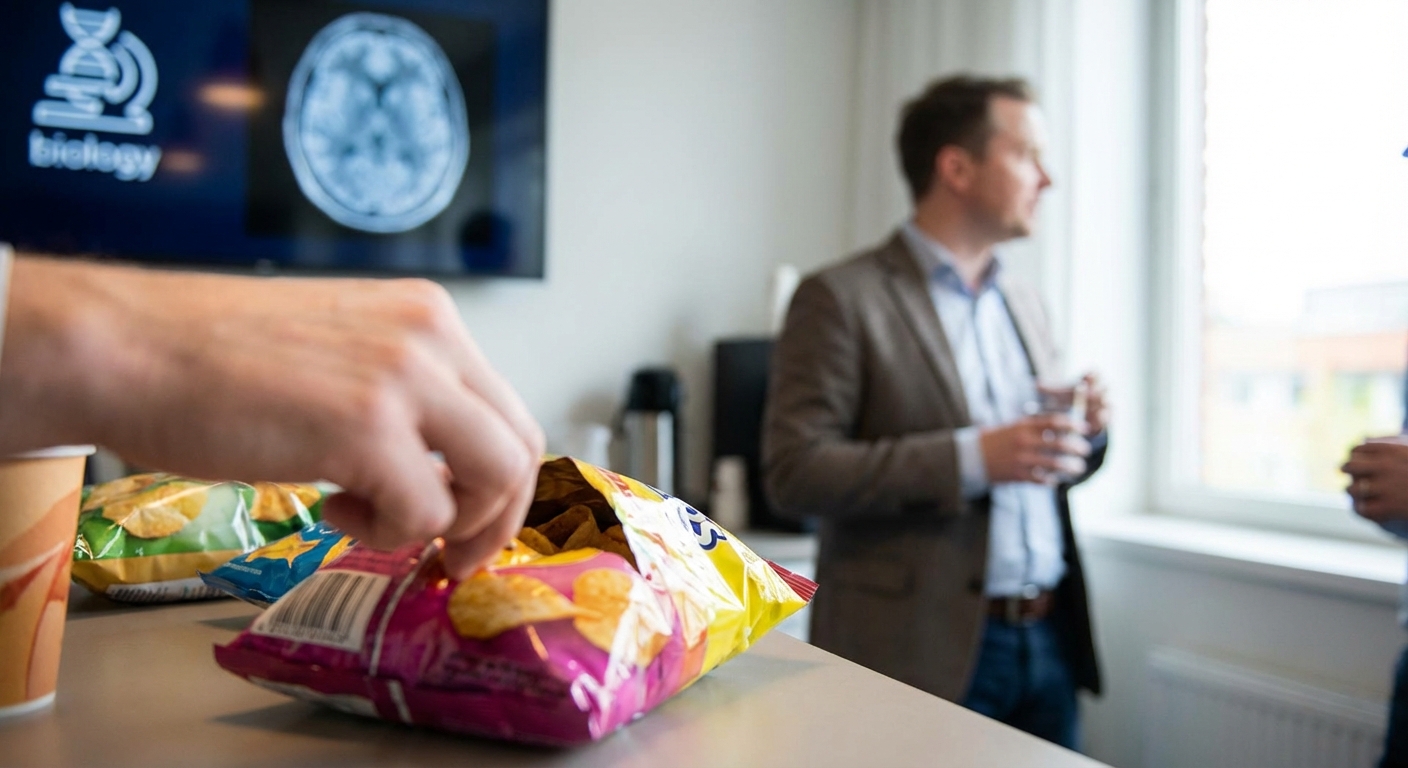
To understand why you can't put down the bag of chips, you have to understand that modern "food" is often not grown; it is manufactured. We are dealing with Ultra-Processed Foods (UPFs). These aren't just foods with a few preservatives thrown in to keep them fresh. These are industrial formulations that barely resemble the crops they came from.
The data is terrifying: 60% of the calories in the average diet now come from these ultra-processed sources. But the real problem isn't just the volume; it is the engineering. Food scientists have spent decades perfecting the "bliss point." This is a specific, scientifically calculated ratio of salt, sugar, and fat that lights up the pleasure centers of your brain like a Christmas tree.
When you eat an apple, your body knows exactly what to do. It processes the fiber, the sugar, and the nutrients, and eventually, your brain receives a signal that says, "I am full. Stop eating." When you eat an ultra-processed snack, that signal never comes. The bliss point overrides your satiety hormones. You can consume thousands of calories and still feel ravenously hungry because your brain is screaming for another dopamine hit, not for nutrition.
I have seen quotes from health officials comparing this to a strategic attack. They argue that if a foreign adversary wanted to destroy our health, cripple our economy, and weaken our national security, they couldn't come up with a better strategy than addicting our nation to ultra-processed foods. It destroys our metabolic health from the inside out, and it does so while making us think it’s our fault for not having enough self-control.
Practical Steps to Detox
So, how do we break out of this biological trap? I know firsthand that you cannot simply "try harder" against addiction. I used to carry an extra 110 pounds on my frame. I spent years in a cycle of binge eating, feeling shame, restricting calories, and then bingeing again. I only broke that cycle and lost the weight when I stopped treating food as a reward and started treating the processed stuff like the drug it is. I didn't need moderation; I needed a new way of living.
Doctors and metabolic experts have outlined a path out of this mess, and it doesn't involve starving yourself. It involves reclaiming your biology.
1. The "Label Rule"
This is the most effective diagnostic tool you have. The rule is simple: If it has a label, think twice. If it was made in a factory, don't eat it. Real food—beef, eggs, broccoli, berries—doesn't usually need a list of ingredients because it is the ingredient.
We have to stop looking at health claims on the front of the box. "Low Fat," "Heart Healthy," and "All Natural" are marketing terms, not medical ones. If you turn the package over and see a paragraph of ingredients that includes words you can't pronounce, or five different types of sugar hidden under different names, put it back. That isn't food; it's an industrial product designed to sit on a shelf for two years. By sticking to the perimeter of the grocery store, you automatically eliminate the majority of the chemicals that are confusing your metabolism.
2. Crowding Out
The hardest part of changing your diet is the feeling of deprivation. If you just focus on what you can't have, you will eventually snap. The "Crowding Out" method flips this script. Instead of focusing on removing the bad stuff immediately, focus on aggressively adding the good stuff.
We know that the prevalence of severe food addiction is high, so we need a transition that doesn't shock the system too hard, too fast for those who aren't ready for a cold-turkey approach. Start by filling your plate with high-quality protein and healthy fats. Eat a steak, have some avocado, load up on roasted vegetables. When you are truly satiated by nutrient-dense food, your physical cravings for the hyper-palatable junk will naturally diminish. You literally crowd out the space in your stomach and the desire in your brain.
3. The 10-Day Clinical Detox
For those of us who feel completely stuck—what doctors call "FLC Syndrome" (Feeling Like Crap)—sometimes you need a hard reset. This is a medically designed 10-day detox from sugar and flour. It is intense, but it is necessary to break the neurochemical cycle.
For ten days, you eliminate all potential triggers. No sugar, no artificial sweeteners (which can still trigger insulin), no flour, no processed foods. You are essentially doing a factory reset on your taste buds and your brain chemistry. The first few days are often difficult as your body goes through withdrawal, but by day four or five, the clouds start to part. You realize that you aren't naturally lethargic; you were just drugged by your lunch.
Why It Works
When you remove these inflammatory additives, you aren't just cutting calories. You are lowering systemic inflammation. Most people walking around today are somewhere on the spectrum of "diabesity"—the continuum from optimal blood sugar to full-blown Type 2 diabetes. One in two adults is on this spectrum, and most don't know it.
The inflammation caused by UPFs affects everything. It’s the reason your joints ache in the morning. It’s the reason you have adult acne. It’s the reason you feel a low-level depression or anxiety that you can't shake. When you stop poisoning your system with inflammatory oils and refined sugars, the body heals with shocking speed.
I have seen people who thought they were destined to be in pain forever realize that their pain was actually a reaction to what they were eating. Within days of a clean diet, the bloating vanishes, the mental fog clears, and energy levels stabilize. It isn't magic. It is just biology functioning the way it was designed to function before we flooded it with industrial sludge.
Conclusion
We are living in an environment that is hostile to our health. The grocery store, the television commercials, and even the standard dietary guidelines have often led us astray. But you have the power to opt out of this system.
You don't need a degree in nutrition to fix this. You just need the discipline to return to simplicity. By identifying the hidden addiction in your pantry and choosing real, whole foods, you are doing more than losing weight. You are reclaiming your mind, your energy, and your future. The "hidden" culprit isn't hidden anymore; we know what it is. Now, it is up to us to close the pantry door on it for good.