

As of March 4, 2026, the headlines are dominated by "Operation Epic Fury." The intensity of this campaign, involving rapid-fire strikes and split-second decisions by U.S. and Israeli commanders, is a stark reminder of what happens when the margin for error hits zero.
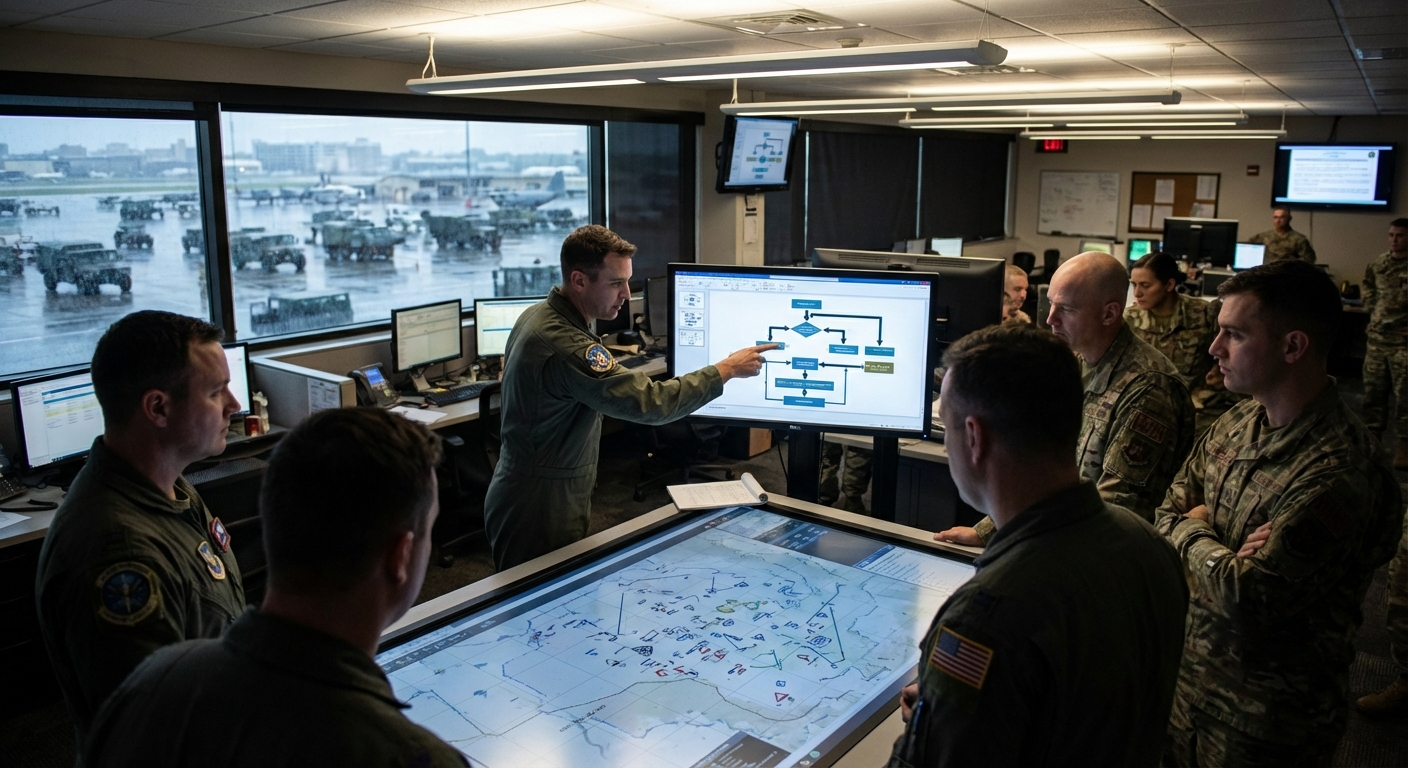
While you and I might not be commanding drone swarms or navigating regional air defenses, the chaos of modern life often feels like a different kind of battlefield. The "fog of war" isn’t just for soldiers; it’s for the parent managing a family crisis, the entrepreneur staring down bankruptcy, or anyone trying to make a hard call when the stakes are high and the data is incomplete.
Most of us freeze when the pressure mounts. We wait for perfect information that never comes. But there is a better way to operate, and it comes directly from the people who specialize in chaos.
The Framework of Rapid Response
The military doesn't survive on luck; it survives on frameworks. When the world is exploding around you, you cannot rely on your raw intuition alone because your brain is wired to panic. You need a system that overrides that panic.
The most famous of these is the OODA Loop. Developed by Colonel John Boyd, a fighter pilot who changed the way we think about conflict, OODA stands for Observe, Orient, Decide, Act.
Boyd’s theory was simple but revolutionary: the person who can cycle through these four stages faster than their opponent wins. It’s not about being smarter or stronger; it’s about processing reality quicker.
Most people get stuck in the first two stages. We observe a problem—maybe a sudden drop in sales or a health scare—and then we just stare at it. We get paralyzed by the sheer volume of information.
The military counters this paralysis with the Military Decision-Making Process (MDMP). While the OODA loop is for split-second reaction, MDMP is for when you have a little more time but the pressure is still crushing. It’s a sequence designed to turn raw noise into a clear plan.
The goal isn't to make the perfect decision. The goal is to make a good decision before it’s too late to matter.
Practical Steps for Tactical Execution
Knowing the theory is one thing, but applying it when your heart is hammering against your ribs is another. You can't just "think" your way out of a high-stress situation; you have to physically and tactically maneuver out of it.
Here is how you apply these combat principles to your daily existence.
1. Regulate Physiology First
You cannot make a logical decision if your body is in fight-or-flight mode. When stress hits, your heart rate spikes, and your brain literally shuts down its higher reasoning centers. You become stupid, fast.
The military solution is "tactical breathing." This isn't some esoteric practice; it is physiological control. You inhale for four seconds, hold for four, exhale for four, and hold for four.
I use this constantly. It forces your parasympathetic nervous system to kick in, lowering your heart rate and bringing your prefrontal cortex back online. Before you look at the email that just ruined your day, take two minutes to breathe. If you don't control your breath, you can't control the situation.
2. Triage the Noise (Observe)
In a crisis, everything looks important. This is called "tunnel vision." You start focusing on the little fires and miss the inferno threatening the foundation.
You have to actively filter. You need to identify the "center of gravity"—the one thing that, if lost, makes everything else irrelevant.
I remember a few years ago, I was juggling massive web development projects while trying to run marketing campaigns. My inbox was a war zone, clients were angry, and I froze. I felt like I was drowning in tasks. It wasn't until I stopped trying to do everything at once and just focused on the next immediate step—triaging the noise to find the single most critical bug—that I broke the paralysis.
Ignore the noise. Find the signal.
3. The 70% Rule (Orient/Decide)
This is where most people fail. We want 100% certainty. We want to know exactly how the investment will turn out, or exactly how the difficult conversation will end.
But in the real world, 100% certainty is a myth. If you wait for all the facts, the opportunity is gone.
Military doctrine dictates that once you have roughly 70% of the information, you must execute.
A decision made today with incomplete information is infinitely better than a perfect decision made next week when the damage is already done. Trust your gut, trust your experience, and move.
4. Decentralized Command (Act)
If you are a leader—whether of a business or a family—you cannot make every single decision yourself. You become the bottleneck.
"Decentralized Command" means empowering the people closest to the problem to solve it. If you have teenagers, give them the parameters and let them solve the issue. If you have employees, tell them the "Commander's Intent" (the end goal) and let them figure out the "how."
This increases agility. It frees you up to look at the big picture rather than getting bogged down in the weeds.
5. The After-Action Review (AAR)
Once the dust settles, you cannot just move on. You have to learn. The Army performs an AAR after every significant event.
It’s not a blame game. It’s a structured debrief asking four questions:
- What did we intend to happen?
- What actually happened?
- Why did it happen that way?
- What will we do differently next time?
This builds "stress inoculation." By analyzing your response to pressure, you make the next crisis easier to handle. You are training your brain to recognize patterns so that next time, you don't have to think—you just react.
The Science of Pressure
Why do these frameworks work? It comes down to biology.
When you are under extreme pressure, your amygdala—the ancient threat-detection center of your brain—hijacks the system. It screams "DANGER" and prepares you to run or fight. This was great for escaping tigers, but it’s terrible for navigating a lawsuit or a divorce.
The amygdala hijack shuts down the logic center of your brain. The reason military strategies are so effective is that they rely on "mental models" and checklists.
When you are panicking, you don't have the cognitive bandwidth to invent a new solution. You need a pre-built pathway.
The OODA loop and the 70% rule act as external hard drives for your brain. They give you a process to follow when your internal compass is spinning out of control. By relying on discipline and training, you bypass the emotional response and stay functional.
Conclusion
We are living in a time of high velocity. The events of March 2026 show us that the world moves faster than we can comfortably process.
You don't have to be a soldier to appreciate the utility of military strategy. You just have to be someone who wants to survive and thrive in a chaotic world.
Stop waiting for the perfect moment. Stop waiting for the fear to go away.
Breathe. Look at the facts you have. If you’re 70% sure, make the call. Then, figure out what went wrong later.
Decisiveness is a muscle. The more you use it, the stronger it gets. And in the fog of your own personal war, it is the only thing that will lead you to clarity.

See also in Productivity
How to Be Consistent in Studies: 10 Tips
20 Productivity Secrets for Holiday Downtime
20 Productivity Tips for End-Year Boost
12 Ways to Enhance Teamwork
20 Energy Management Tips
10 Fall Habits to Boost Your Productivity This Season