It is March 2026, and if you are paying attention to the headlines, you know the world is moving faster than ever. The UCLA Anderson Forecast just dropped its spring outlook, and the word on the street is "reacceleration." We are seeing massive AI investment and a fiscal stimulus that is pushing the economy into a higher gear.
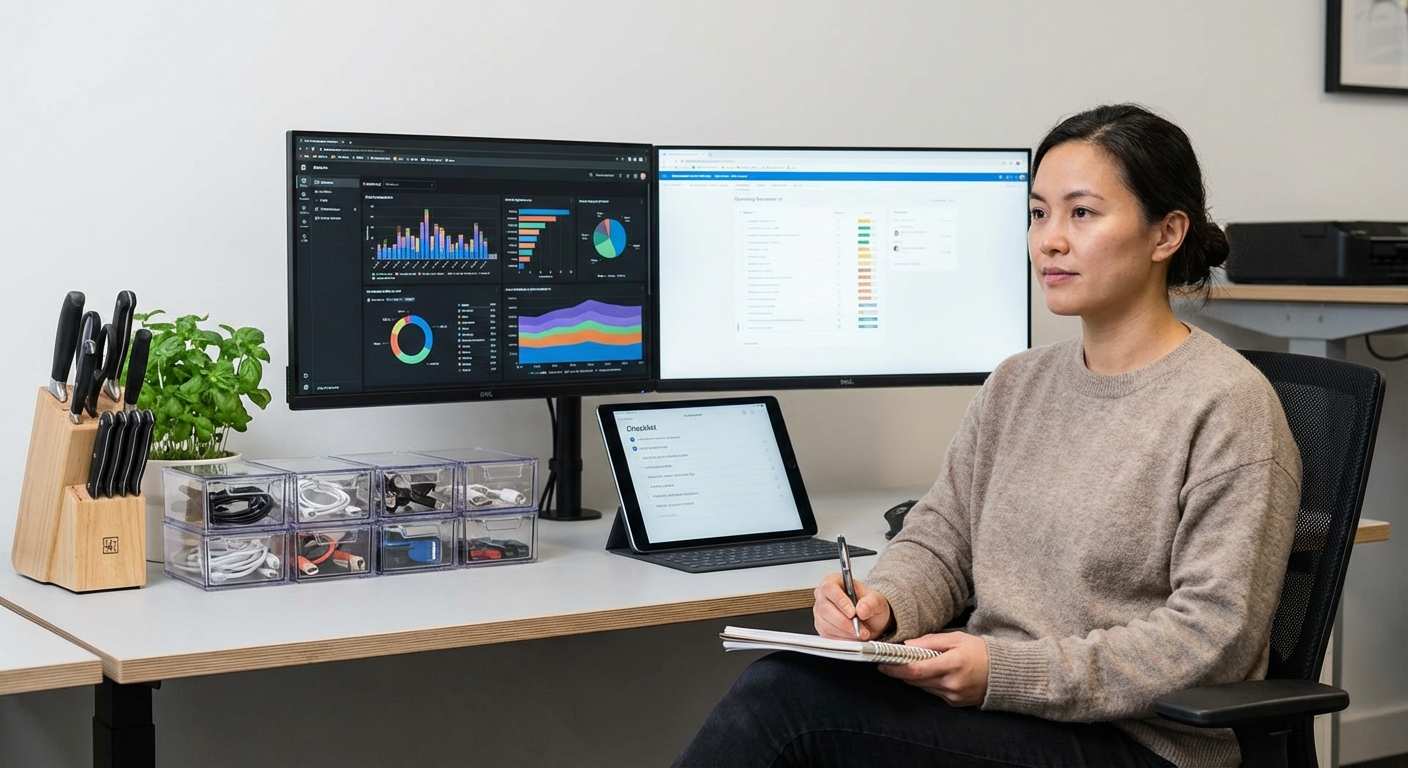
That sounds great for the GDP, but for you and me? It feels like pressure. As organizations lean harder on artificial intelligence to drive productivity, the expectation for human output is skyrocketing. We are expected to keep up with algorithms that never sleep, never eat, and never burn out. But you aren’t an algorithm. You are a human being with a limited battery and a brain that gets tired.
If we try to match this new pace with brute force, we are going to crash. We don’t need more hustle; we need a better operating system. Surprisingly, the answer to surviving this high-tech acceleration doesn't come from Silicon Valley. It comes from the kitchen.
The Core Idea: The 'Meeze' Mindset
If you have ever watched a high-end restaurant kitchen during the dinner rush, you have seen a miracle of logistics. Orders are screaming in, pans are flaring, and the heat is unbearable. Yet, the head chef isn’t running around screaming. They are standing there with an unshakeable, almost eerie sense of calm.
This isn’t magic. It is mise en place.
In French, the phrase literally means "put in place." On the surface, it sounds like a fancy way of saying "clean your room." But if you think that, you are missing the point entirely. Mise en place isn’t about being tidy; it is a philosophy of readiness. It is a commitment to preparation, process, and presence.
In the culinary world, the "meeze" is your religion. It means you do not start cooking—you do not even turn on the stove—until every single ingredient is chopped, measured, portioned, and placed in the exact spot where your hand will naturally fall to grab it. It is about removing friction before the friction even happens.
The goal isn't just to be organized. The goal is to separate the thinking from the doing. When the dinner rush hits—or in your case, when the emails start flooding in and the Slack notifications go haywire—you shouldn’t be wasting mental energy looking for a file, figuring out your password, or deciding what to do next. That thinking should have been done hours ago.
Real mise en place creates a system of "working clean." It means maintaining that order even when things go wrong. It is easy to be organized when nothing is happening. The true test of a professional is keeping that structure intact when the pressure is on.
Practical Steps to Chef-Level Productivity
You might not be dicing onions, but you are chopping up data, sautéing spreadsheets, and plating up presentations. The principles remain exactly the same. Here is how you apply the culinary code to your digital life to reclaim your sanity.
1. The Daily Meeze
This is the most critical habit you can build. In a kitchen, a chef never walks in and immediately starts cooking. They spend hours prepping. You need to do the same, relative to your workday.
Dedicate 30 minutes—non-negotiable—to your Daily Meeze. You can do this at the very end of your day (to set up tomorrow) or the very first thing in the morning. During this time, you are not "working." You are preparing to work.
- Clear the decks: Close every tab on your browser that isn't relevant to your first task.
- Scrub the inbox: Archive, delete, or flag emails. Do not leave them sitting there as "unread" landmines.
- Plot the timeline: meticulous planning is key. Don't just list tasks; slot them into specific hours.
- Prepare the tools: Open the specific documents, folders, and software you will need for your first major task.
When you sit down to start the actual work, there should be zero friction. You shouldn't have to decide where to start; the decision was already made during your prep time.
2. Knolling and Spatial Integrity
There is a concept related to mise en place called "knolling." It involves grouping like objects and aligning them in parallel or at 90-degree angles on the surface they are on. It sounds obsessive, but it serves a function: it allows you to scan your environment instantly.
In a digital context, this is about your "spatial integrity."
- The Physical Desk: If your physical workspace is cluttered with coffee cups, old receipts, and tangled cables, your brain is constantly processing that visual noise. Clear it off. Keep only what you are currently using within arm's reach.
- The Digital Desktop: Do not treat your computer desktop as a junk drawer. Group your files. Create folders for active projects and archive the rest.
- The Browser Bar: Use tab groups. If you are working on a marketing report, group those tabs. If you are doing research, group those. Do not let them bleed into each other.
I know how easy it is to let this slide. I work as a web developer and marketer, often juggling complex coding projects alongside creative ad campaigns. For years, I operated in chaos. I’d have fifty tabs open, code editors sprawling across two monitors, and Slack pinging every thirty seconds. I felt "busy," but I wasn't effective. I was drowning. It wasn't until I started treating my desk like a line cook's station—closing everything unrelated to the immediate task and using deep-work bursts—that I actually started making progress without feeling like my brain was on fire.
3. Clean As You Go (CLAYGO)
This is the golden rule of the professional kitchen: Clean As You Go. If you spill sauce, you wipe it immediately. If you finish with a knife, you wash it or put it away immediately. You never let the mess accumulate, because a messy station leads to cross-contamination and mistakes.
In knowledge work, "chaos accumulation" is invisible, but it’s deadly.
- The Micro-Reset: When you finish a task, take two minutes to "reset" your station. Close the tabs you are done with. File the document you just finished. Delete the screenshots you no longer need.
- The Digital Wipe-Down: Don't just close your laptop at the end of the day with 40 windows open. That is the equivalent of a chef leaving dirty pans in the sink overnight. It means you start tomorrow morning with a mess.
- Immediate Action: If you download a file, rename it and file it immediately. Do not leave it in the "Downloads" folder to rot.
Why It Works: The Science of Efficiency
You might be thinking this sounds like a lot of extra work for no reason. Why spend time organizing when you could be working? The answer lies in how your brain processes information.
Your brain has a limited amount of working memory. In psychology, we talk about "Cognitive Load Theory." This theory suggests that any mental effort used on things that aren't the task at hand is wasted energy. This is called "extraneous cognitive load."
Every time you have to search for a file, look past a stack of papers to find your mouse, or ignore a flashing notification, you are burning fuel. You are taxing your brain's "CEO"—the prefrontal cortex. When that CEO gets tired, your decision-making ability plummets, your willpower vanishes, and you start making mistakes.
By externalizing order—by putting the order into your physical and digital environment rather than trying to hold it all in your head—you free up processing power. You are reducing the extraneous load so you can focus on the "germane load," which is the actual difficult work of problem-solving and creating.
This isn't just anecdotal. Research confirms that visual-based instructions and organized environments reduce subjective cognitive load, which essentially means that when your space is clear, your brain perceives the work as easier and less stressful.
When you practice mise en place, you are protecting your mind from decision fatigue. You are saving your best energy for the work that actually matters, rather than burning it on navigating chaos.
Scaling Excellence
We are living in an era where speed is the default currency. The pressure to move faster is not going away. If anything, as we move deeper into this AI-driven economic cycle, it is only going to increase.
But speed without structure is just panic.
The best chefs in the world don't rush. They glide. They move with economy and grace because they have done the heavy lifting before the service even started. They respect their craft enough to prepare for it.
Adopting the mise en place method is about respecting your own work. It is about acknowledging that your energy is a finite resource that deserves to be protected. It is about finding a sense of stillness in the middle of the whirlwind.
So, tomorrow morning, before you dive into the emails and the meetings and the noise, stop. Take thirty minutes. Sharpen your knives. Wipe down your station. Put everything in its place. You will be amazed at how much heat you can handle when you are truly ready for the fire.