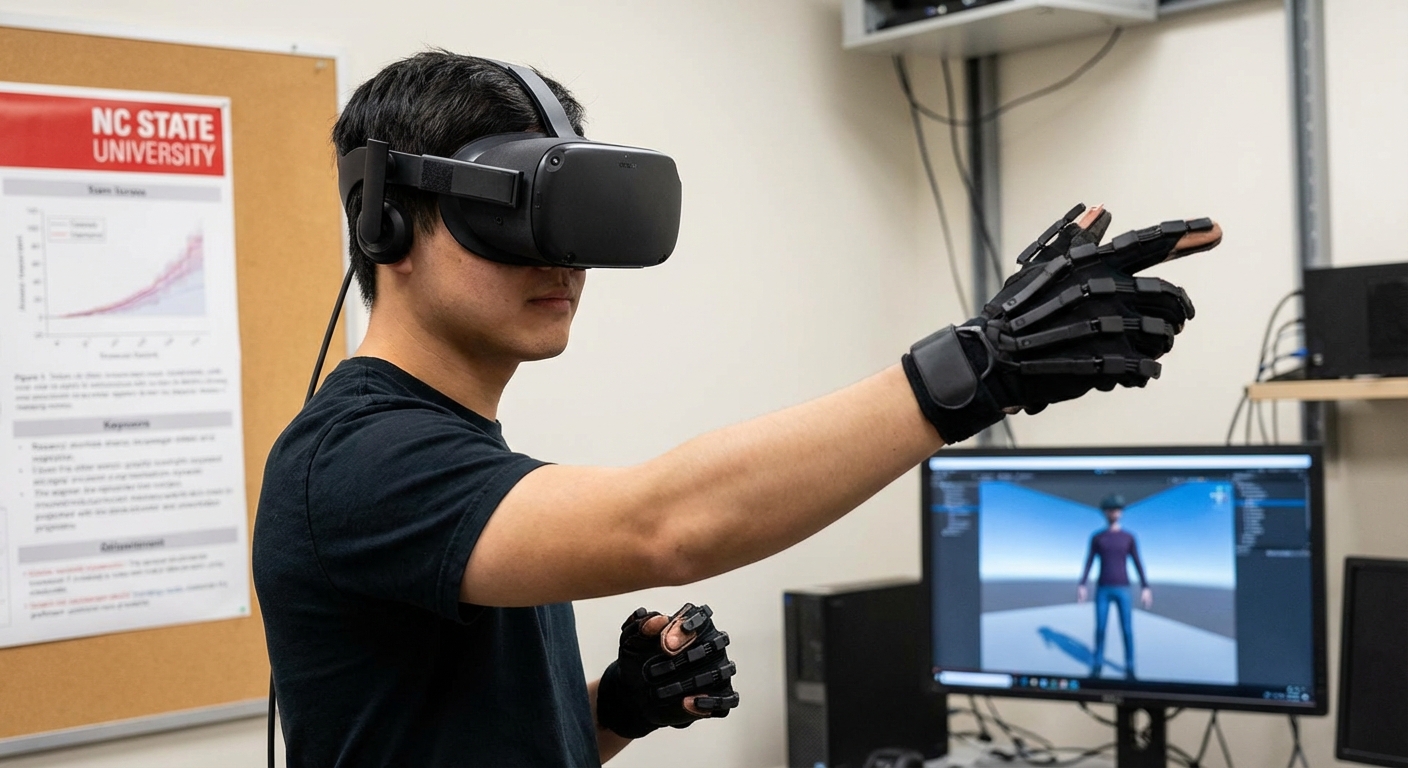
Just a few days ago, on March 2, 2026, researchers from North Carolina State University dropped a massive update on the world of virtual reality. They released a study slated for the IEEE Conference in South Korea that confirmed what many of us have suspected for a long time: families are getting worried. As VR headsets become as common as toasters in our living rooms, parents are demanding hard evidence on how these digital environments are actually shaping their children’s development.
They aren't just worried about eye strain or motion sickness anymore. They are worried about personality.
If you have ever felt a strange shift in your mood just by changing your clothes—putting on a sharp suit and suddenly feeling more authoritative, or slipping into gym gear and suddenly feeling more energetic—you have already touched the edge of a psychological phenomenon that is about to define the next decade of human interaction. It is called the "Proteus Effect."
For years, we assumed that our digital avatars were just puppets. We thought we were the puppet masters, pulling the strings of a digital character that looked however we wanted it to look. But the research is telling a very different, slightly more unsettled story. It turns out the strings go both ways. When you step into a digital skin, that skin starts to rewrite your behavior, your confidence, and even your empathy in the real world.
The Core Idea: The Digital Mirror
The phenomenon is named after Proteus, the Greek sea god who could change his shape at will. In mythology, Proteus was fluid and adaptable, shifting forms to suit the situation. In psychology, the Proteus Effect describes how you unconsciously adapt your behavior to match the characteristics of your digital avatar.
Here is how it works on a practical level. When you look in a mirror in the real world, you see yourself. You see your history, your flaws, your height, and your current state of health. Your brain has a "self-model" based on that reflection. But in a virtual environment, that mirror changes. You might look down and see that you are seven feet tall. You might see that you are incredibly muscular, or that you are wearing the uniform of a firefighter or a superhero.
Your brain is an efficiency machine. It is constantly looking for cues on how to act. When it sees this new reflection, it doesn't spend hours analyzing the philosophical implications of virtual reality. It simply accepts the new data. It says, "Okay, I see that I am tall and powerful. Therefore, I will act tall and powerful."
This is rooted in something called Self-Perception Theory. This theory suggests that we don't just act based on who we think we are; we figure out who we are by observing how we act and what we look like. It is a feedback loop. In the digital realm, because the visual cues are so strong and immersive, that feedback loop hits hard and fast.
You experience a moment of "deindividuation." This sounds technical, but it just means that your normal, everyday self-awareness fades into the background. You stop worrying about your real-world insecurities and start inhabiting the traits of the character you see on the screen. The mask becomes the face.
From Screen to Street
The most jarring part of the Proteus Effect isn't what happens while you are wearing the headset or holding the controller. It is what happens when you take it off.
Stanford University has been the epicenter of this research. In a series of landmark studies, they found that these behavioral shifts adhere to you like wet cement. In one experiment, participants were given avatars that were either taller or shorter than their actual height. They were then asked to perform negotiation tasks. The results were consistent: those with taller avatars negotiated more aggressively. They were less likely to back down and more likely to demand a fair (or unfair) split of resources.
But here is the kicker: they didn't just act tough in the game. When they were removed from the virtual environment and placed in a face-to-face setting immediately afterward, the "tall" participants continued to act more assertively. The digital confidence bled into their physical reality.
We see the same thing with attractiveness. When users were given avatars that were conventionally attractive, they became more social. They stood closer to other people in virtual spaces and disclosed more personal information. Later, in the real world, that social confidence remained. They were more willing to approach strangers and engage in conversation.
I know this dynamic intimately, though I learned it the hard way. I remember when I finally decided to quit gaming and doom-scrolling. For years, I had poured my energy into these immersive worlds. I spent thousands of hours building up characters that were strong, capable, and respected. When I was "in" the game, I felt like a leader. I was decisive and disciplined. But then the screen would turn off. I would look around my messy apartment, conscious of the weight I had gained and the work I was avoiding. The disconnect between my digital power and my physical reality became a source of deep shame. I realized I was letting the "hero" live on the server while the real me was wasting away. I had to stop pretending and start building that character in the real world, through the sweat of discipline and the silence of hard work.
The research confirms that my experience wasn't unique. The line between "virtual" and "real" is a lot more porous than we think. If you spend hours a day being someone else, you eventually bring a piece of them back with you.
Strategic Avatar Use
So, if we know that our digital appearance shapes our real-world behavior, we have a choice. We can let it happen accidentally, or we can use it strategically. We can use this "digital plastic surgery" to train our brains for better habits in the real world.
We are moving past the point of just playing games. We are looking at tools for self-improvement that leverage the brain's plasticity. If you are struggling with confidence, empathy, or physical motivation, you can curate your digital input to produce a specific physical output.
Here are four practical ways you can leverage the Proteus Effect right now:
Prime Yourself for Negotiation. If you have a difficult salary negotiation or a high-stakes business meeting coming up, use the "height hack." Spend fifteen minutes in a VR environment where your avatar is significantly taller than the other characters. Walk around, interact, and get used to the feeling of looking down (literally, not figuratively) on the situation. The research shows this primes your brain for assertiveness. You aren't being arrogant; you are simply adjusting your baseline for confidence before you walk into the real room.
The Superhero Protocol for Empathy. It sounds childish, but it works. If you are feeling cynical or disconnected from your community, embody a "heroic" avatar. Studies have shown that users who are given the ability to fly like a superhero in VR are significantly more likely to help someone pick up dropped pens or offer assistance in the real world immediately afterward. The experience of having "superpowers" seems to trigger a sense of responsibility and prosocial behavior. It reminds your brain that you are someone who helps, not someone who watches.
Visualizing the Athlete. If you are struggling to stick to a workout routine, your digital self-image might be part of the problem. If you constantly see yourself as sedentary or out of shape, your brain will defend that identity. To break this, use an avatar that looks like a fit, athletic version of yourself. Watching a digital "you" running, lifting, or competing can break the mental barrier. It creates a new standard for your brain to chase. It reduces the cognitive dissonance between "who I am" and "what I do."
Social Training for the Anxious. Social anxiety often stems from a fear of negative evaluation. A 2025 study showed that even participants with significant social challenges improved their confidence in economic games after interacting via "attractive" avatars. This isn't about vanity; it is about removing the fear of judgment. By practicing social interactions in a "skin" that you perceive as socially valuable, you lower the stakes. You build the muscle of conversation without the paralyzing fear of rejection, and that muscle memory stays with you when you meet people in the flesh.
Conclusion
The technology of 2026 is impressive, but the biology of the human brain hasn't changed much in thousands of years. We are creatures of imitation. We look for cues on how to behave, and we conform to the expectations set by our environment—and our appearance.
As we spend more time in digital spaces, we need to exercise what I call "digital intentionality." You cannot afford to be passive about the avatars you wear or the virtual environments you inhabit. If you spend your time in chaotic, aggressive, or dark digital worlds, do not be surprised if you find your real-world patience wearing thin.
On the other hand, if you approach your digital presence with discipline, you can use it as a training ground. You can use it to rehearse the character you want to become.
The goal isn't to escape reality. The goal is to return to reality better than you left it. Use the tools, understand the psychology, and make sure that when you step away from the screen, you are bringing the best version of yourself back into the room.