

It is March 3, 2026. You open your phone, and the first thing you see is a red arrow pointing down. Financial analysts are all over the news feeds, screaming about "renewed volatility" in the Middle East. They are using words like "caution" and "retreat." If you are like most people, your stomach drops. You feel an immediate urge to log into your brokerage account and sell, or at the very least, stop contributing to your 401(k). You feel like the world is crumbling because the last 48 hours have been chaotic.
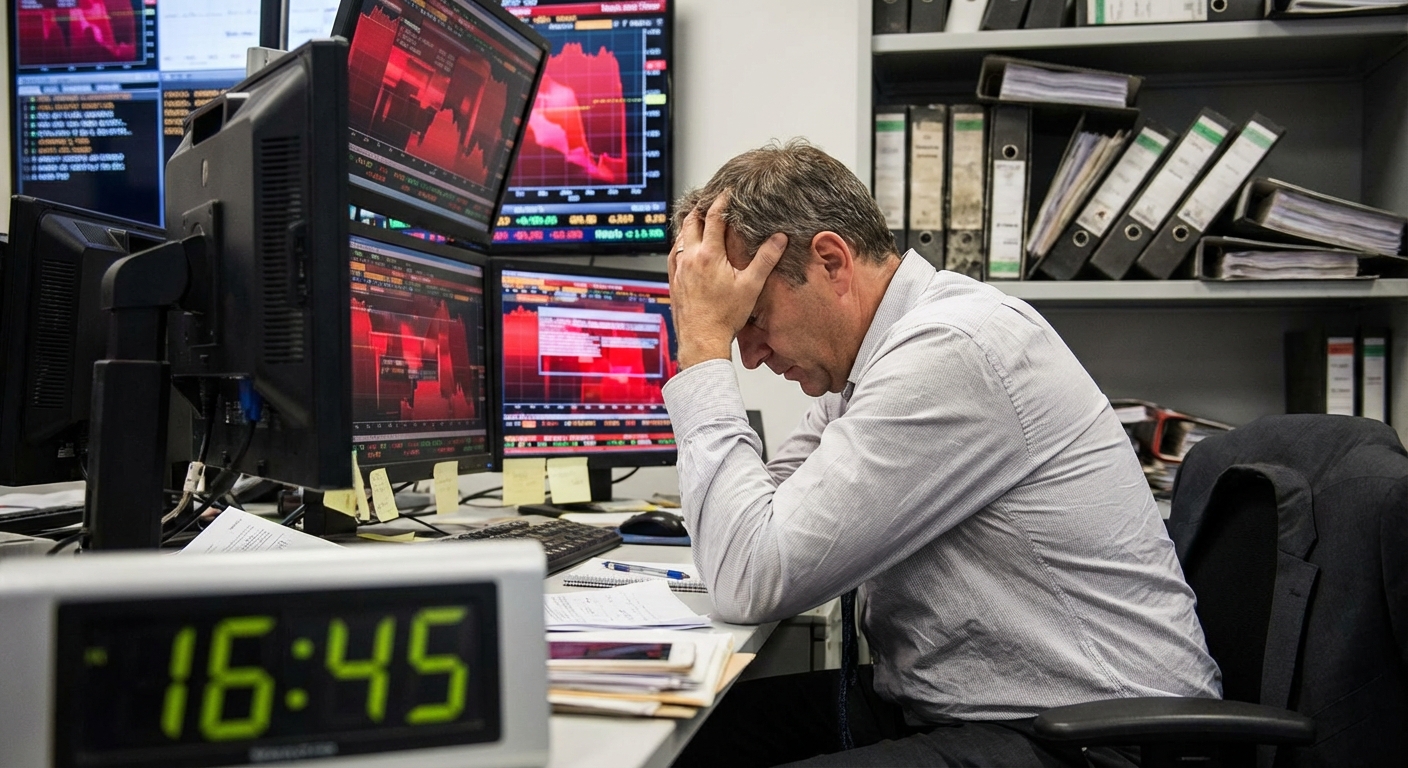
But here is the truth: You are falling for a cognitive magic trick. You are ignoring ten years of market history because of two days of bad headlines. This is the Recency Effect in action. It is a glitch in your biological software that convinces you the immediate past is the only timeline that matters. It makes you bad at investing, it ruins how you manage people, and it clouds your judgment in ways you probably don't even realize.
We need to talk about why your brain is wired to panic, why you can’t remember the middle of a list, and how to stop making long-term decisions based on short-term noise.
The Architecture of Recall
To understand why you make these mistakes, you have to understand how your memory is built. It isn't a video camera recording everything perfectly. It is more like a leaky bucket.
Psychologists call this the "Serial Position Effect." Imagine I read you a list of twenty words and asked you to repeat them back to me immediately. You would likely remember the first few words perfectly. That is the "Primacy Effect." Those first words had time to sink in; your brain processed them and moved them from your temporary workspace into your long-term storage—your brain's file cabinet.
Then, you would probably remember the last few words on the list. That is the Recency Effect. These words didn't make it to the file cabinet yet; they are still sitting on your mental desktop. They are active in your short-term "working" memory.
But the words in the middle? They are gone. They fell into the "valley of oblivion."
The problem is that your working memory is incredibly weak. Research suggests that the average human can only hold between 5 and 9 items in their short-term memory at once. Think of your working memory like a receptionist who can only juggle seven phone calls. If an eighth call comes in, the receptionist has to hang up on someone to take it.
The Recency Effect happens because that new information—the "last thing you heard"—bumps out the older, often more important data. When you read a terrifying headline about the market, it takes up all the available space in your working memory. The ten years of steady growth you experienced prior to that headline? That data is in the file cabinet, effectively locked away, while the panic is sitting right on your desk, staring you in the face.
The Efficiency Trap
You might be wondering why we are built this way. If this bias makes us bad investors and poor decision-makers, why didn't evolution fix it?
The answer is simple: Survival is more important than accuracy.
For most of human history, the Recency Effect was a brilliant survival tool. It is a mental shortcut—a heuristic—designed to save energy. If you are walking through the jungle and you hear a twig snap behind you, that sound is the most relevant piece of data in your universe. It doesn't matter that the jungle was quiet for the last three hours. It matters that there is a noise right now that might be a predator.
Your brain prioritizes recent data because, in a state of nature, the present moment is where the danger lives.
However, we don't live in a state of nature anymore. We live in a data-rich, complex environment where this efficiency becomes a trap. We confuse "recent" with "relevant."
I see this constantly in the world of sports. Every year in early March, the NFL holds its Scouting Combine. Scouts watch hundreds of college players run, jump, and lift. In 2024, a player named Xavier Worthy ran the 40-yard dash in a record-breaking 4.21 seconds.
It was an incredible feat. Suddenly, teams were scrambling. They were willing to overlook years of game tape—the actual evidence of how good a football player he was—because of a 4.21-second sprint that happened recently. The flashy new data point overwrote the boring, historical data. The Recency Effect blinded them to the bigger picture because the new number was shiny and fresh.
I battle this in my own life, too. I work in web development and marketing, often juggling multiple projects at once. I have noticed that my "internal importance meter" is broken. If I receive a slightly annoyed email from a client about a minor font size issue, my brain treats it like a five-alarm fire.
I will drop deep, critical work on a major project just to fix that minor issue, simply because the email is the last thing I saw. It feels urgent because it is recent. I have to use serious discipline to ignore that impulse, knowing that just because a notification is new doesn't mean it is important. If I let the Recency Effect run my workday, I would spend 40 hours a week putting out tiny fires and never building the house.
Strategic Safeguards
If you want to stop being jerked around by the latest headline or the last email, you cannot rely on willpower alone. You need systems. You need "strategic safeguards" that force your brain to look at the whole picture, not just the snapshot.
Here are three methods to strip the bias out of your decisions.
1. Diligent Record-Keeping
One of the most dangerous places for the Recency Effect is the workplace performance review. If you are a manager, you probably think you are fair. But if you rely on your memory to review an employee, you are likely only judging their last three weeks of work.
If an employee screwed up a project yesterday, you will rate them poorly, even if they were perfect for the previous eleven months. Conversely, if they pulled a miracle out of a hat last week, you might give them a raise they don't deserve, forgetting a year of mediocrity.
The fix is boring but essential: Keep a log. Maintain a digital document for every major decision or person you manage. Update it weekly. When it comes time to make a decision, do not trust your gut. Read the log. Force your brain to acknowledge the "middle" of the list, not just the end.
2. Implement "Cooling-Off" Periods
In high-stakes environments, speed is the enemy of accuracy. If you receive shocking new information—whether it’s a market crash, a bad medical test result, or a resignation letter—do not act immediately.
The Recency Effect is strongest immediately after the event. The information is burning hot in your working memory. You need to let it cool down so it can be filed away into long-term memory, where it can be compared properly against historical context.
Wait 24 to 48 hours before making a pivot. If you are angry at a spouse, wait. If you are scared about your stocks, wait. This cooling-off period allows the emotional "noise" of the recent event to fade, allowing your rational mind to regain control.
3. Seek Divergent Perspectives
We often live in echo chambers that reinforce the "now." If everyone around you is panicking about the geopolitical situation, your Recency Bias gets amplified.
You need a "designated dissenter." Before you make a big move, talk to someone who hasn't been exposed to the same sequence of events you have. If you have been glued to the news feed for six hours, call a friend who has been offline all day. Explain the situation to them.
Because their working memory isn't clogged with the same immediate panic triggers as yours, they can often see the long-term trend that you are missing. They aren't smarter than you; they just aren't suffering from the same temporal blindness.
Moving Toward Stillness
The modern world is designed to exploit the Recency Effect. News tickers, social media feeds, and push notifications are all engineered to keep you in a state of constant, "now-focused" anxiety. They want you to forget the past and fear the future so you keep clicking in the present.
Breaking free from this requires a commitment to stillness and silence. It requires the discipline to turn off the input, step back, and look at the timeline of your life with a wide-angle lens.
Don't let the last thing you heard be the only thing that matters. Trust the data, trust the history, and trust the long-term plan you made when you were calm, not the panic you feel when you are overwhelmed.

See also in Mindset
10 Mindset Shifts to Help You Achieve Your Goals
20 Mindset Strategies for Family Holiday Dynamics
15 Quotes on Overcoming Winter Blues
The Surprising Way Gratitude Physically Changes Your Brain
The ‘Spoon Theory’ Everyone with Burnout Needs to Understand
How the ‘Doorway Effect’ Causes You to Forget Why You Walked Into a Room