Remember when Friday night automatically meant cheap margaritas and waking up with a headache that lasted until Sunday brunch? For a long time, that was the script. If you had a bad week, you drank to forget it. If you had a good week, you drank to celebrate it. The beverage was the punctuation mark for every sentence in our lives.
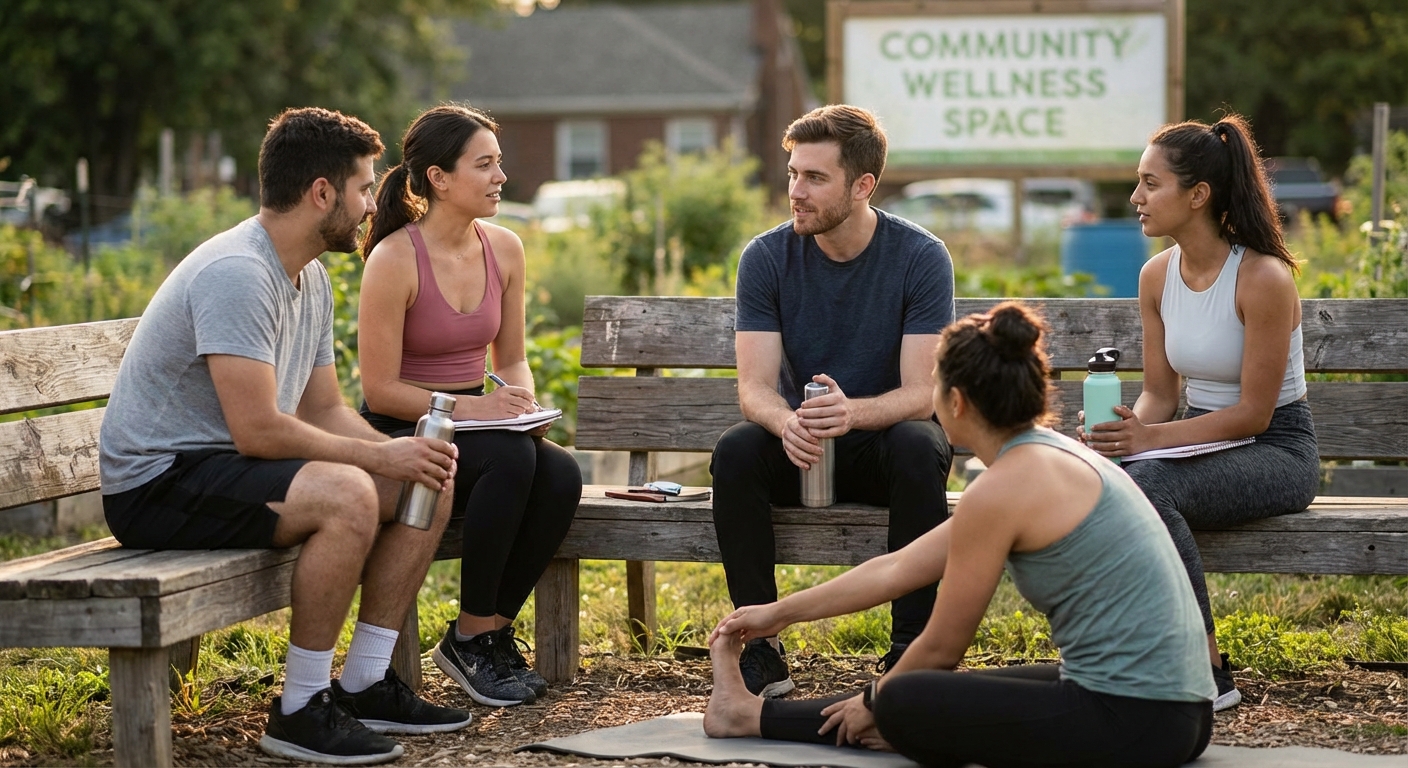
But the script has flipped. We are seeing a massive cultural pivot, and for the first time in decades, it isn't being led by doctors or concerned parents. It is being led by us—Millennials who are frankly just too tired, too busy, and too focused on longevity to deal with the hangover.
We are entering the era of the "Health Hour."
As of early 2026, the data is undeniable. Participation in challenges like Dry January isn't just a quirky internet trend anymore; it is a massive societal behavior shift. Roughly 30% of adults gave up alcohol to start the year, but the real story is that nearly half of them have no intention of going back to "normal" drinking. They are tapping the brakes permanently.
This isn't about puritanism. It isn't even necessarily about addiction in the traditional sense. It is about performance. It is about reclaiming your time, your money, and your brain power in an economy and a world that demands all three.
The Core Idea: Intentionality Over Intoxication
For years, the conversation around alcohol was binary. You were either a "drinker" or you were "sober." If you were sober, people assumed you had a problem. If you were a drinker, you were just normal. There was no middle ground.
That binary is dead.
We are seeing the rise of the "damp" lifestyle. This is the defining characteristic of the modern sobriety movement. It is not necessarily about hitting rock bottom and swearing off every drop of alcohol forever (though for some, that is the right path). Instead, it is about intentional consumption.
It is the difference between eating a slice of cake at a wedding and eating a whole cake because you are bored on a Tuesday.
Millennials are approaching alcohol the same way we approach our budgets or our gym routines. We are asking: "Is this serving me?"
Current stats show that alcohol participation among our generation has dropped to around 81%, an all-time low. The "Work Hard, Play Hard" mantra has been replaced by a desire for stillness and stability. When you are juggling a career, perhaps raising young children, and trying to navigate a volatile housing market, you cannot afford to lose your entire Saturday to brain fog.
This shift is driven by a new identity: the "sober curious." This isn't a label for people who are judging others. It is a label for people who are experimenting with their own biology. They are testing a hypothesis. The hypothesis is that life is actually more fun, more vivid, and more manageable when you aren't chemically sedated.
One in five drinkers now says they intentionally skip alcohol when out with friends. They aren't staying home. They are just choosing clarity. They are redesigning their social architecture to prioritize connection over intoxication.
The Practical Toolkit: How to Navigate the Shift
If you decide to cut back or quit, the hardest part isn't usually the physical withdrawal (unless you are a heavy dependent user, in which case, seek medical help). The hardest part is the social friction.
How do you stand in a bar without a drink in your hand? What do you do with your hands? How do you deal with that one friend who keeps asking, "Come on, just have one"?
You need a toolkit. You cannot just remove the alcohol and leave a vacuum; you have to replace it with something better.
1. Functional Substitution
Don't just drink tap water while everyone else is having complex, interesting cocktails. That feels like a punishment. You need to upgrade your options.
The market has exploded with "active" non-alcoholic beverages. These aren't just sugary sodas. We are talking about drinks infused with functional ingredients like L-theanine or GABA. These compounds are designed to help you relax physiologically without the intoxication.
This is functional substitution. You get the ritual—the cold glass, the complex flavor, the act of sipping—but instead of a depressant, you are consuming something that supports your nervous system. It signals to your brain that it is time to unwind, but it keeps your "CEO" (your prefrontal cortex) online and fully functional.
2. Redesign Your Rituals
I know what it feels like to be physically weighed down by your own choices. When I lost 110 pounds and finally put a stop to my binge eating habits, the biggest change wasn't the number on the scale. It was the mental clarity. The brain fog lifted. I realized that what I consumed—whether food or drink—dictated my reality.
You have to apply that same discipline to your social life. If your only way of hanging out with friends is sitting in a dark room drinking fermented yeast, you need new rituals.
We are seeing a 478% growth in things like "soft clubbing" and coffee-based social events. People are looking for "nostalgic comfort." They want to play board games, go bowling, hike, or just sit in a coffee shop.
Propose an alternative to the bar. You will be surprised at how many of your friends are secretly relieved they don't have to spend $50 on rounds of shots. Be the architect of the new plan.
3. The "No" Muscle
You have to get comfortable with the word "No."
In the beginning, you might feel the need to explain yourself. "Oh, I'm on a health kick," or "I have an early meeting." Eventually, you realize you don't owe anyone an explanation.
"I'm not drinking tonight." That is a complete sentence.
The people who matter won't care. The people who care usually have their own uncomfortable relationship with alcohol that they are projecting onto you. That is their battle, not yours.
The Sobriety Dividend: Money and Biology
Let's talk about the bottom line. The "Sobriety Dividend" is real, and it pays out in two currencies: cash and cellular health.
The Financial Payoff
Drinking is expensive. It’s not just the cost of the drinks, which have skyrocketed with inflation. It’s the Uber ride home. It’s the late-night food delivery you order because your inhibition is gone. It’s the unproductive day that follows where you don't cook, so you order takeout again.
Estimates suggest that moderate drinkers who quit save between $2,600 and $5,200 annually. That is a significant amount of money.
That is a vacation. That is a massive dent in a student loan. That is an investment account contribution. In an economy where every dollar counts, pouring your disposable income into a glass is becoming a luxury fewer of us can justify.
The Biological Audit
Then there is the health data. We are the first generation to have widespread, immediate access to the hard truth about alcohol. We can't plead ignorance. We know that alcohol is a Group 1 carcinogen.
We also have smartwatches. We can see the data in real-time.
You can physically see your Resting Heart Rate spike after a night of drinking. You can see your Heart Rate Variability (HRV)—a key metric of stress and recovery—tank. You can see your sleep quality disintegrate. Even if you "pass out" quickly, alcohol destroys your REM cycles, which means you aren't actually recovering.
Researchers have found that even a single month of abstinence leads to stabilized blood pressure and deeper sleep cycles. Your liver enzymes normalize. Your skin clears up.
When you look at the data on your wrist, the glamour of the "party lifestyle" fades pretty quickly. It’s hard to argue with a biological imperative.
Why This Stick
This isn't a fad. Fads are about fashion or novelty. This is a structural shift in how we live.
The non-alcoholic beverage market is projected to surpass $1.5 trillion globally in 2026. This means the infrastructure is now in place to support this lifestyle. You can go to a steakhouse, a dive bar, or a wedding and find high-quality options that don't involve ethanol. The stigma is evaporating because the market has validated the demand.
We are changing the definition of fun. We are decoupling "good times" from "spirits."
For a long time, we thought alcohol gave us courage, connection, and relaxation. But as we step back, we are realizing it was often just borrowing happiness from tomorrow.
Millennials are deciding we want to keep our happiness for today and tomorrow. We are choosing stillness over chaos. We are choosing discipline over distraction. And frankly, we are better for it.