It is March 2026, and if you are anything like me, you are tired. We were promised that the digital revolution would simplify our lives, and then we were promised that Artificial Intelligence would handle the drudgery so we could be creative. Instead, we have ended up in a "Digital-Real Hybrid" reality where the noise never stops. The notifications differ, but the overwhelm is the same. We are drowning in content, algorithmic suggestions, and the pressure to be constantly optimized.
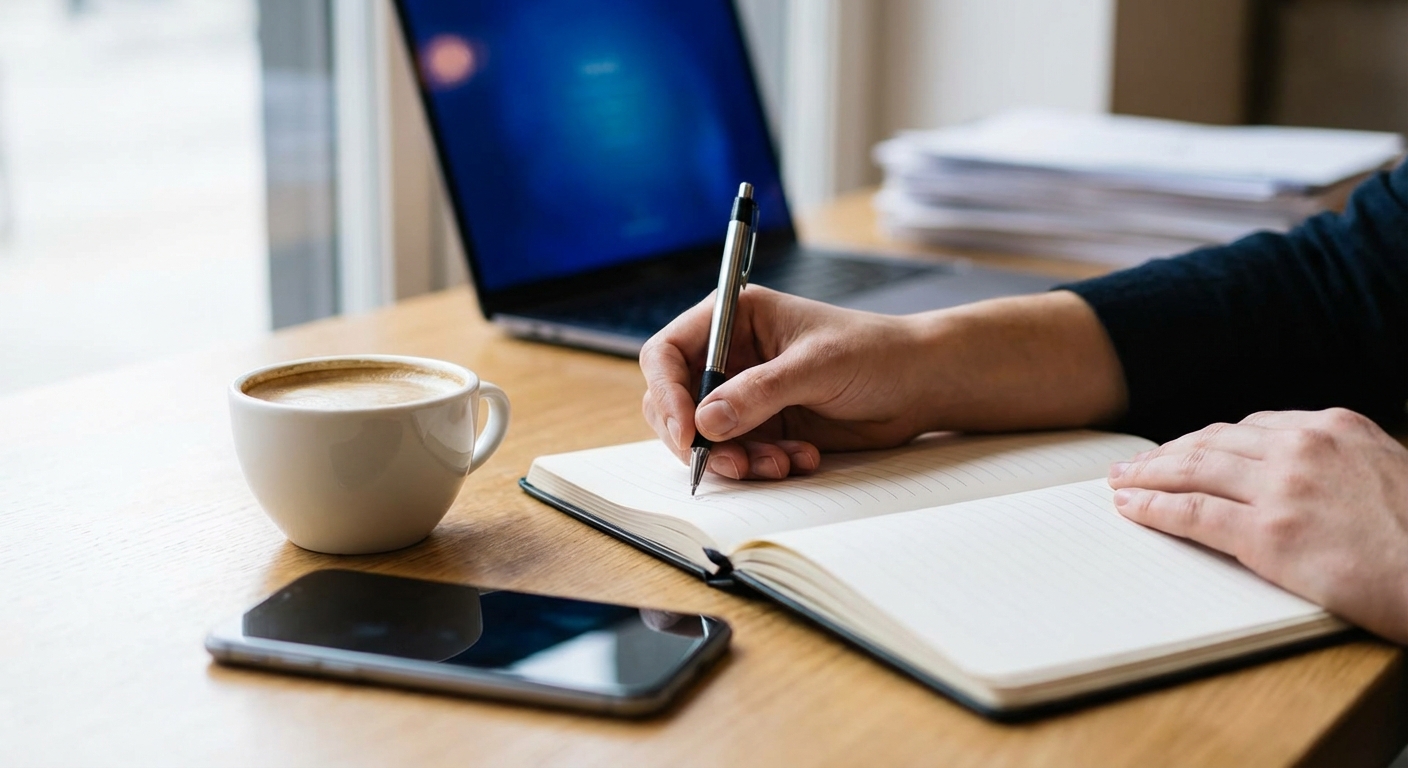
This is why, right now, we are seeing a massive resurgence in what I like to call "slow rituals." People are trading their smart assistants for fountain pens. We are seeing a revival of analog tools because we have realized that efficiency is not the same thing as peace. We are looking for a way to reclaim our own minds from the machine.
Interestingly, the solution that is gaining the most traction isn't new. It is a practice that dates back to the candle-lit mornings of the Victorian era, was formalized in the 1930s, and was made famous by Julia Cameron in the 1990s. It is the practice of "Morning Pages." But to understand why this simple act of writing three pages by hand is saving people’s sanity in 2026, we have to look back at the men and women who used it to survive the first industrial age.
The Victorian Blueprint for Sanity
We tend to think of the Victorians as stiff and repressed, but they understood something about "interiority" that we have forgotten. They lived through a time of rapid industrialization, where the pace of life was speeding up faster than the human nervous system could handle. Their solution was the "Morning Hour."
Writers like Anthony Trollope and Charles Dickens didn't just write when they felt inspired. They treated the early morning as a sacred, disciplined window for labor and reflection. Trollope is perhaps the most famous example of this pragmatic discipline. He was the Postmaster General—a man with a demanding day job—yet he wrote dozens of novels. His secret was simple: he sat at his desk at 5:30 a.m. every single morning. He wrote for three hours before his "real" work began.
But it wasn't just about productivity. For many in the 19th century, this early morning time was for "Commonplacing" or keeping a Commonplace Book. This was a repository for thoughts, prayers, scraps of information, and observations. It was a method of "emptying the cup." They understood that you cannot face the day with clarity if your mind is still cluttered with the debris of yesterday.
This concept of "spiritual hygiene"—cleaning out the mind before the day begins—is the ancestor of modern morning pages. It was formalized further in 1934 by a woman named Dorothea Brande. In her book Becoming a Writer, she instructed her students to write "immediately upon waking." She wasn't asking for great literature. She was asking them to tap into the unconscious mind before the world rushed in. She knew that in the liminal space between sleeping and waking, we have access to a stillness that vanishes the moment we check the news or speak to another human being.
The Modern Reincarnation: Spiritual Hygiene
Fast forward to today. The practice has been popularized for decades by Julia Cameron, author of The Artist's Way, but in 2026, it has taken on a new urgency. Cameron calls this practice "Morning Pages," and she defines them as three pages of longhand, stream-of-consciousness writing done first thing in the morning.
Cameron often describes this not as a writing tool, but as a spiritual path. She calls it "spiritual hygiene." Think of it this way: you wouldn't go days without brushing your teeth, yet we often go years without brushing out our minds. We let resentments, worries, grocery lists, and half-formed anxieties pile up in the corners of our brains until we can barely think straight.
The goal of Morning Pages is to get all of that "stuff" out of your head and onto the paper. It is a brain dump. It is not meant to be art. It is not meant to be read by anyone, not even you. It is simply the act of moving the mental clutter from the inside to the outside.
I have found this to be true in my own life. As someone who holds to the Orthodox Christian faith, I rely heavily on prayer and the discipline of stillness to keep my footing in a chaotic world. However, I often found that when I tried to enter a state of quiet prayer or contemplation, my brain was too loud. It was shouting at me about deadlines, awkward conversations, and future fears. I realized that I needed a mechanism to clear the floor before I could stand in the silence. Morning Pages became that broom. By writing down the noise, I could finally hear the silence beneath it.
The Science of the "Censor"
You might be wondering, "Why does it have to be the morning? Can't I just journal after work?"
As a pragmatic coach, let me be clear: You can, but it won't work the same way. The magic of this practice lies in the timing.
Our brains have a built-in safety mechanism that Julia Cameron calls the "Censor." This is the logical, critical, left-brained voice that edits everything you say and do. It is the voice that says, "That's a stupid idea," or "You forgot to pay the gas bill," or "Who do you think you are?"
The Censor is like a relentless security guard. But here is the secret: in the early morning, specifically in the hypnopompic state (the transition from sleep to wakefulness), the security guard is still groggy. He hasn't had his coffee yet. He is slow to react.
When you write immediately upon waking, you are sneaking past the Censor. You are accessing your honest, unvarnished self before your defenses go up. This allows you to process emotions and thoughts that you would normally suppress during the day.
If you wait until the evening, your Censor is wide awake. He has been working out all day. If you try to write then, you will likely end up writing a polished, performative entry about how your day went, rather than a raw, honest dump of what is actually weighing on your soul. The morning window is the only time you have direct access to the mainframe without the firewall.
Practical Steps to Build the Ritual
If you are ready to reclaim your mental sovereignty from the digital noise, here is how you build this sacred window. It is simple, but it is not easy. It requires discipline.
1. The Three-Page Mandate
You must write three pages. Not one, not two, but three. This is specific and non-negotiable. Why? because the first page and a half are usually easy. They are surface-level complaints: "I'm tired," "I need to buy eggs," "I'm worried about that meeting."
The real work happens on the third page. That is where you run out of easy things to say and start tapping into the deeper currents of your mind. That is where the breakthroughs happen. If you stop at two pages, you are just skimming the surface. You have to push through the boredom to get to the truth.
2. Longhand Only
In our tech-obsessed world, this is the hardest rule for people to follow. You cannot type your Morning Pages. You must use a pen and paper.
Typing is too fast. most of us can type as fast as we think, which means we can gloss over our feelings. Writing by hand is slow. It is laborious. This slowness is a feature, not a bug. It forces your brain to slow down. It connects your hand to your heart in a way that a keyboard never can. The tactile sensation of the pen moving across the paper is grounding. It anchors you in the physical world, which is exactly what we need in 2026.
3. Absolute Privacy (No Rereading)
These pages are for your eyes only. In fact, for the first few months, you shouldn't even read them yourself. If you know you are going to read them later, or that someone else might see them, you will start performing. You will try to sound smart or spiritual or "together."
The point of this exercise is to be a mess. You need a place where you can be petty, angry, whiny, and illogical. You need to drain the "sediment" of your psyche so that it doesn't clog up your day. Tear the pages up, burn them, or stuff them in a box. Just don't edit them.
Conclusion: Reclaiming Your Interior Life
We are living in an era where our attention is the most valuable commodity on earth. Corporations, algorithms, and devices are fighting a war for your focus every single minute of the day.
The Victorian practice of Morning Pages is a declaration of independence. It is a way of saying, "The first hour of my day belongs to me. Not to my email, not to the news, not to the demands of others."
It is a return to analog sovereignty. By taking twenty minutes to sit in silence with a pen and paper, you are strengthening your ability to be alone with your thoughts. You are building the muscle of stillness. In a world that is constantly screaming at you, the ability to be quiet and listen to your own interior life is the ultimate superpower. Buy the notebook. Set the alarm. reclaiming your mind starts tomorrow morning.