

It is March 2026, and if you are anything like me, you are absolutely exhausted by the constant noise of the digital world. We were promised that the next great app update would bring us peace of mind, or that a new wearable device would finally help us relax. But let’s be honest: staring at a screen to find tranquility feels like a bad joke. We are drowning in notifications, pings, and an endless stream of information that demands our attention every waking second. That is why the kitchen—specifically the act of baking bread—has emerged as the new sanctuary for those of us seeking real, tangible stillness.
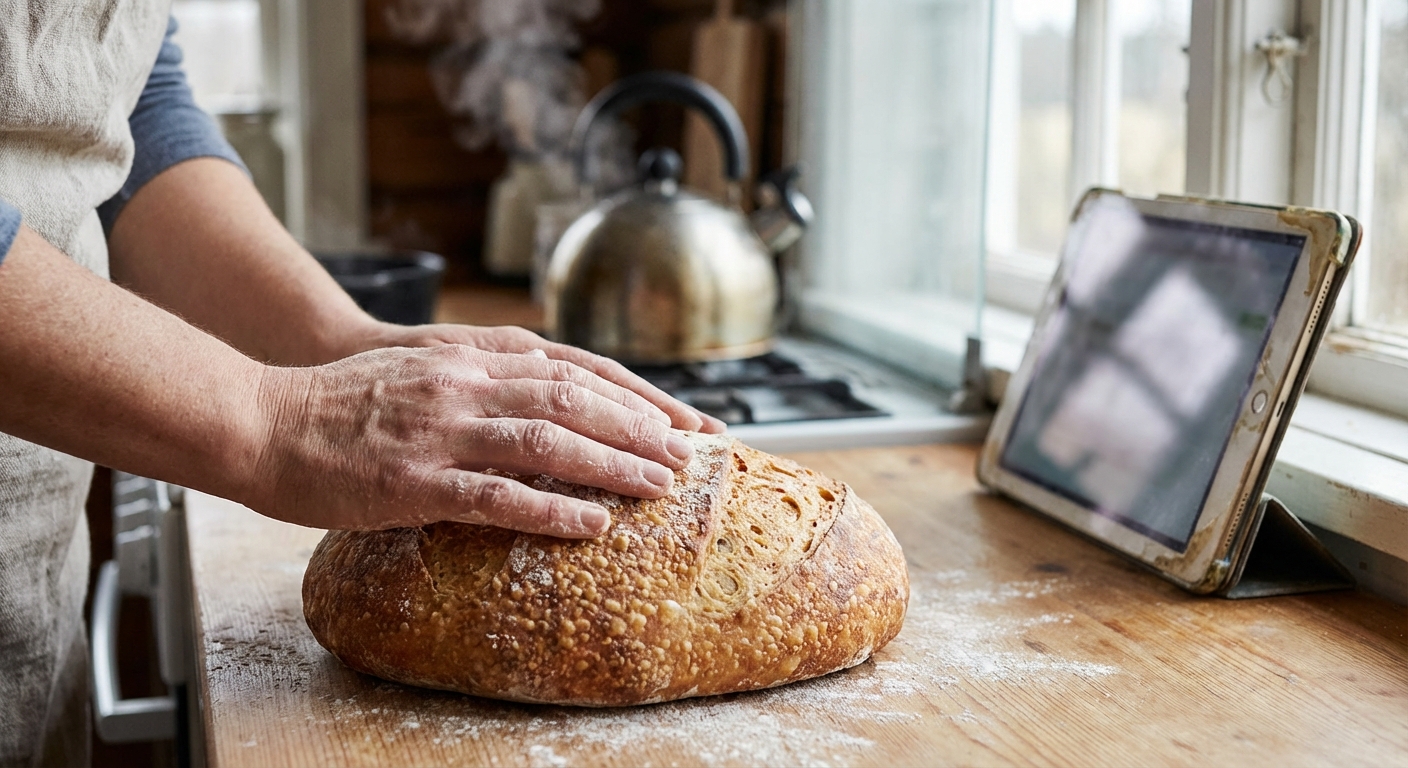
We are seeing a massive cultural shift right now. It is being called the "Analog Revolution," and it makes perfect sense. People are trading in their subscriptions for sourdough starters. We are seeing record participation in community baking events because we are collectively realizing that you cannot swipe your way to inner peace. We need to build it with our hands. This is not about becoming a master chef; it is about finding a way to shut out the chaos and ground yourself in the present moment.
The Active Pursuit of Stillness
For years, we have been told that the only way to quiet the mind is to sit in a dark room, close our eyes, and empty our thoughts. But for many of us, that is just not realistic. When I sit in total silence, my brain actually gets louder. I start making to-do lists or worrying about emails I haven't sent. This is where baking bread changes the game. It is not passive; it is active silence. It is a discipline that requires your full attention, effectively pushing out the mental clutter because you simply do not have the bandwidth to worry about work when you are trying to keep a hydration level correct.
Experts are calling this "Culinary Contemplation." It works because it anchors you in the "now" through sensory feedback. You have to touch the sticky dough, smell the yeast activating, and watch the texture change. It is a full-body experience. Pop culture is catching on, too. Even major celebrities are opening up about how "bread therapy" has become their primary tool for staying grounded during high-stress tours. They aren't doing it for the carbs; they are doing it because the rhythmic, repetitive nature of the process forces the brain to slow down.
Unlike the abstract nature of trying to "think about nothing," baking gives you a singular, concrete focus. You are not trying to escape reality; you are engaging with it on a fundamental level. You are taking simple, chaotic ingredients—flour, water, salt, yeast—and through discipline and patience, transforming them into something structured and nourishing. That transformation in the bowl often mirrors a transformation in the spirit.
A Guide to Finding Silence in the Flour
If you are ready to trade your scrolling thumb for flour-dusted hands, you need to approach this with the right mindset. This isn't just about making a sandwich loaf; it is about the process. Here is how you can turn a Sunday afternoon bake into a practice of deep, restorative silence.
- The Discipline of Preparation. In professional kitchens, this is called mise en place, or "everything in its place." Before you even touch the flour, you measure out every ingredient into its own bowl. You clear the counter. You put your phone in the other room. This step provides a "cognitive container." By organizing your physical space, you are signaling to your brain that it is time to organize your internal space. It reduces decision fatigue. You don't have to scramble for the salt later; it is already there. You are creating a safe, ordered environment where you can drop your guard.
- The Rhythm of the Work. Once the water hits the flour, the real work begins. The kneading process—push, fold, turn—is rhythmic and repetitive. This is where the magic happens. You commit to this motion for ten or fifteen minutes. It allows your subconscious to take over. You aren't thinking about the motion anymore; you are just doing it. This physical exertion is a healthy way to release frustration. You can channel your stress into the dough. It is a safe place to put your anger or your anxiety. You physically work it out of your system until the dough becomes smooth and elastic.
- The Practice of Waiting. We live in a world of instant gratification. We want same-day delivery and instant downloads. Sourdough does not care about your schedule. It requires a "Quiet Ferment." You have to cover the bowl and walk away. You have to wait. This is a crucial lesson in patience. You cannot rush the rise. If you try to force it, the bread will fail. This forces you to accept that some things take time, and that is okay. It teaches emotional regulation by forcing you to slow your internal clock to match the natural speed of the yeast.
- Creative Expression. Finally, right before the bake, you score the bread. You take a lame (a razor blade) and slash the top of the loaf to control how it expands in the oven. This is your moment of artistic expression. It is a small act of creation that says, "I made this." It creates a sense of agency and control, which is often what we feel we are lacking in our daily lives.
Why Your Brain Loves the Bake
There is a biological reason why you feel better after wrestling with a ball of dough for an hour. Your body is not designed to be in a constant state of "fight or flight," yet modern life keeps our cortisol levels spiked almost 24/7. When you engage in repetitive, hands-on tasks, you trigger a physiological relaxation response.
Your brain's CEO—the prefrontal cortex—gets tired just like your muscles do. When it is overworked by decision-making and screen time, you feel burned out. Baking gives that part of your brain a break while activating the sensory processing centers. The tactile pressure of kneading stimulates the vagus nerve, which activates your parasympathetic nervous system. This is your body's built-in brake pedal. It lowers your heart rate and drops your cortisol levels.
I know this dynamic personally. I used to lose hours of my life to gaming and doom-scrolling, chasing that cheap dopamine hit. It left me anxious, wired, and feeling like I had wasted my life. When I swapped the controller for a mixing bowl, I found that the slow, physical work of kneading gave me the peace I was desperately scrolling for. The difference was that the peace from baking lasted, whereas the feeling from the screen vanished the second I locked my phone.
Furthermore, there is a chemical release of oxytocin—the bonding hormone—when we prepare food. This is an ancient biological drive. We are wired to find satisfaction in providing sustenance. When you pull a loaf of bread out of the oven, the smell hits your olfactory system, which is directly connected to the emotional center of your brain. It triggers feelings of safety, home, and comfort that no digital notification can ever replicate.
Conclusion
We are living in a time that demands high resilience. The world is noisy, fast, and often overwhelming. We need tools to manage that pressure, but we don't need more apps or more abstract theories. We need to get back to basics.
Baking bread is a sustainable ritual. It is a productive way to process the stress of the week. Unlike hours spent on social media, which leaves you with nothing but eye strain, baking leaves you with a tangible reward: a loaf of bread that you can eat, share, and enjoy. It nourishes you physically and mentally.
So, this weekend, leave the phone on the charger. Get a bag of flour. Get your hands messy. Embrace the silence of the kitchen and the discipline of the dough. You might find that the stillness you have been searching for has been waiting for you in the kitchen all along.

See also in Self-Improvement
Self-Esteem Journal Prompts for Confidence
10 Steps to Creating a Personal Mission Statement
5 Beliefs I Changed to Be Happy
How Expressive Writing Reduces Anxiety Symptoms in Clinical Studies
How to Be Happy Consistently
12 Tips for Overcoming Procrastination