There is a reason you feel a distinct, almost physical wave of relief when you sink your hands into warm earth. It is not just the fresh air or the escape from your email inbox; it is a biological reaction that acts almost exactly like a drug, changing your brain chemistry the moment your skin touches the soil.
The Biology of Getting Your Hands Dirty
We often think of gardening as a sweet, passive hobby for retirees, but the medical community is finally catching up to what growers have known for centuries. On March 5, 2026, the East of England Ambulance Service Charity announced a massive initiative to build a "wellbeing garden" specifically for paramedics and frontline staff in Peterborough. They aren't doing this to make the station look pretty. They are doing it because the evidence is now undeniable: gardening is a potent tool for regulating a nervous system that has been fried by trauma and high-pressure stress.
This shift toward "social prescribing"—where a doctor might tell you to plant tomatoes rather than just handing you a pill—is gaining traction because the science backs it up. The soil itself is alive with a specific bacterium called Mycobacterium vaccae. This isn't a pathogen that makes you sick; it’s a friendly microbe that we evolved alongside.
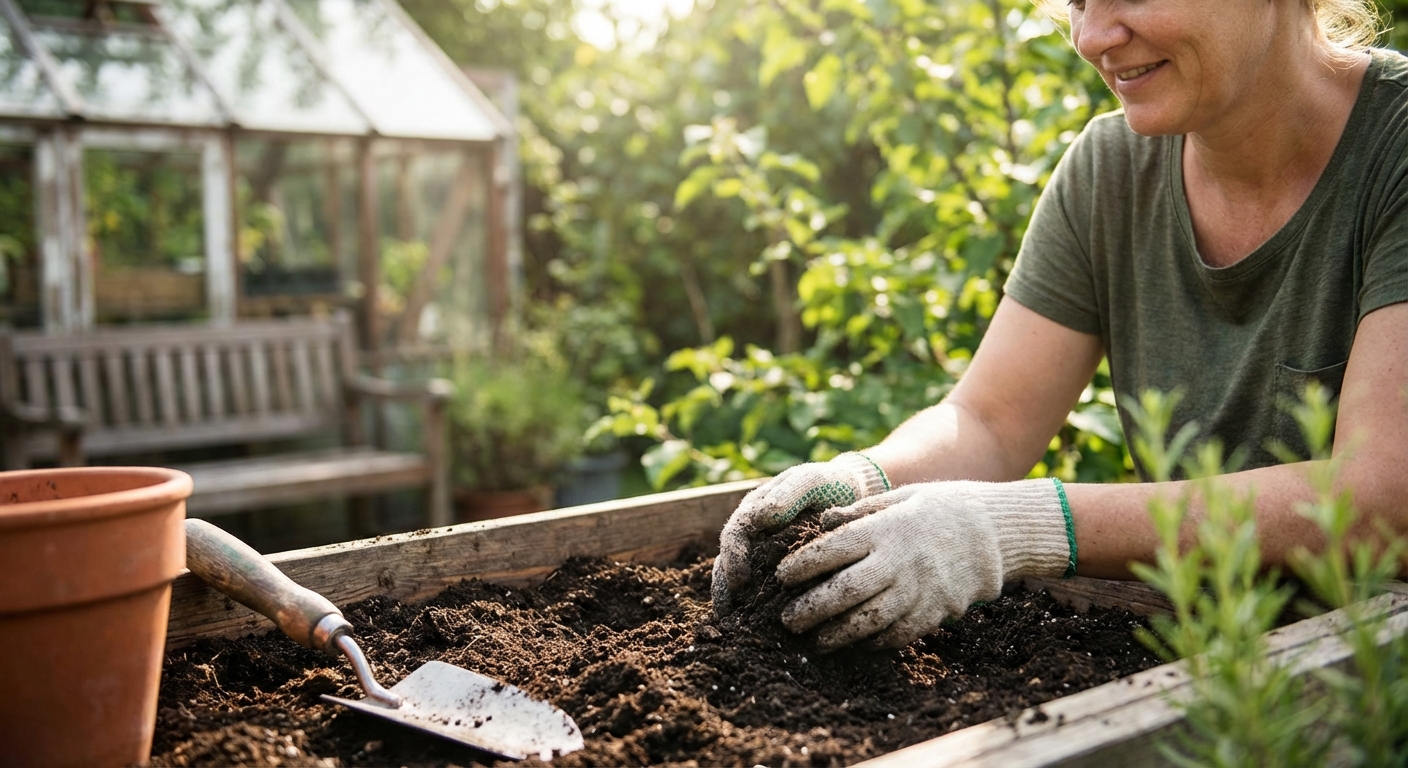
When you dig in the garden, you inhale microscopic particles of this bacteria and absorb them through your skin. Once they enter your system, they trigger the neurons in your brain to produce serotonin. This is the same neurotransmitter that pharmaceutical antidepressants try to regulate. Essentially, healthy soil acts as a natural antidepressant.
A systematic review released in 2025 confirmed that Social and Therapeutic Horticulture (STH) yields a large and significant effect in reducing symptoms of depression. We aren't talking about a minor mood boost. Participants in these programs often moved from "moderate" depression scores to "normal" ranges after just 8 to 12 weeks. The dirt is doing the work.
Moving From Passive Consumption to Active Nurturing
While the bacteria handle the chemistry, the act of gardening addresses the psychological crisis of our modern lives. We live in an era of "attention fatigue." Your brain is constantly bombarded by notifications, headlines, and the artificial urgency of the digital world. You are in a state of passive consumption, reacting to stimuli rather than creating anything.
Gardening forces a hard reset. It demands what psychologists call "attention restoration." You cannot scroll through a raised bed. You cannot speed-run a harvest. You have to slow down to the metabolic rate of a plant, which is agonizingly slow compared to high-speed internet. This shift in pacing allows your cortisol levels to drop and your focus to reset.
I know this struggle personally. I work in web development and marketing, often juggling complex projects that keep my brain spinning at a thousand miles an hour. It is easy to confuse being "busy" with being productive, and easier still to lose your soul in the noise. For a long time, I looked for peace in all the wrong places.
I found that the discipline required in the garden mirrors the discipline I have found in my Orthodox Christian faith. In the Orthodox tradition, we prioritize stillness and silence—keeping a "watch" over our hearts. When I am weeding a row of carrots, I am forced into that same state of quiet contemplation. There is no noise, only the task at hand. It creates a space where the frantic energy of the day dissipates, replaced by a profound silence that allows me to actually hear myself think. It isn't magic; it is the result of deliberate, physical action that quiets the mind.
This is where the concept of "Lemonading" comes into play. It’s a trend that has taken hold in 2026, but the principle is timeless. It is the practice of transforming anxiety—whether it’s about the climate, the economy, or your job—into creative output. Instead of worrying about food prices, you grow squash. Instead of stressing about the future, you plant a tree that won't mature for ten years. It shifts you from a victim of circumstance to an active participant in your own survival.
Designing a Garden for Restoration
If you want to harness these benefits, you don't need a farm. You need a strategy. A "mental health garden" looks different than a production farm. The goal isn't just maximum yield; it is maximum restoration.
Here is how you build one:
Commit to No-Dig Gardening
To get the full benefit of those microbial antidepressants, you need to protect the soil life. Tilling and double-digging destroy the fungal networks and bacterial colonies that make the soil potent. By using a "no-dig" method—layering compost on top rather than churning the earth—you create a rich ecosystem teeming with M. vaccae. You are essentially farming the bacteria that help your brain. Plus, it is far less back-breaking work, which removes a barrier to entry when you are already feeling low.Create Experiential Landscapes
Your brain’s emotional centers, specifically the amygdala and hippocampus, are directly wired to your sense of smell and touch. Design your space to trigger these senses. Don't just plant for visual appeal. Plant rosemary, lavender, and mint along the pathways where you will brush against them. The release of these essential oils provides an immediate physiological signal to your body that you are in a safe place. In 2026, we call these "experiential landscapes," but it’s really just common sense: surround yourself with life that you can physically interact with.Practice Successional Growth
One of the hardest parts of depression is the feeling of permanence—the idea that things will always be this bad. Gardening teaches the opposite. It teaches successional growth. Crops fail. Pests arrive. Frost kills the peppers. In the garden, a dead plant isn't a failure; it’s compost for the next living thing. Adopting this mindset helps build resilience. You learn to view setbacks not as personal indictments, but as part of a cycle. When you lose a crop, you don't quit; you plant something else that thrives in the cooler weather. This builds self-efficacy—the belief that you have the power to affect your outcome.
The Future is Green and Gritty
We are entering a time where we have to take responsibility for our own mental resilience. The systems around us are loud, chaotic, and often draining. We cannot wait for the world to slow down for us. We have to carve out spaces of silence and sanity with our own hands.
Gardening offers a unique combination of biological support and psychological empowering. It exposes you to beneficial microbes that lift your mood, it forces your brain into a state of restorative quiet, and it proves to you, day after day, that you are capable of nurturing life.
The next time you feel the weight of the world pressing down on you, don't just reach for your phone. Go outside. Put your hands in the dirt. It isn't just a distraction. It is a prescription, and it works.