You have been told that sobriety is a test of character, a measure of how tough you are, but that is a dangerous lie that keeps good people sick.
For generations, society has treated addiction as a moral failing. The narrative goes something like this: if you really loved your family, if you really wanted to keep your job, or if you simply had a stronger backbone, you would just stop. This perspective treats recovery like a muscle that you simply need to flex harder. But if you have ever tried to "white-knuckle" your way through a craving at 11 PM on a Tuesday, you know that muscle fails.
It fails not because you are weak, but because you are fighting a biological war with the wrong weapons.
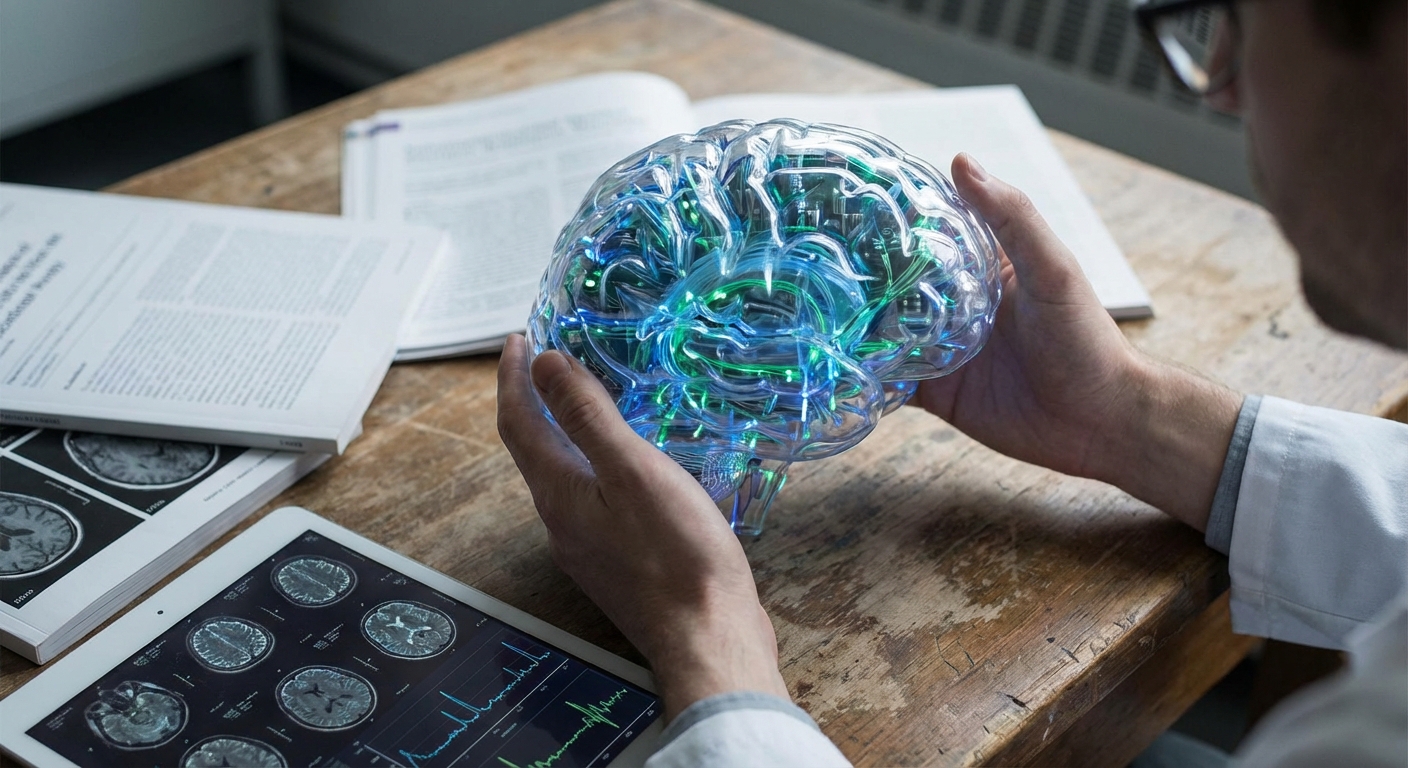
New research released just this month has fundamentally changed the conversation. As of March 2026, we now have concrete evidence from Michigan State University confirming that addiction is a "biological rewiring," not a choice. We are looking at a physical alteration of the brain’s hardware, specifically a protein called DeltaFosB that acts like a genetic master switch.
This isn't just about bad habits. It is about a brain that has been hijacked. When we understand the mechanics of this hijack, we can stop shaming ourselves for lacking willpower and start building systems that actually work.
The Core Idea: It’s Not You, It’s Your Hardware
Let’s get the science out of the way, but I’ll keep it simple because I’m not a neuroscientist—I’m a guy who reads the data so you don't have to.
The Michigan State study identified that DeltaFosB accumulates in the hippocampus, the part of your brain responsible for memory and learning. Think of this protein as a layer of cement. Once it sets, it creates a permanent, compulsive drive for the substance that completely overrides your logical decision-making centers.
In a healthy brain, there is a hierarchy of survival needs. Air comes first, then water, then food, then shelter, and eventually social connection. Your brain rewards you with dopamine when you satisfy these needs because it wants to keep you alive.
In an addicted brain, that hierarchy gets scrambled. The substance doesn't just join the list; it jumps to the top. It bypasses the prefrontal cortex—your brain's CEO, the part that says, "maybe we shouldn't do this"—and goes straight to the survival center.
When you are in the grip of active addiction, your brain is screaming that the substance is as vital as oxygen. Trying to fight that signal with "willpower" is like trying to stop a freight train by holding up a piece of paper. The train doesn't care about the paper. It’s going to run right over it.
This is why the "moral muscle" myth is so damaging. When we tell people to just "be stronger," we are asking them to use their prefrontal cortex to defeat a survival instinct. But under stress, the prefrontal cortex is the first thing to go offline.
The Depletion Trap
Here is the reality of human psychology: willpower is a battery, and it is a small one.
Psychologists call this "ego depletion." Every time you make a decision, resist an urge, regulate an emotion, or focus on a difficult task, you drain that battery. By the end of the day, or even after a particularly stressful hour, your battery is flat.
I remember when I finally quit smoking and vaping. For years, I thought I just needed to be tougher. I’d stare at the pack, grit my teeth, and tell myself "No." I treated every craving like a wrestling match. But by 4 PM, after a stressful client call or a drop in blood sugar, my resolve vanished. I wasn't weak; I was just exhausted. It wasn't until I stopped relying on my "no" and started changing my environment—physically removing the triggers and finding something else to do with my hands—that it finally stuck.
This depletion is compounded by something called "allostatic load." This is the cumulative burden of chronic stress and life events. Recovery places a massive stress load on your brain. You are removing your primary coping mechanism (the substance) while simultaneously trying to fix the wreckage of your life.
Your brain enters a state of "anti-reward." You don't just feel neutral; you feel below baseline. You are irritable, anxious, and uncomfortable in your own skin. This is a physiological state, not a mood swing. When your allostatic load is high, your willpower battery drains twice as fast.
If your only strategy is to "try hard," you are guaranteeing failure because you cannot maintain peak effort 24 hours a day, 7 days a week. Eventually, you have to sleep. Eventually, you will get hungry, angry, lonely, or tired (HALT). And in that moment of weakness, if you are relying on grit, the biological imperative will win.
Systems Over Strength
If willpower is a finite resource, what is the alternative? The answer lies in systems.
We need to shift from internal grit to external structure. We need to design our lives so that we don't have to make so many difficult choices. This is about friction.
In product design, "friction" is anything that makes a user work harder to get what they want. Companies like Amazon want zero friction—they want you to buy with one click. In recovery, we want to reverse that. We want to add massive friction to the behaviors we want to stop and remove all friction from the behaviors we want to encourage.
This is often called "Environmental Design."
If you are trying to stay sober, relying on your ability to say "no" to a drink at a party is a high-risk strategy. A systems approach means not going to the party in the first place, or driving your own car so you can leave the second you feel uncomfortable.
It means pre-preparing your meals so you don't have to make food decisions when you are "hangry." It means having a list of three people you can call immediately when a craving hits, so you don't have to think about who to dial.
Statistics back this up. Recovery success is significantly higher in "sober living environment dynamics." Why? Not because the people in sober living homes have more willpower, but because the environment makes the right choice the path of least resistance. Peer-led support demonstrates 20% higher treatment retention rates because the burden of decision-making is shared by the group, not carried alone.
A Strategy-First Framework
So, how do we apply this? We stop trying to be heroes and start being strategists. Here is a framework based on the latest data, designed to bypass the need for superhuman willpower.
1. Execute, Don't Motivate
Forget about waiting for motivation. Motivation is a feeling, and feelings are fickle. Focus on execution. This means treating your recovery like a job. You show up whether you feel like it or not. You follow the schedule whether you are inspired or depressed. By automating your day—wake up, pray or practice silence, exercise, work, meeting—you remove the need to make decisions. Fewer decisions mean a fuller battery for when you really need it.
2. The Helper Therapy Principle
One of the most powerful tools available is what experts call the "Helper Therapy Principle." Research shows that engaging in community support—where you are the one helping others—can reduce relapse risk by 35%.
This works because it flips the script. When you are helping someone else, you are no longer the "patient" or the "victim." You are a person of value. It provides a biological "refill" of dopamine and serotonin that self-isolation cannot provide. It also creates a layer of accountability. It is harder to let yourself down when you know someone else is counting on you to be there for them.
3. Manage the Stress Load
You have to accept that your brain is under heavy load. You cannot ignore this. You must actively manage your stress to keep your "anti-reward" system from taking over.
This doesn't mean you need to go on a retreat. It means incorporating simple, physiological tools into your day. Breath control is effective because it speaks directly to your nervous system, bypassing your racing thoughts. The Christian Orthodox tradition has long understood the power of stillness and silence to quiet the mind. Whether through prayer, reading Scripture, or simply sitting in quiet contemplation, these practices lower your cortisol levels and protect your limited reserve of self-control.
4. Respect the Biology
Finally, stop fighting the biology. If the March 2026 study tells us anything, it’s that the rewiring is real. If you have a broken leg, you don't try to walk it off; you use crutches.
In recovery, your "crutches" are your meetings, your sponsor, your therapist, and your routine. They are not signs of weakness; they are the necessary tools for navigating a world with a brain that has been compromised. Leading organizations like the American Medical Association now emphasize that addiction is a treatable chronic illness. Treating it with willpower is like trying to treat asthma with positive thinking. It ignores the physical reality of the condition.
Conclusion
Recovery is not a test of your soul. It is a management process for a chronic medical condition.
When we let go of the idea that we need to be "strong," we gain the freedom to be smart. We can stop beating ourselves up for every slip and start looking at our systems to see where the friction was missing. We can stop white-knuckling and start building a life where we don't have to hold on so tight.
You don't need more willpower. You need a better strategy. You need to respect the biological reality of your brain and build a fortress of habits, community, and faith around it. That is how you stay standing—not by fighting the wave, but by building a boat.