

We tend to treat our comfort zones like a cozy living room. We imagine a static, safe space where we can rest, recover, and feel secure. We assume that if we stay inside, the walls will stay put, preserving a nice little area where we are the masters of our domain.
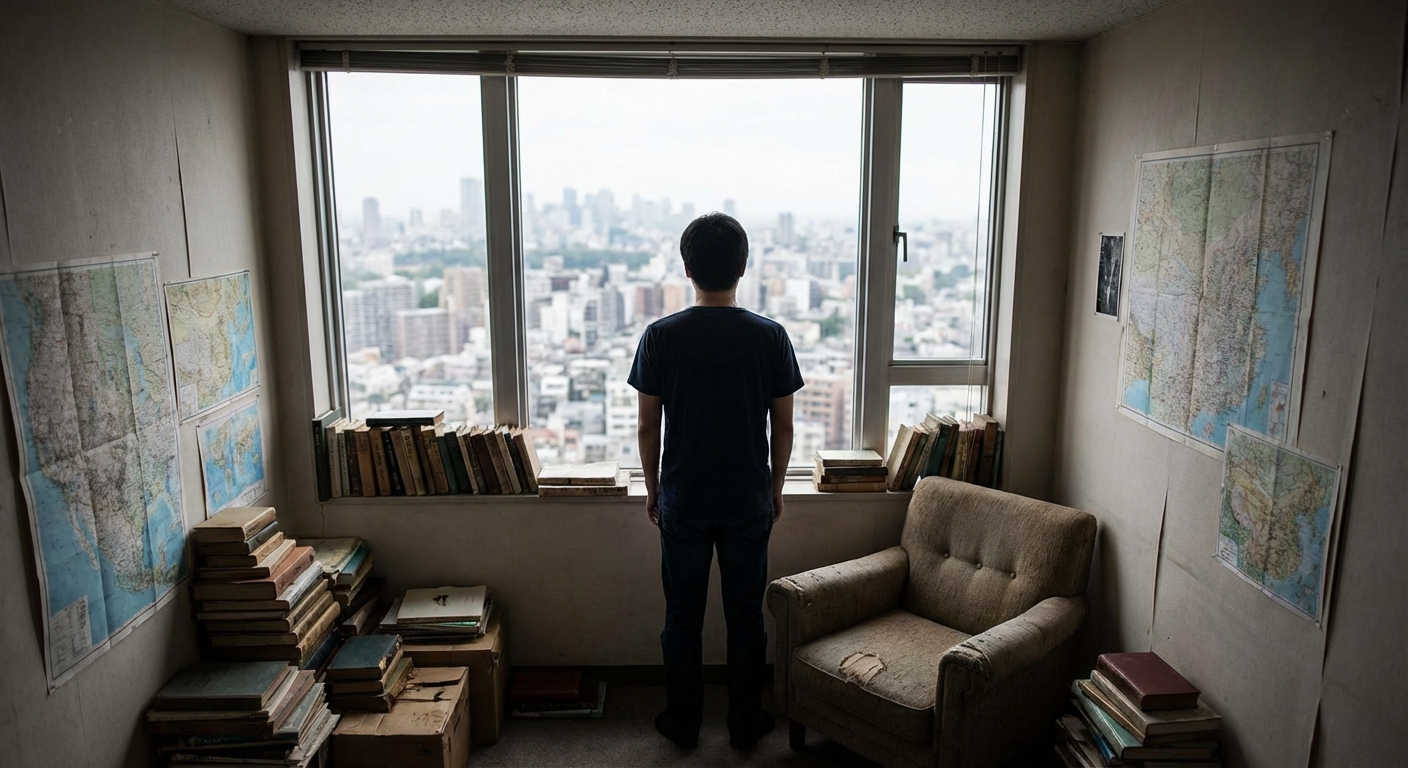
But that is a lie.
Your comfort zone is not a room; it is a muscle. And like any muscle in the human body, the moment you stop using it, it begins to atrophy. It doesn't just stay the same size while you relax. It actively shrinks. The boundaries of what you consider "safe" or "doable" encroach inward, inch by inch, until the world feels overwhelming and your capacity to handle life creates a suffocating sense of claustrophobia.
If you have noticed that small tasks suddenly feel like mountains, or that making a simple phone call sends your heart rate spiking, it isn't because the world has gotten harder. It is because your perimeter has collapsed. The safety you sought has become a cage.
Here is why that happens, and how you can push the walls back out.
The Science of a "Shrinking" World
To understand why this happens, we have to look at how your brain handles uncertainty. Your brain is an efficiency machine. Its primary job is to keep you alive while burning as little glucose as possible. When you repeat the same routine, eat the same food, and talk to the same three people every day, your brain goes into autopilot. This is efficient, but it comes at a terrible cost.
Neuroplasticity—the brain’s ability to wire new connections—relies on novelty and challenge. When you remove those elements in the name of "comfort," your brain stops mapping new terrain.
Recent research highlights exactly how dangerous this state of stagnation can be. A major study recently published by the University of Minnesota Medical School reveals that apathy—often disguised as being "content" or "comfortable"—significantly reduces a person's exploratory behavior, physically altering how the brain processes decision-making. The study found that while anxiety makes us frantic, apathy makes us blind. It shuts down the desire to learn from the environment.
When you stop exploring, your brain interprets the unknown not just as "new," but as a threat. This creates a feedback loop. You avoid a small risk because it feels uncomfortable. Your brain tags that risk as "dangerous." Next time, the fear is stronger, so you retreat further.
This also violates the "Sweet Spot" of performance, known in psychology as the Yerkes-Dodson Law. This law suggests that we need a moderate amount of stress—arousal—to function well. Too much stress causes panic, but too little stress causes distinct cognitive decline. If you live your life at zero stress, you aren't preserving your energy; you are eroding your competence. You are telling your nervous system that it no longer needs to be ready for action.
The Hidden Cost of Stagnation
We often stay in our shrinking zones because of a cognitive glitch called "Status Quo Bias." This is a deep-seated preference for things to stay exactly as they are. It is driven by loss aversion, which is the psychological reality that the pain of losing something creates twice the emotional impact as the joy of gaining something.
We are terrified of losing our current level of comfort, so we refuse to gamble on a better future. But here is the paradox: by trying to protect the status quo, you actually destroy it.
I learned this the hard way physically. Years ago, I was carrying an extra 110 pounds of body weight. My "comfort zone" was a cycle of binge eating and inactivity. It felt safe because it was familiar. I knew exactly what a pizza would taste like; I didn't know what it would feel like to be hungry or to sweat in a gym. I was terrified of the discomfort of change. But that "safety" was actually a slow death. It wasn't until I accepted that hunger and physical exhaustion were necessary—and actually good for me—that I lost the weight and stopped the binging. I had to realize that the pain of discipline was far less severe than the pain of regret.
When you refuse to move, you don't just stand still. You become more sensitive to uncertainty. This is called emotional habituation. If you never expose yourself to the cold, a cool breeze feels like a blizzard. If you never have a difficult conversation, a slightly awkward pause feels like a social catastrophe.
This hypersensitivity is the hidden tax of the comfort zone. You think you are buying peace, but you are actually buying fragility. You are training yourself to break under the slightest pressure.
Practical Steps to Reclaim Your Territory
You do not need to skydive tomorrow. In fact, grand gestures often fail because they trigger the "fight or flight" response too intensely, causing you to retreat even further. The goal is not to traumatize yourself; the goal is to expand your perimeter through calculated, tactical strikes.
Here is how you push back the walls:
Micro-Dose Discomfort.
Instead of overhauling your life, introduce tiny disruptive elements. If you always take the same route to work, take a different one. If you always shy away from eye contact, hold it for three seconds with a cashier. These are not life-or-death risks. They are signals to your brain that "new" does not equal "deadly." This prevents the amygdala hijack—that panic response—and allows your rational brain to process the experience.The "Stretch" Intervention.
Identify a task that sits just outside your current ability. It should feel difficult but possible. Maybe it is signing up for a class where you know no one, or volunteering to lead a project you feel 80% qualified for. Research suggests that when we self-select these challenges, specifically those that involve helping others or learning a skill, we see a massive spike in life satisfaction. You are proving to yourself that you can survive the initial friction of incompetence.The Pre-Mortem Visualization.
Anxiety thrives on vague threats. We stay in our comfort zone because we worry about "what if." Defeat this by running a "worst-case scenario" drill. If you take this risk, what is the absolute worst thing that happens? Write it down. Usually, the worst case is embarrassment or a minor loss of time. Once you define the monster, it stops being a monster and starts being a manageable problem.Reframe Anxiety as Entry Fees.
Stop viewing a racing heart or a sweaty palm as a sign to stop. Reframe those physical sensations as the "entry fee" for growth. When you feel that tension, tell yourself: "This is what it feels like to get stronger." In the Christian Orthodox tradition, there is a deep understanding that struggle and ascetic effort are necessary for spiritual health. The same applies to your psychological health. That tension isn't a stop sign; it's a growing pain.
Conclusion
A comfortable life is a beautiful thing, but a comfort zone is a dangerous place to live permanently. It promises safety, but it delivers atrophy. It promises peace, but it delivers a fragility that makes true peace impossible.
The walls are always moving. If you do not push them out, they will push you in.
Look at your life today. Where have you become so devoted to safety that you have become a prisoner? Pick one small area—one conversation, one habit, one routine—and break it. Step outside the perimeter. It will feel cold and uncertain for a moment. But that chill is just the feeling of your world getting bigger.

See also in Self-Improvement
20 Ways to Celebrate Small Wins This Season
12 Practical Steps to Learning to Go with the Flow
How Circadian Rhythm Disruption Is Linked to Depression and Anxiety
12 Ways to Find Joy in Everyday Moments
How to Stop Consuming Microplastics and How Harmful Are They?
7 Steps to Turn Self-Improvement Desires into Reality