As of today, March 5, 2026, a significant debate is raging just north of the border. Sleep researchers are issuing urgent warnings regarding British Columbia’s decision to adopt permanent Daylight Saving Time. While the politicians argue about convenience and economy, the scientists are pointing to something far more fundamental: biology. They argue that the loss of morning light exposure during the winter months will significantly disrupt public health. It sounds dramatic, but they are talking about a massive disconnect between our social clocks and our body clocks—a phenomenon known as "social jetlag" that leads to chronic fatigue and metabolic chaos.
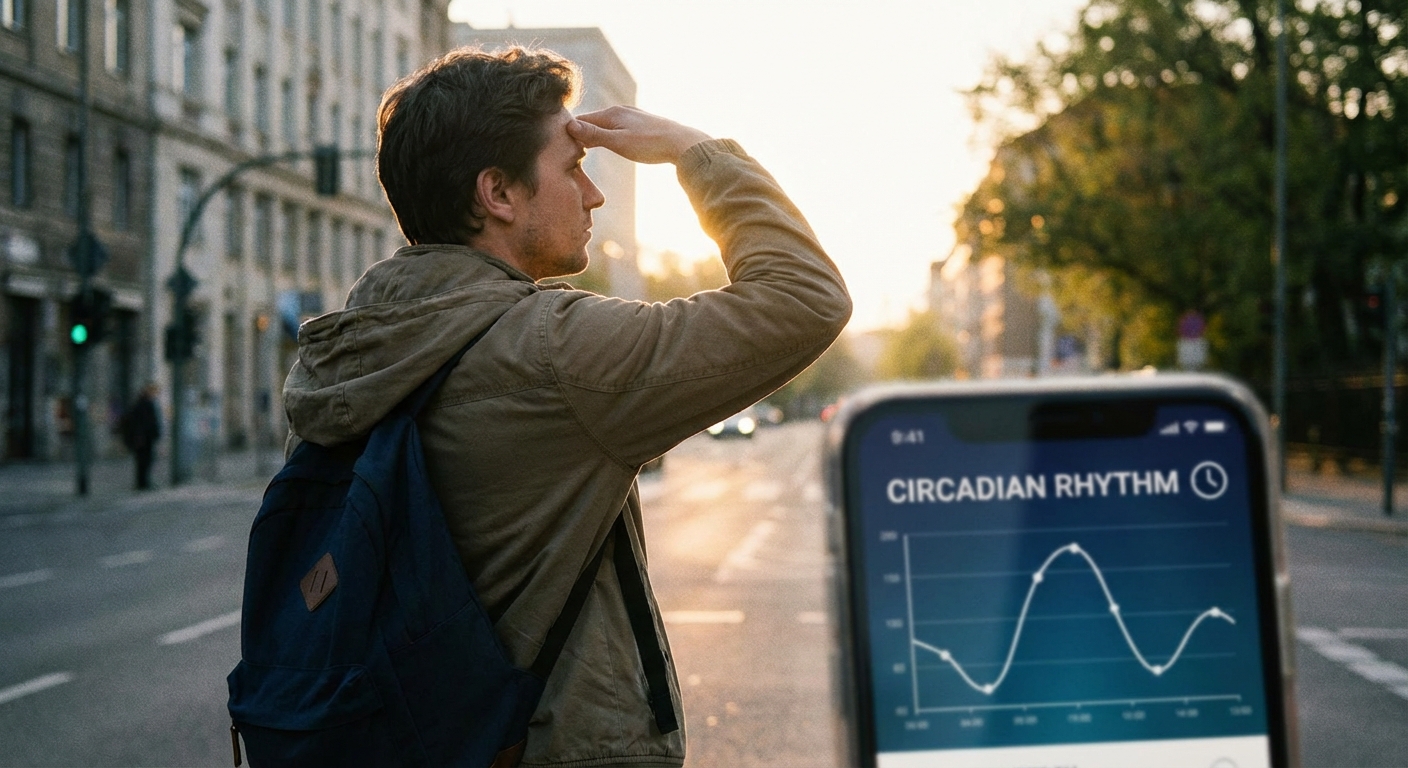
With the National Sleep Foundation launching Sleep Awareness Week this coming week, the timing couldn't be better to have a serious conversation about light. We tend to obsess over our bedtime routines. We buy blackout curtains, expensive mattresses, and mouth tape, but we completely ignore the other half of the equation. We treat sleep as an isolated event that happens at night, rather than the inevitable result of what we did—or didn't do—the moment we opened our eyes.
The truth is, your sleep quality is determined primarily by your behavior in the first hour of waking. It is not about pills or evening rituals; it is about photons. If you are waking up groggy, relying on three cups of coffee to function, and then finding yourself wired and staring at the ceiling at midnight, you don't have an insomnia problem. You have a light problem.
The Master Clock and Your Brain's CEO
To understand why light is so powerful, you have to understand the hierarchy of your biology. You are not a single entity; you are a colony of trillions of cells, and every single one of them has its own 24-hour clock. Your liver has a clock, your heart has a clock, and even your skin has a clock. If these clocks drift out of sync—if your liver thinks it's noon while your brain thinks it's midnight—performance collapses and disease sets in.
You need a conductor to keep the orchestra in time. That conductor is a tiny region in the hypothalamus called the Suprachiasmatic Nucleus, or SCN.
Think of the SCN as the CEO of your brain. It dictates when you feel alert, when you feel hungry, when your body temperature rises, and when your hormones are released. But like any executive, the SCN sits in a dark office inside your skull. It cannot see the outside world. It needs a memo to tell it what time it is.
That memo is light.
But here is the fascinating part: your eyes are not just for vision. You actually have two separate systems in your eyes. One system uses rods and cones to help you see shapes, colors, and movement. The other system consists of specialized neurons called Intrinsically Photosensitive Retinal Ganglion Cells (ipRGCs). These cells don't care about what you are looking at. They don't care if you are reading a book or looking at a tree. They only care about the quality and intensity of light hitting them.
These cells contain a photopigment called melanopsin. When bright light—specifically sunlight—hits these cells, they send a direct electrical signal to the SCN. It is the biological equivalent of smashing the "reset" button on a stopwatch. It tells the CEO, "Day has begun. synchronize the fleet." Without this signal, your internal clock drifts. You exist in a state of perpetual lag, constantly fighting your own physiology to stay awake or fall asleep.
The Hormonal Cascade: Setting the Timer
When you step outside and let photons hit your retina, you aren't just "waking up." You are initiating a complex hormonal cascade that dictates how you will feel for the next 24 hours.
The first thing that happens is the Cortisol Awakening Response (CAR). Now, in the health world, cortisol often gets a bad rap as the "stress hormone." Chronic, low-level stress is indeed bad. But acute, morning cortisol is absolutely essential. It is nature's caffeine.
A healthy spike in cortisol right after waking does two things:
- It signals your body to mobilize glucose for energy, clearing out the "brain fog."
- It creates a state of alertness and focus.
If you don't get light, this spike is delayed or blunted. You feel groggy, so you reach for caffeine. But caffeine doesn't fix the rhythm; it just masks the fatigue.
More importantly, morning light sets a timer for your sleep. This is the mechanism most people miss. When sunlight hits those ipRGCs, it immediately suppresses the production of melatonin, the hormone that makes you sleepy. But it also starts a silent countdown clock. The SCN registers the light and effectively says, "Okay, in approximately 14 to 16 hours, we will release melatonin again."
This is why viewing light at 8:00 AM helps you fall asleep at 10:00 PM. If you stay inside in the dark until noon, you haven't started the timer. Your body doesn't know the day has begun, so it won't know when the day ends. You end up tired but wired, unable to shut down because you never properly started up.
Practical Morning Light Protocols
Knowing the science is useless if you don't apply it. The goal here is discipline and consistency. You cannot simply look out a window and expect results. Window glass filters out much of the specific blue-wavelength light required to stimulate the melanopsin cells. You need to remove the barriers.
Here is the protocol I use and recommend, based on the physiological realities of the human eye.
1. Get Outside Immediately
You need to view natural light within 30 to 60 minutes of waking. This is the critical window to trigger that Cortisol Awakening Response. Do not check your phone in bed for an hour. Get up, put on clothes, and get out the door.
2. Remove the Filters
This is non-negotiable. You cannot do this through a windshield, a window, or sunglasses. Prescription glasses and contact lenses are generally fine, but if you can safely see without them, take them off for a few minutes. You want the raw photons hitting the back of the eye.
3. Calibrate Your Duration
The intensity of light matters. Light intensity is measured in "lux." Indoor lighting is usually around 500 lux. A bright sunny day can be 100,000 lux. Your brain knows the difference.
- On Sunny Days: spend 10–20 minutes outside.
- On Cloudy Days: spend 20–30 minutes outside.
- On Dark/Rainy Days: spend 30+ minutes outside.
Even a cloudy day provides significantly more light energy than your bright kitchen. Do not be fooled by the clouds; the photons are still getting through.
Back when I was in the trenches of losing 110 pounds, the hardest part wasn't the gym; it was the morning discipline. I realized that if I didn't get my head right immediately, the binge eating urges would win by 4 PM. Stepping outside became my non-negotiable anchor. I didn't listen to music or podcasts. I just stood there, letting the cold air and the light hit me, using that time for silence and prayer. It was the only way to physically signal to my body that the old patterns were dead and a new day had started.
Why This Matters Now More Than Ever
We are living in an environment that is hostile to our biology. Emerging research from March 2026 indicates that satellite-based light pollution is increasing, potentially brightening the night sky to levels that confuse our circadian rhythms even further. We are being bombarded with artificial light at night and starved of natural light in the day.
This behavior leads to tangible health consequences. Recent data from 2025 suggests that for every additional 30 minutes of morning sun exposure, the midpoint of sleep shifts earlier by 23 minutes. This is the cure for the "night owl" syndrome that plagues so many people. Furthermore, consistent "sun gating"—the practice of aligning activity with the sun—is linked to lower Body Mass Index (BMI) and a stronger immune system.
When we ignore these signals, we become fragile. We rely on stimulants to wake up and sedatives to fall asleep. We lose our resilience.
The Path to Resilience
Aligning your circadian clock is not about being a "morning person" in the chipper, annoying sense. It is about physiological competence. It is about giving your body the inputs it requires to function without constant pharmacological intervention.
The debate in British Columbia and the warnings from the sleep researchers are valid. When we detach ourselves from the solar cycle, we pay a price. But you don't have to wait for government policy to change. You have control over your first hour.
Tomorrow morning, when the alarm goes off, don't scroll. Don't negotiate with yourself. Get up, walk outside, and look toward the light. It is the simplest, most effective thing you can do to reclaim your energy and your health.