

As of March 2026, the headlines are heavy. You cannot look at the news without seeing the devastation in the Middle East, specifically the tens of thousands of families in Lebanon currently fleeing airstrikes with nothing but the clothes on their backs. It is a humanitarian crisis of massive proportions, and when we see suffering on that scale, our natural reaction is often a mix of horror and helplessness. We wonder how anyone survives that kind of upheaval, let alone finds a way to live a meaningful life afterward.
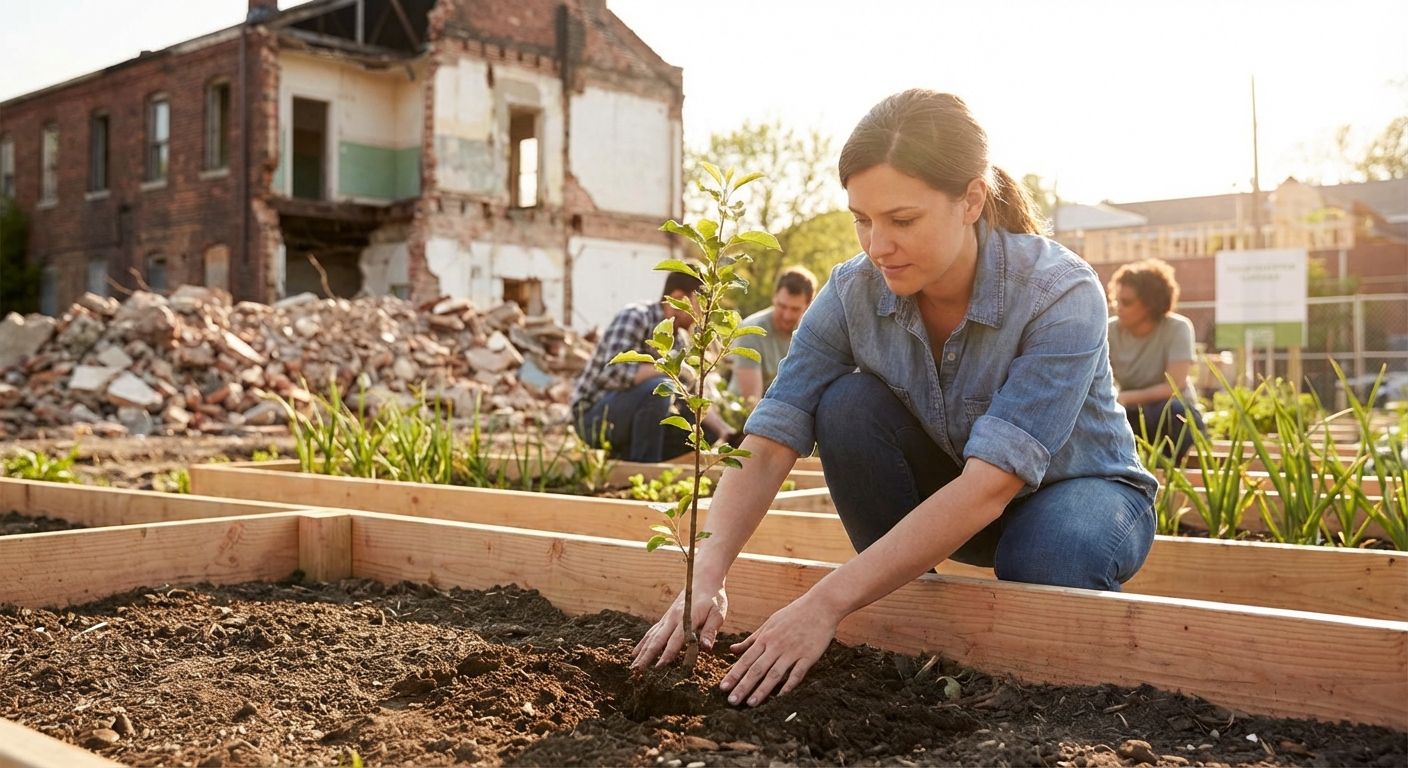
But the human spirit is far more durable than we give it credit for. While the media rightfully focuses on the immediate tragedy, there is another story that happens quietly, over years and decades, in the aftermath of disaster. It is the story of how people rebuild.
We used to think of trauma solely in terms of damage. We thought of it as a permanent crack in the vase that could never quite be hidden. But psychologists and researchers have spent decades studying what actually happens when our lives are turned upside down. They found that while some people struggle—and understandably so—a significant number of survivors don't just bounce back to who they were before. They bounce forward.
This is the concept of Post-Traumatic Growth (PTG). It is not about pretending the pain didn't happen. It is not about toxic positivity or smiling through the tears. It is a gritty, painful, and ultimately transformative process where the very things that try to break us become the raw materials for a stronger, deeper, and more significant life.
The Seismic Shake
To understand how growth happens, we have to look at what trauma actually does to your brain and your belief system. Psychologists use a metaphor called the "seismic shake."
Imagine your life is a house built on a foundation of core beliefs. These are the assumptions you live by: "The world is generally safe," "If I work hard, good things happen," or "I have plenty of time." When a tragedy strikes—whether it is a diagnosis, a divorce, the loss of a loved one, or a geopolitical crisis—it acts like an earthquake. It doesn't just rattle the windows; it cracks the foundation.
Suddenly, the old beliefs don't hold up. The house is unstable. You cannot simply patch the cracks and go back to normal because "normal" doesn't exist anymore. You are forced to bulldoze the condemned parts of the structure and pour a new foundation.
This is the difference between resilience and post-traumatic growth. Resilience is the ability to withstand the storm and stay standing. It is endurance. PTG is what happens when you decide that the old house wasn't strong enough anyway, so you build a fortress in its place.
Research suggests that anywhere from one-half to two-thirds of trauma survivors experience this phenomenon. They don't just survive; they evolve. They undergo a fundamental shift in how they view the world and their place in it.
The Five Pillars of Change
So, what does this new house look like? When researchers interview people who have walked through fire—from cancer survivors to combat veterans—they find that growth tends to manifest in five specific domains. You might not see all of them, but you will likely recognize a few if you have ever had to pick yourself up off the floor.
1. Personal Strength
There is a strange paradox here. Survivors often report feeling more vulnerable than ever before. They know, intimately, that life is fragile and that safety is an illusion. Yet, simultaneously, they feel stronger. The mindset shifts to: "If I could survive that, I can handle anything." You stop sweating the small stuff because you have survived the big stuff. It creates a quiet confidence that doesn't need to shout.
2. New Possibilities
When a door slams shut, we usually stare at it for a long time. But eventually, we turn around. Tragedy often forces us out of ruts we didn't even know we were stuck in. It might force a career change, a move, or a complete lifestyle overhaul.
I see this all the time in my own circle. People who get fired from "safe" corporate jobs often end up starting the business they dreamed of for a decade but were too scared to launch. The crisis lowers the opportunity cost of change. When the worst has already happened, the risk of failure doesn't seem so scary anymore.
3. Improved Relationships
This is one of the most common outcomes. Trauma acts as a filter for your social life. The superficial connections—the drinking buddies, the fair-weather friends—tend to fall away. They don't know what to say, so they fade out.
But the people who stay? Those bonds turn into iron. Survivors often find they have zero tolerance for drama or surface-level chatter. They crave authenticity. They want to talk about real things. This deepens connections with family and close friends, creating a support network that is far more robust than what they had before.
4. Appreciation for Life
It sounds like a cliché, but it is chemically real. When you have a brush with mortality, the colors look brighter. The coffee tastes better. The fact that you can simply take a deep breath without pain becomes a source of genuine joy.
This isn't about "positive thinking." It is a physiological reset of your priorities. You stop taking the boring Tuesdays for granted because you realize that boring Tuesdays are actually a luxury.
5. Spiritual and Existential Change
When the foundation cracks, we start asking the big questions. Why are we here? What is the point of all this?
For me, this domain is personal. I spent years chasing distractions, trying to numb the noise of life with noise of my own. It wasn't until I hit a wall that I realized I had no anchor. I turned to the Orthodox Christian tradition, specifically the discipline of prayer and the ancient practice of stillness. It wasn't a "magic fix," but it gave me a framework to understand suffering not as a punishment, but as a crucible. Standing in a quiet church, realizing that generations before me had suffered and survived, gave me a sense of continuity and peace that no amount of modern hustle could provide. For many, trauma opens the door to this kind of deepening, whether through faith, philosophy, or a profound connection to nature.
How to Actually Move Forward
You might be reading this and thinking, "That sounds great, but I'm just trying to get through the day." That is valid. Growth is not automatic. It is a byproduct of how you process the pain. Here are three practical frameworks to help facilitate that growth.
Deliberate Rumination
There are two ways to think about the past. One is intrusive rumination—where the thoughts attack you, spinning in a loop of "why me?" and "what if?" That keeps you stuck.
The alternative is deliberate rumination. This is when you sit down, perhaps with a journal or in a quiet room, and choose to think about what happened. You actively try to make sense of it. You construct a narrative. You ask, "Okay, this happened. It was terrible. Now, how does this fit into the story of my life? What did I lose, but what is still here?"
This is hard work. It requires discipline. But moving from intrusive thoughts to deliberate processing is the engine of meaning-making.
Social Disclosure
You cannot do this alone. Isolation is the fertilizer for despair. You need "relational safety"—a context where you can speak the ugly truth without being judged.
This doesn't mean broadcasting your pain to the world on social media. It means finding a few trusted people and being honest about where you are. When you put your story into words for someone else, you are actually organizing it in your own brain. You are taking the chaos of emotion and turning it into the structure of language. That is a crucial step in rebuilding.
Self-Compassion
Your brain's CEO gets tired, just like you do. Processing trauma is exhausting. There will be days when you regress. There will be days when you feel weak.
If you beat yourself up for not "growing fast enough," you are just adding a second layer of trauma. You have to treat yourself like you would treat a friend. Give yourself the grace to be messy. Growth is a jagged line, not a straight ascent.
Turning Pain into Purpose
There is one final piece to the puzzle, and it is backed by the most recent science. In January 2026, a study published in Supportive Care in Cancer looked at childhood cancer survivors. These are people who faced death before they even really started living.
The researchers found a distinct pathway to growth through "Self-Advocacy." The survivors who thrived were the ones who took their painful history and used it to help others. They shared their lived experience to guide new patients. They turned their private hell into a public resource.
This suggests that the final stage of Post-Traumatic Growth is often service. When you can look at your scar and use it as a map to help someone else find their way out of the woods, you reclaim your power. You are no longer just a victim of circumstance; you are a guide.
Whether it is the displaced families in Lebanon or you in your own living room wrestling with a private grief, the mechanism is the same. We do not choose the earthquake. We do not choose the cracks in the foundation. But we do choose how we rebuild. We have the option to build something smaller and darker, or to build something with wider doors and stronger walls, capable of sheltering not just ourselves, but the people coming up behind us.
