It’s 11:45 PM. You are exhausted. Your eyes are burning, your body feels heavy, and you know, logically, that you have to be up in seven hours to commute to the office. The sensible thing to do is put the phone down, turn off the lights, and go to sleep.
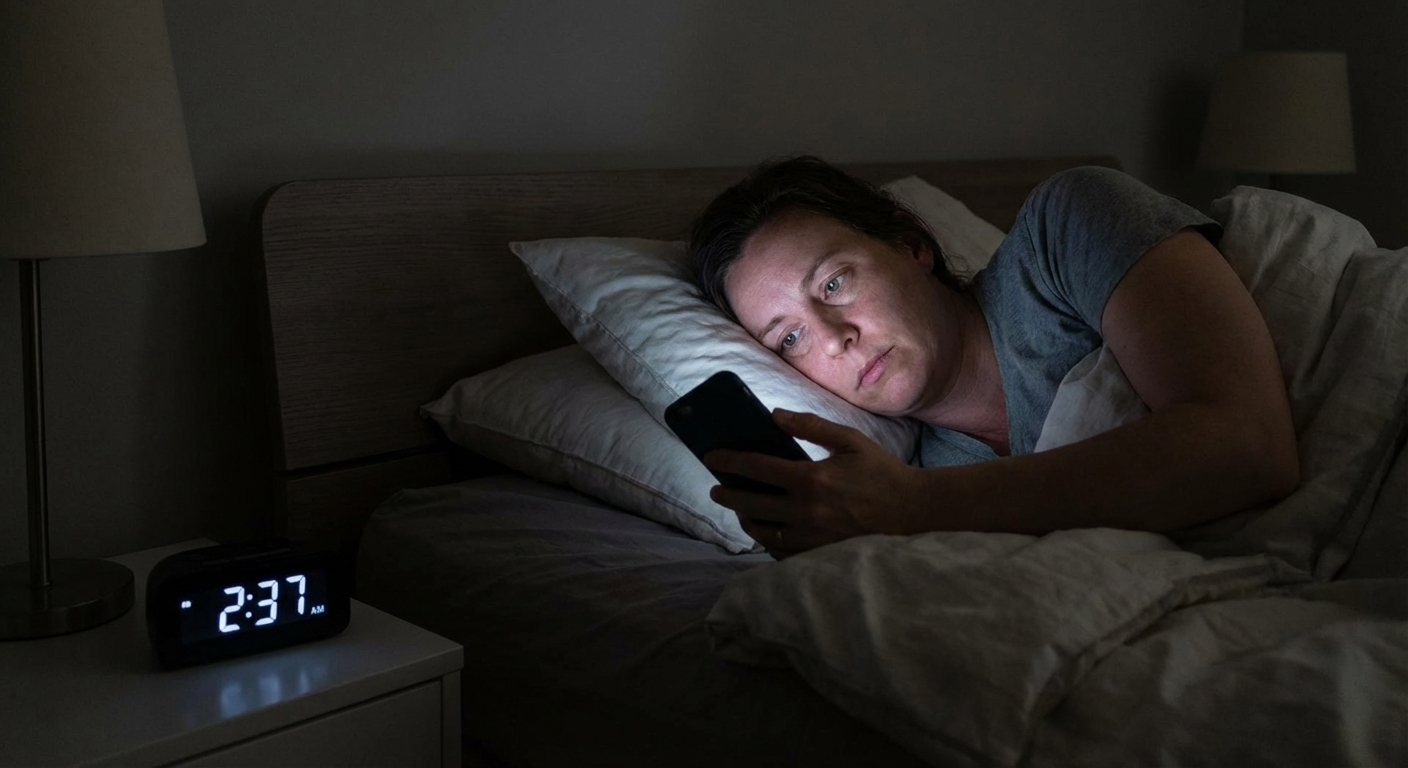
But you don’t.
Instead, you open another app. You watch one more episode. You scroll through feeds that you don’t even enjoy anymore. You aren't doing this because you have insomnia, and you certainly aren't doing it because you’re having the time of your life. You are doing it because the day is over, and you feel like you haven’t actually lived it yet.
This is what we call Revenge Bedtime Procrastination.
It sounds like a bad habit, the kind of thing you should just be able to "discipline" your way out of. But if you dig a little deeper, you realize it isn't about laziness. It is a desperate, psychological response to a life that feels like it belongs to everyone else but you. It is a quiet riot against your calendar.
As we move deeper into 2026, with return-to-office mandates tightening their grip on the corporate world, this phenomenon is exploding. We need to stop treating it like a sleep problem and start treating it like what it really is: a battle for your autonomy.
The Autonomy Deficit
Let’s look at the landscape we are living in right now. It is March 2026. The dust has settled on the "hybrid work" debates of the early 2020s, and the results are not what many hoped for. Major industry players—like the recent mandates from giants like Home Depot—are pulling people back into the office five days a week. The commute is back. The cubicle is back. And for many, the feeling of being constantly watched and managed is at an all-time high.
According to the Workplace Well-Being Report 2026, 61% of U.S. workers are currently "languishing." That is a specific and heavy word. It doesn’t mean you are clinically depressed, but it means you aren't flourishing. You are stagnant. You are just getting by.
When you spend eight to ten hours a day under strict schedules, answering to managers, and navigating traffic, you deplete a vital psychological resource: your sense of autonomy. Humans have an innate need to feel like they are the captains of their own ships. We need to feel that we have agency over our actions.
When that agency is stripped away for 12 hours a day (including the commute and prep time), your brain goes into a deficit. It starts starving for freedom.
This is where the "revenge" comes in. The night becomes the only territory left that hasn't been conquered by your employer or your obligations. Subconsciously, your brain decides that sleep is just a time machine that fast-forwards you to the next workday. Sleeping early feels like giving up. Staying up late, even if it hurts you tomorrow, feels like reclaiming a piece of your soul today.
I know this feeling intimately. I went through a phase a few years ago where I would stay up until 2 AM every single night, gaming or doom-scrolling through endless feeds. It wasn't because I wasn't tired; I was physically wrecked. But the hours between 9 AM and 6 PM belonged to clients, emails, and deadlines. I felt like if I went to sleep at a reasonable hour, I was just an employee who slept in storage. I needed those quiet, unhealthy, late-night hours just to feel like I existed for myself.
The Psychology of the "Quiet Protest"
So, why do we sabotage our own health to get this feeling of freedom? Why can't we just take an hour in the evening and then go to bed?
The answer lies in a concept called "Ego Depletion" or self-regulatory fatigue. Think of your willpower and your ability to make good decisions as a battery. Every time you smile at a coworker when you want to frown, every time you force yourself to focus on a boring spreadsheet, and every time you hold your tongue in a meeting, you drain that battery.
By 10 PM, your battery is flat. You are operating on fumes.
Here is the kicker: going to bed on time is actually a decision that requires willpower. It requires you to stop the low-effort, high-dopamine activity (like watching a show) and transition to a no-dopamine activity (sleeping). When your self-regulation tank is empty, you physically cannot make that jump. You get stuck in a "freeze" state. You know you should move, but you don't.
Furthermore, recent research suggests that this behavior is also driven by a "need to belong" and a need for leisure that went unmet during the day. If you spent your whole day in high-pressure isolation or in meetings where you couldn't be yourself, your brain craves connection or entertainment. It refuses to shut down until that quota is filled.
You aren't just procrastinating sleep. You are staging a protest. You are telling your schedule, "You can take my day, but you cannot have my night." It is a rebellion, but unfortunately, the only casualty in this war is your own health.
Practical Strategies for Reclaiming the Day
Understanding the "why" is the first step, but it doesn't solve the problem. If you want to stop the revenge cycle, you can't just try to force yourself to sleep. That’s like trying to hold a beach ball underwater; eventually, it’s going to pop back up.
Instead, you have to treat the root cause: the lack of autonomy during the day. You need to steal your freedom back before the sun goes down, so your brain doesn't feel the need to riot at midnight.
1. The Mid-Day Rebellion
You need to carve out time during your workday that belongs 100% to you. I’m not talking about a lunch break where you run errands or eat at your desk while checking email. I mean 15 to 30 minutes of pure, unproductive time.
Go for a walk without your phone. Read a chapter of a fiction book in your car. Sit in silence. The key is that this time must not be "productive." If you use this time to catch up on life admin, it doesn't count.
By reclaiming agency in the middle of the chaos, you signal to your brain that you are still in control. You release the pressure valve. When you get home, the urge to "steal" time diminishes because you’ve already taken some for yourself.
2. Name the Enemy
When you find yourself scrolling at 11:30 PM, stop and ask yourself: "What am I actually feeling right now?"
Usually, we label it as "not tired yet" or "just unwinding." But if you are honest, you might find the emotion is actually anger, frustration, or resentment. You might be angry that your boss emailed you at 5:30 PM. You might be frustrated that your commute took an hour.
Labeling the emotion changes the dynamic. It moves you from a passive state of scrolling to an active state of awareness. You can say to yourself, "I am staying up late because I am annoyed that I have no free time." Once you admit that, the scrolling often loses its appeal. You realize that destroying your sleep is not actually hurting your boss; it’s only hurting you.
3. Create a "Soft Landing"
Because your willpower is depleted at night, you cannot rely on discipline to get you into bed. You need a transition ritual that feels like a treat, not a chore.
If your routine is "work -> chores -> doom scroll -> sudden lights out," your brain will resist the "lights out" part because it feels like a hard stop to your freedom.
Instead, build a "soft landing." This is a period of 30 to 45 minutes before sleep where you engage in high-quality leisure that doesn't involve blue light or high-stimulation algorithms.
This is where you use tools of stillness. You might read physical Scripture or a philosophy book. You might practice breath control exercises to physically slow your heart rate. You might engage in prayer or quiet contemplation.
The goal is to trick your brain. You aren't "going to sleep" (which feels like a demand); you are "relaxing with a book" (which feels like a reward). This satisfies the need for "me time" without keeping you awake until 2 AM.
The Path Forward
The reality of the 2026 workplace is harsh. The systemic issues causing this burnout—the long hours, the rigid mandates, the lack of trust—are real and they need to be addressed at a corporate level. But we cannot wait for corporations to develop a conscience before we take care of ourselves.
Revenge Bedtime Procrastination is a signal. It is your mind waving a red flag, telling you that your life is out of balance. Don't ignore the flag, but don't just keep scrolling, either.
Reclaim your day in small chunks. assert your autonomy where you can. And remember that the best revenge you can get on a stressful workplace is showing up the next day well-rested, sharp, and capable, rather than broken and exhausted. That is true power. That is true control.