"Just breathe" is usually the last thing you want to hear when you are spiraling, but it turns out that advice is actually a biological command code. It is not just a way to distract yourself; it is the only lever you have to manually override your nervous system.
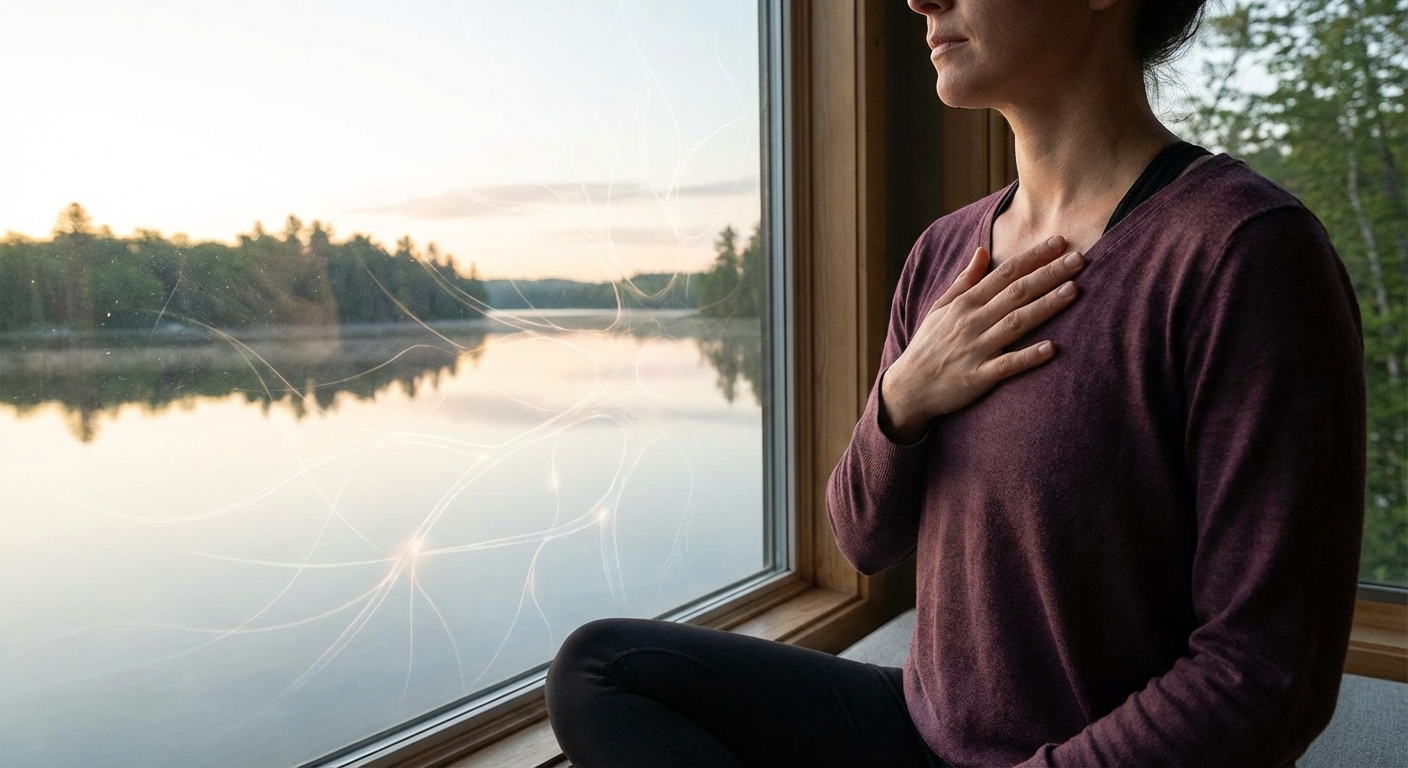
It is March 2026, and if you feel like the world is getting louder and more chaotic, you are not the only one. We are seeing a massive shift in priorities right now. Recent polls show that nearly 40% of Americans have made mental health their primary resolution for the year, a number that keeps climbing. We are all looking for a complex solution or a new pill to fix the noise in our heads.
But while we look for external fixes, neuroscientists have been mapping the internal wiring that already exists. Groundbreaking research released earlier this month regarding sleep rhythms and brain activity has confirmed what human beings have intuitively known for centuries but often forget. The way you breathe dictates the way you think.
This isn't about magic or vague spirituality. It is about wetware—the physical biology of your brainstem. When you understand the mechanics, you stop viewing breath control as a soft skill and start seeing it as a necessary discipline for survival.
The Brain’s Breathing Pacemaker
Deep inside your brainstem, there is a cluster of roughly 3,000 neurons called the pre-Bötzinger Complex. You can think of this as the drummer in the band of your body. It is the pacemaker for your respiration.
For a long time, scientists thought this area was just responsible for keeping you alive by ensuring you inhale oxygen and exhale carbon dioxide. But it does much more than that. This cluster of neurons has a direct line to the parts of your brain that regulate arousal, panic, and alertness.
Jack Feldman, the neurobiologist who discovered this complex, found that the rhythm set by these neurons acts like a metronome for your entire emotional state. When you breathe rapidly or erratically, the pre-Bötzinger Complex sends a "fast" signal to the rest of the brain. Your brain interprets this rhythm as a sign of danger. It assumes that if you are panting, you must be running from a predator.
Conversely, when you slow that rhythm down, you are hacking the system. You are sending a reverse signal up the chain of command. The survival of early mammals depended on this ability to shift gears, but in our modern world, we have largely forgotten how to use the clutch. We get stuck in high gear, shallow breathing while sitting at a desk, and our brain stays in a perpetual state of low-grade alarm.
The Circuit of Control
The most exciting development in this field isn't just knowing that the pacemaker exists, but understanding how we can control it. Recently, researchers identified a specific neural pathway—a top-down circuit—that connects the frontal cortex directly to the brainstem.
Your frontal cortex is the "CEO" of your brain. It handles logic, reasoning, and long-term planning. The brainstem is the ancient, automatic part that handles survival. For years, it was assumed these two didn't talk much. But this newly mapped circuit proves otherwise. It is a physical pathway that allows your rational mind to tell your survival instincts to stand down.
When you make a conscious decision to slow your breath, you are activating this specific circuit. You are using the CEO to send a memo directly to the factory floor. This signal effectively "deflates" the amygdala, the part of your brain responsible for fear processing.
A 2024 study in Nature Neuroscience highlighted this connection, showing that activating these specific brain cells can reduce anxiety as effectively as some pharmaceutical interventions. This implies that we have a built-in mechanism for tranquility that doesn't require a prescription; it just requires the discipline to use it.
In my own life, I find this rhythm essential within the Christian Orthodox tradition. Standing in prayer, using a prayer rope, and focusing on stillness isn't just a spiritual act for me; it is a physical discipline that regulates my breath, quiets my mind, and forces that "CEO" to take charge of the panic.
The Physics of Calm
Beyond the brainstem, there is a mechanical component to this that involves the Vagus nerve. This is the longest nerve in your body, running from your brain down through your neck and into your abdomen. It is often called the "highway of calm" because it is the main component of the parasympathetic nervous system—the "rest and digest" mode.
The physics here are simple but powerful. When you take a deep breath using your diaphragm (not just your chest), you physically move your diaphragm downward. This movement stimulates the Vagus nerve. It is a mechanical trigger.
The real magic happens on the exhale. When you exhale slowly, the Vagus nerve releases a neurotransmitter called acetylcholine. This substance acts like a tranquilizer for your heart rate. It tells your heart to slow down and lowers your blood pressure. This is why the exhale is more important than the inhale when you are trying to calm down.
This process increases what is known as Heart Rate Variability (HRV). A high HRV is a good thing; it means your heart is responsive and can recover quickly from stress. A low HRV means your system is rigid and stuck in fight-or-flight mode. By extending your exhale, you are manually pumping the brakes on your heart rate, forcing your body into a state of safety.
Practical Protocols for Stillness
Understanding the science is useless if you don't apply the protocols. You don't need a retreat or a studio to do this. You just need a few minutes and some discipline. Based on the latest data, here are the three most effective methods for engaging these neural circuits.
1. The Cyclic Sigh
This is the fastest way to reduce physiological arousal in real-time. It works by re-inflating the collapsed air sacs in your lungs (alveoli) and offloading carbon dioxide efficiently.
- The Method: Inhale through your nose until your lungs are almost full. Then, take a second, shorter inhale on top of that (still through the nose) to fully expand the lungs. Finally, exhale very slowly through your mouth.
- The Result: Studies suggest this technique is more effective than standard quiet contemplation for immediate mood improvement. It is a mechanical reset button.
2. The 4-6 Rhythm
If you need sustained focus or are trying to raise your HRV, this rhythm is mathematically optimal. It slows your breathing rate to about six breaths per minute, which creates a synchronization between your heart rate and your breath.
- The Method: Inhale through your nose for a count of 4. Exhale through your nose for a count of 6.
- The Result: By making the exhale longer than the inhale, you are spending more time stimulating the Vagus nerve. This ratio has been shown to be superior to "box breathing" (equal counts) for maximizing heart rate variability.
3. Nasal Breathing Only
Unless you are doing the Cyclic Sigh, you should be breathing through your nose.
- The Method: Keep your mouth shut.
- The Result: This isn't just about filtration. Nasal breathing synchronizes electrical activity in the piriform cortex, amygdala, and hippocampus. Mouth breathing does not do this. If you want your memory and emotional centers to work in harmony, you have to use the nose.
Conclusion
We often treat our bodies like dragging anchors—heavy things we have to lug around while we try to live our lives. But your body is the control panel. The separation between "mental health" and "physical health" is an illusion.
The pre-Bötzinger Complex and the Vagus nerve are always listening. They are waiting for instructions. If you don't provide a rhythm, they will default to the chaotic pace of your environment. But if you take control—if you use the cortical circuits available to you—you can dictate your own internal state.
You don't need to overcomplicate this. You don't need special equipment. You just need the discipline to stop, engage your diaphragm, and send the signal that you are safe.