It is early 2026, and if you look at the glossy interior design magazines or scroll through the latest home decor feeds, you will notice something interesting. The era of the sterile, hospital-white "ultra-minimalist" box is over. We have moved into a phase experts are calling "warm minimalism." It is a shift away from emptiness and toward texture, comfort, and character. We are no longer trying to erase ourselves from our homes; we are trying to curate them.
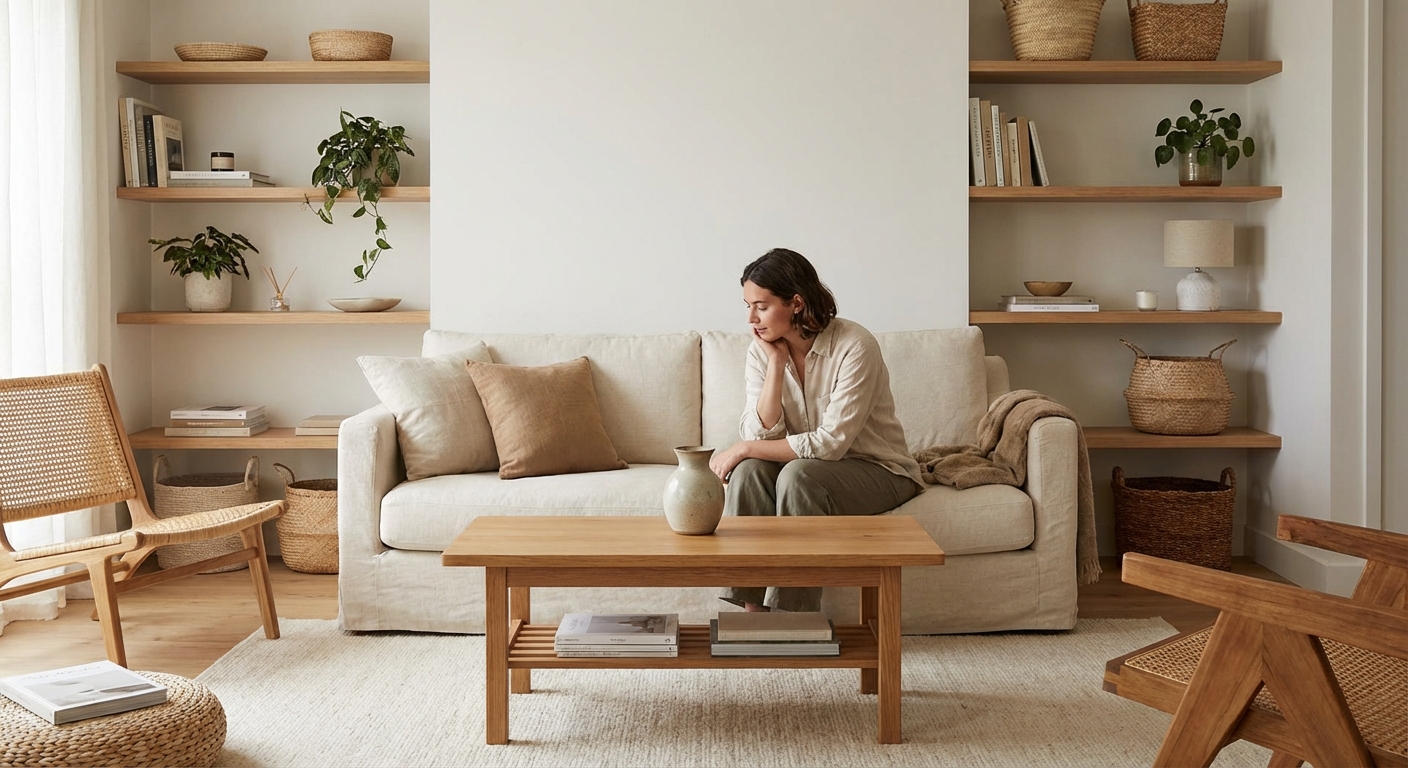
But here is the problem with that shift: you cannot curate a space that reflects who you are today if it is suffocated by who you used to be.
We all have that one drawer. Or that box in the garage. Or, if we are being honest, that entire guest room that has become a "staging area" for things we don't use but physically cannot bring ourselves to throw away. We look at these piles and we tell ourselves we are just disorganized. We say we are "too busy" to sort through it.
But clutter is rarely just about laziness. It is about noise. It is about fear. The reason you can’t throw away that broken guitar or those jeans that haven't fit since 2019 isn't that you need them. It’s because those objects are speaking to you, and until you decode the hidden message they are sending, they aren't going anywhere.
The Hidden Message in the Hoard
To understand why we keep things, we have to look at what psychologists call the "Extended Self." This is the idea that our possessions are not just dead matter; they are external hard drives for our identity. When you look at a souvenir from a trip you took ten years ago, your brain doesn't just register an object. It registers a memory, an emotion, and a piece of your history.
When you try to throw that object away, your brain's threat detection system lights up. It doesn't feel like you are tossing out a cheap trinket; it feels like you are amputating a part of your own life story. This is why decluttering is physically exhausting. You aren't just moving boxes; you are fighting a neurological battle against loss.
Research on the home as an extension of the self suggests that for people who view their environment as a reflection of their soul, decluttering is an emotionally complex process. It triggers the same grief centers in the brain as a breakup or a bereavement. You are mourning the potential future you thought you’d have with that item, or the past you are afraid to forget.
But if you want peace—real, quiet stillness in your home—you have to stop letting these objects hold your mental real estate hostage. You have to translate the message.
The Anatomy of Attachment
Usually, the things we refuse to throw away fall into three specific categories of emotional baggage. Once you identify which category an item falls into, the grip it has on you starts to loosen.
1. The Scarcity Anchor ("Just in Case")
This is the box of cables for electronics you no longer own. It’s the stack of wood scraps in the garage. It’s the extra three spatulas. The hidden message here is fear.
This stems from a scarcity mindset, often rooted in past experiences where you didn't have enough, or a deep-seated anxiety about being unprepared for a crisis. Your brain whispers, "If you throw this away, you will need it next week, and you won't be able to replace it."
This is a lie your amygdala tells you to keep you safe. But in reality, keeping these items "just in case" creates a guarantee of clutter in exchange for a theoretical possibility of need. You are trading your daily peace for a safety net that is full of holes.
2. The Guilt Trap (Obligation Clutter)
This is the ugly vase your aunt gave you. The sweater from a friend that scratches your skin. The family heirlooms that don't fit your style but have been passed down for three generations.
The hidden message here is unresolved guilt. You aren't keeping the object because you love it; you are keeping it because you are afraid of disappointing the person who gave it to you. You are prioritizing their feelings (which, by the way, they probably don't even remember) over your own sanctuary.
Your home is not a museum of other people's expectations. It is your space for rest and prayer. Every time you look at that object and feel a twinge of guilt, it is stealing a micro-moment of your peace.
3. The Ghost of Identity Past
This is the most painful category. It’s the hobby gear for the sport you quit. It’s the unfinished novel draft. It’s the clothing that doesn't fit.
I know this battle intimately. Years ago, I lost 110 pounds and finally put a stop to a cycle of binge eating that had dominated my life. But for a long time after the weight came off, I kept my "big" clothes in the back of the closet. I told myself it was practical, but the truth was darker: I didn't trust my own discipline. Those clothes were a safety net for failure. Conversely, before I lost the weight, I held onto "skinny" clothes that mocked me every time I opened the drawer. Both piles were anchors to a version of myself that didn't align with reality. Throwing them away was the final step in accepting who I actually was.
When you keep items for a "someday" version of yourself, you are signaling a struggle to accept your current reality. You are living in a fantasy future or a romanticized past, rather than the present moment.
Actionable Renewal
So, how do we move from understanding the psychology to actually clearing the room? We need strategies that respect the emotional weight of these items without succumbing to them. Here is a battle plan for the modern age.
The "Edit, Remove, Done" Rule
One of the biggest causes of failure in decluttering is "decision fatigue." Your brain has a limited supply of willpower. If you spend three hours sorting, your brain’s CEO gets tired. You end up making piles of "maybe" or "donate later" that sit in your hallway for six months.
The rule for 2026 is simple: Edit, Remove, Done.
Do not sort a whole room at once. Pick one drawer. Make the decision. And here is the key: remove the discard pile from your house immediately. Put the trash in the bin outside. Put the donation bag in your car trunk (or better yet, drive it to the center right then). Do not let the ghosts linger. Close the loop so your brain can register the task as complete.
Physiological Regulation
This sounds strange, but it works. When you are handling a sentimental item and you feel that tightness in your chest—that is your stress response kicking in. You are in "fight or flight" mode over a porcelain figurine.
To bypass this, you need to regulate your nervous system. A highly effective, physiological trick is to hum. Seriously. Humming creates a vibration in the vocal cords that stimulates the vagus nerve, which tells your body to calm down. It shifts you from a sympathetic state (stress) to a parasympathetic state (rest).
While you are sorting through the hard stuff, keep a low hum going. It keeps you grounded in your body and prevents the emotional wave from knocking you over.
Create Digital Keystones
We often fear that if we lose the object, we lose the memory. But we have technology to solve this. If you have a sentimental item that takes up space but serves no purpose—like a child’s large art project or a tattered quilt—take a high-quality, beautifully lit photograph of it.
Create a digital folder called "Memory Box." This photo serves as a "digital keystone." It satisfies the brain's need to visually access the memory trigger without requiring 20 square feet of storage. You keep the story; you release the dust-collector.
Conclusion: Moving Toward Curated Authenticity
The goal of clearing out this clutter is not to live in an empty house. It is to live in an honest one.
When your environment is filled with "visual noise"—thousands of items calling out for your attention, guilt, or maintenance—your cortisol levels stay chronically elevated. You are living in a state of low-grade alarm. You cannot find stillness or focus on deep work when your peripheral vision is cluttered with unmade decisions.
By removing the items that are driven by fear, guilt, and past identities, you make room for the things that actually matter. You make room for a home that supports the person you are today. You clear the table not just to have an empty table, but so you can sit down, breathe, and finally hear yourself think.