As of March 2026, the world is waking up to a staggeringly expensive hangover. We are currently staring down a bill of $540 billion annually in global food waste losses within the retail supply chain alone. That is half a trillion dollars of value, labor, and resources thrown directly into the trash. It is a number so large it feels abstract, but the reality is sitting in your kitchen bin right now.
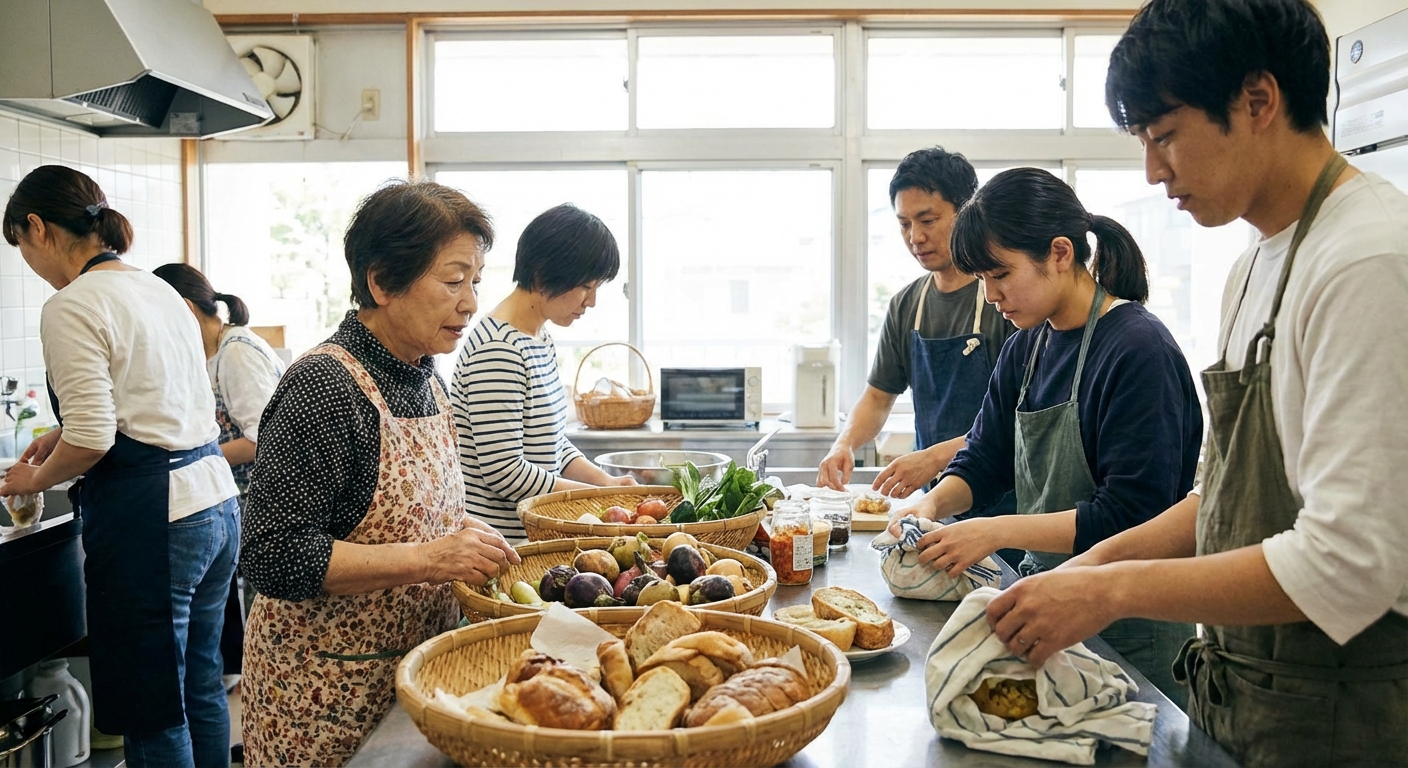
To highlight this crisis, the United Nations has designated March 30 as the International Day of Zero Waste. But dates on a calendar and terrifying statistics rarely change human behavior. We don't need more data; we need a fundamental shift in how we view the stuff we own. We need to stop looking at objects as disposable conveniences and start seeing them through the lens of Mottainai.
This isn't just a trendy buzzword to slap on a recycling bin. It is a deep, visceral Japanese concept that combines regret, respect, and a call to action. It is the feeling of "what a shame" that hits you when you see something valuable wasted. And right now, it is exactly the mindset we need to stop bleeding money and start living with intention.
The Core Idea: More Than Just "Don't Waste"
I want you to think about the last time you threw away an apple because it had a small bruise, or tossed a plastic container because you didn't feel like washing it. You probably didn't feel much. It was just trash.
In the philosophy of Mottainai, that act is a tragedy. The word itself is difficult to translate directly. It comes from the combination of mottai (intrinsic dignity or sacred essence) and nai (negation). When you put them together, it expresses a profound sense of regret when an object’s true form or value is ignored or cut short.
If you say "Mottainai!" in Japan, you aren't just saying "that's wasteful." You are saying, "This object had a purpose, and we failed to honor it." It shifts the narrative from economics to ethics. We aren't just losing money; we are disrespecting the labor, the materials, and the history that went into making that thing.
This perspective changes everything. It means that an old shirt isn't garbage just because it has a hole; it's a resource that hasn't finished its job yet. It means that the broccoli stem has just as much right to be eaten as the floret. It demands that we look at the world with eyes that see value where others see trash.
Ancient Roots of Respect
While I am not a historian, you cannot understand this concept without looking at where it came from. Japanese culture has long held the belief that objects are not merely dead matter. There is a sense that tools, rivers, and even stones possess a certain presence or essence.
In the West, we tend to separate the "spiritual" from the "material." We think faith happens in a building on Sunday, and the rest of the week is for consuming products. The Mottainai worldview collapses that divide. It suggests that how you treat your broom, your kitchen knife, or your leftovers is a reflection of your inner character.
If you believe that everything around you has a specific purpose—a reason for existing—then wasting it becomes an act of ingratitude. It is a failure of stewardship.
I find a strong parallel to this in my own life within the Orthodox faith. We are taught that the physical world isn't something to be escaped, but something to be sanctified and treated with reverence. When I treat a simple meal or a well-worn tool with respect, I am not just saving money; I am acknowledging the gift of creation.
This isn't about superstition; it is about gratitude. When you treat your possessions as if they have dignity, you take better care of them. You buy less. You fix what is broken. You step out of the frantic cycle of "buy, break, toss, repeat" and enter a state of stewardship.
The Fourth R: Respect
For decades, we have been drilled on the three Rs of the environment: Reduce, Reuse, Recycle. They are good principles, but they are often mechanical. We recycle because the bin is blue, not because we care about the aluminum.
The late Nobel Peace Prize laureate Wangari Maathai saw that this triad was incomplete. She introduced Mottainai to the global stage in 2005, arguing that we needed a fourth element: Respect.
Respect is the engine that makes the other three work.
- If you respect the resource, you will naturally reduce how much you use.
- If you respect the object, you will reuse it until it falls apart.
- If you respect the material, you will recycle it properly so it can live another life.
Maathai’s campaign was brilliant because it didn't rely on guilt-tripping people about polar bears. It appealed to our sense of dignity. She linked Japanese cultural values with the Green Belt Movement in Kenya, using the proceeds from waste reduction to fund massive reforestation efforts. It proved that this isn't just a nice philosophy for organizing your closet; it is a viable strategy for saving the planet.
The Economic Reality of 2026
Let’s get back to that $540 billion number. We are living in a time where supply chains are fragile and inflation is real. Wasting food is no longer just a moral failing; it is a financial disaster for families and businesses.
Japan has taken the lead here. Between 2008 and 2020, the country achieved a 31% reduction in total food waste per capita. They didn't do this through draconian laws alone; they did it by leveraging the cultural power of Mottainai.
This month, Japan is hosting the 6th Circular Economy Expo. The focus is on "resource-autonomous" economies. The goal is to design waste out of the system entirely. In a circular economy, there is no such thing as trash—only resources that are waiting to be cycled back into use.
This is the future of business. Companies that ignore this will go bankrupt. Households that ignore this will bleed cash. Adopting a Mottainai mindset is the most pragmatic financial move you can make this year.
Practical Steps to Stop the Bleeding
So, how do we move this from a high-minded concept to a daily discipline? You don't need to become a monk or move to a tiny house. You just need to change a few habits. Here are three practical ways to integrate this ethos into your life starting today.
1. The Art of Golden Repair (Kintsugi)
When a bowl breaks in the West, we sweep it up and buy a new one. In the tradition of Kintsugi, the broken pottery is repaired with lacquer mixed with powdered gold. The cracks aren't hidden; they are highlighted. The object becomes more beautiful and valuable because it has been broken and repaired.
You can apply this literally by fixing your broken items instead of trashing them. But you can also apply it to your mindset. Wear your scuffed boots with pride. Patch your jeans. Let your possessions tell the story of your life. Don't chase the "brand new" aesthetic. Chase the "well-loved" aesthetic.
2. Embrace Furoshiki
We are drowning in plastic bags and wrapping paper. The Japanese solution is Furoshiki—traditional reusable cloth that can be folded into various shapes to carry almost anything.
- The Swap: Instead of buying rolls of paper that get torn up and thrown away in three seconds on Christmas morning, use fabric.
- The Utility: Keep a square of sturdy cloth in your bag. It can be a shopping bag, a lunch wrap, or a protective cover. It is versatile, washable, and infinite.
3. Respect Your Food Scraps
Households contribute 60% of the world's total food waste. We are the problem. The Mottainai approach to the kitchen is simple: nothing leaves the kitchen until it has given everything it has.
- Vegetable Skins: Don't compost them yet. Keep a bag in your freezer. When it's full, boil them with water to make a nutrient-dense vegetable stock.
- Stems: Broccoli and cauliflower stems are sweet and crunchy. Peel the tough outer layer and slice them into stir-fries.
- ** leftovers:** A single serving of rice isn't trash. It's the start of tomorrow's fried rice.
Conclusion: Active Respect
We often think of environmentalism as a burden—a list of things we aren't allowed to do. Mottainai flips the script. It is an invitation to deeper appreciation. It turns the mundane act of washing a jar or mending a sock into a quiet victory.
When you refuse to waste, you are asserting control over your life. You are stepping out of the mindless consumer current and planting your feet on solid ground. You are saying that you value the labor of the farmer, the craftsmanship of the maker, and the blessings of the world around you.
The $540 billion loss is a symptom of a society that has lost its ability to see value. The cure isn't just better technology; it's better vision. Look at what you have. Use it well. Respect it deeply. That is the good existence.