If you ask the average person to picture a minimalist’s home, they usually imagine something akin to a sterile hospital waiting room. They picture white walls, a single uncomfortable chair, a laptop on the floor, and an echoing silence that feels more lonely than peaceful. For years, that was the prevailing aesthetic: a cold, stark rejection of worldly possessions.
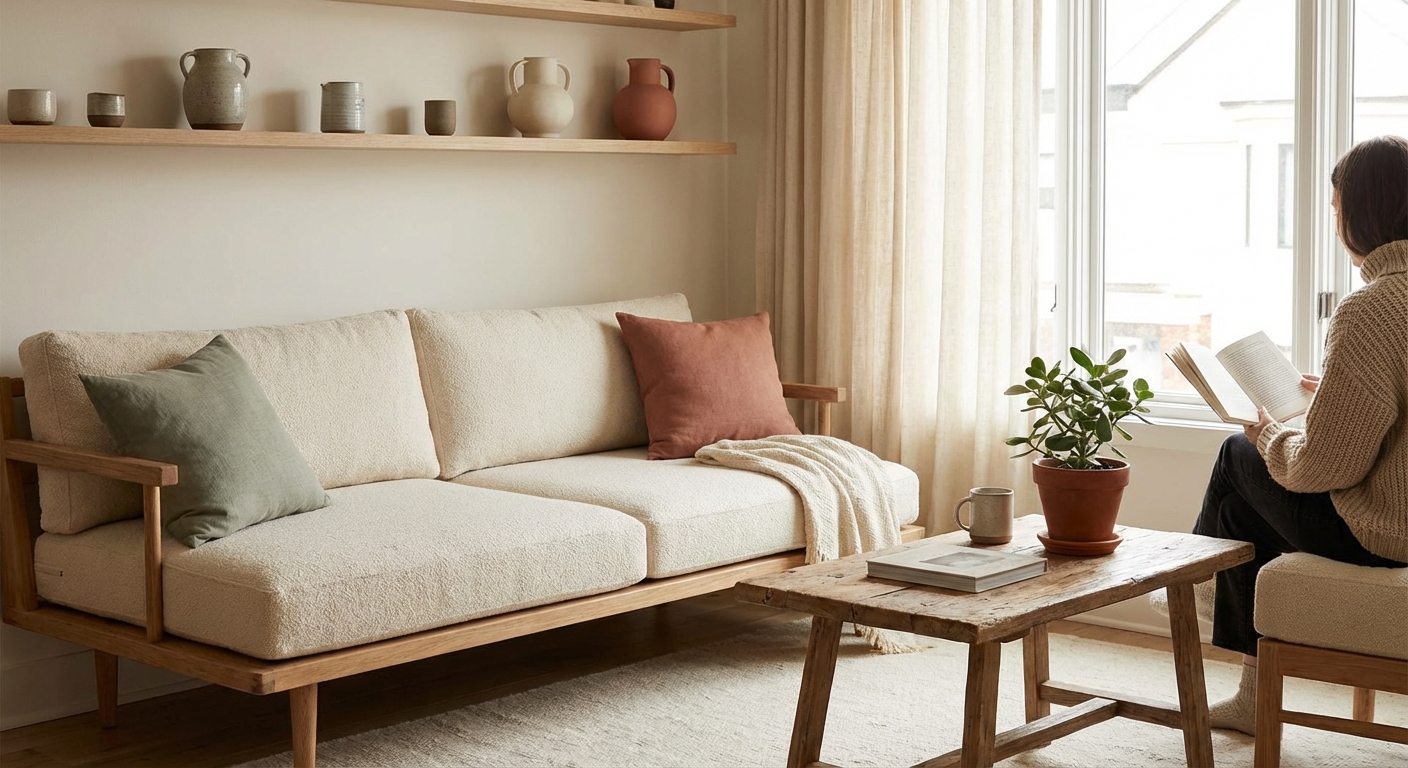
But as we settle into March 2026, the conversation has shifted. We are seeing a massive correction in how we view ownership. The "empty room" aesthetic is dead. It has been replaced by what designers and cultural critics are calling "Warm Minimalism." This isn't about deprivation; it is about curation. It is about creating a sanctuary that supports the life you actually want to live, rather than a showroom you’re afraid to touch.
The most successful minimalists I know aren't the ones who win a contest for owning the fewest items. They are the ones who have ruthlessly identified the tools, heirlooms, and comforts that actively support their purpose. They don't throw everything away. In fact, there is one category of possession they fiercely protect.
The Essential Intersection
The one thing a true minimalist never throws away is the item that sits at the "Essential Intersection." This is the precise point where high utility meets deep personal value.
In the past, minimalism was often defined by subtraction. We thought that if we just removed enough stuff, we would eventually find happiness underneath the pile. But subtraction is only half the equation. If you subtract everything, you are left with nothing. The goal of minimalism, particularly in this era of "Underconsumption Core," is not to have nothing; it is to have enough of the right things.
Joshua Becker, a pioneer in this space, often defines minimalism as the intentional promotion of the things we most value by removing everything that distracts us from them. That definition is critical. We are not just removing; we are promoting.
When you look at the trends dominating the UK and US right now, you see a move toward "sanctuaries of intention." People are keeping the stonewashed cotton bedding because the texture grounds them. They are keeping the heavy, well-worn cast iron skillet because it connects them to the ritual of cooking for their family. They are keeping the physical books that have shaped their thinking because a digital file doesn't offer the same tactile reminder of the wisdom inside.
This aligns with recent consumer data showing that nearly 80% of us are now prioritizing sustainability and longevity. We aren't buying throwaway items anymore. We are hunting for things that serve a purpose. The minimalist keeps the tool that aids their work. They keep the instrument that creates their art. They keep the chair that allows them to sit in stillness and prayer. If an object facilitates your core values, keeping it isn't clutter—it’s equipping your life for action.
Practical Steps to Audit Your Life
Knowing you should keep "purpose-driven" items is one thing; identifying them in a pile of junk is another. You need a system. You need a way to look at an object and instantly know if it is a tool or a trap. Here is how you can audit your possessions with the same pragmatic discipline used by those mastering this lifestyle in 2026.
1. The "Buy Once, Cry Once" Durability Check
Before you decide to keep an item—or before you buy a replacement—you must evaluate its construction. We are moving away from the disposable economy. The era of "fast fashion" and "fast furniture" is collapsing under the weight of its own poor quality.
Look for items that are repairable. Look for timeless materials. In the fashion world right now, we are seeing a resurgence of structured, high-quality leather and suede—materials that age well and develop a patina rather than falling apart. In your home, this means keeping the solid wood table that can be sanded and refinished, rather than the particle board desk that will snap the next time you move.
Ask yourself: "Will this item look better in five years than it does today?" If the answer is yes, it is likely a keeper. If the answer is no, it is future trash.
2. The Strict "One-In, One-Out" Protocol
This is the golden rule for maintaining a "Warm Minimalist" home without sliding back into chaos. You cannot keep bringing high-quality items in without letting old, low-utility items go.
If you buy a new, high-quality jacket that serves a specific function, the old, mediocre jacket must be donated or sold. This isn't just about space; it is about mental bandwidth. Every object in your home demands a sliver of your attention. By strictly adhering to "one-in, one-out," you ensure that the total inventory of your life never exceeds your capacity to manage it.
3. Curate "Heirloom Details"
There is a massive difference between clutter and "story-rich" presence. Clutter is a pile of mail on the counter or a box of cables you haven't touched since 2019. Heirloom details are items that anchor a room and tell a story.
Don't aim for a rental stage set look. A home without history feels fake. Keep the quilt your grandmother made. Keep the chipped mug that fits your hand perfectly. These items provide emotional ROI (Return on Investment). They ground you. In a world that feels increasingly digital and ephemeral, having physical objects that carry history helps stabilize your mood. The key is that these items must be curated. A few meaningful pieces shine; a thousand meaningful pieces is just a hoard.
Why This Approach Actually Works
You might be wondering why this matters. Why go through all this trouble to audit your socks and evaluate the longevity of your furniture?
The answer lies in the psychology of cognitive load. Your brain’s CEO gets tired, just like you do. Every time you look at a cluttered corner, your brain has to process that visual information. It creates a background hum of stress, a subtle signal that says, "There is work to be done here."
By adopting the "Underconsumption Core" philosophy—dialing back consumption to appropriate, manageable levels—you are physically reducing the amount of processing your brain has to do. You are reducing decision fatigue. When you own fewer, better things, you spend less time maintaining, repairing, and organizing, and more time actually living.
I remember when I finally understood this distinction between "stuff" and "tools." Years ago, I lost 110 pounds. It was a brutal, difficult process that required me to completely overhaul my relationship with food and discipline. When I started that journey, I did a massive purge of my kitchen. I threw away the junk food, the hidden stashes of candy, and the gadgets that promised "easy" results. But I didn't empty the room. I kept the high-quality chef’s knife. I kept the heavy meal-prep containers. I kept the food scale. To an outsider, these were just kitchen items. To me, they were the weapons of my warfare against obesity. I wasn't hoarding them; I was using them to carve out a new existence. That is the essence of purpose-driven possession.
This approach builds what we call the "dopamine muscle" for meaningful activities. When you aren't getting quick hits of dopamine from buying new, cheap trinkets on Amazon, your brain resets. You start finding satisfaction in slower, deeper activities. You find joy in reading a book, in working on a craft, or in the quiet discipline of a morning prayer routine.
Conclusion
The ultimate goal of minimalism isn't to see how little you can live with. That is a game for people who treat suffering as a sport. The goal is freedom.
It is about the freedom to engage with the world on your own terms. It is about clearing away the debris so you have the time, energy, and resources to focus on what actually matters. In 2026, we aren't throwing away the things that make life beautiful. We are throwing away the things that make life blurry.
The one thing you should never throw away is the tool that helps you build the life you were called to live. Whether that is a set of weights, a library of books, or a comfortable chair for quiet contemplation, keep it. Cherish it. And use it to build something real.