"Just one?"
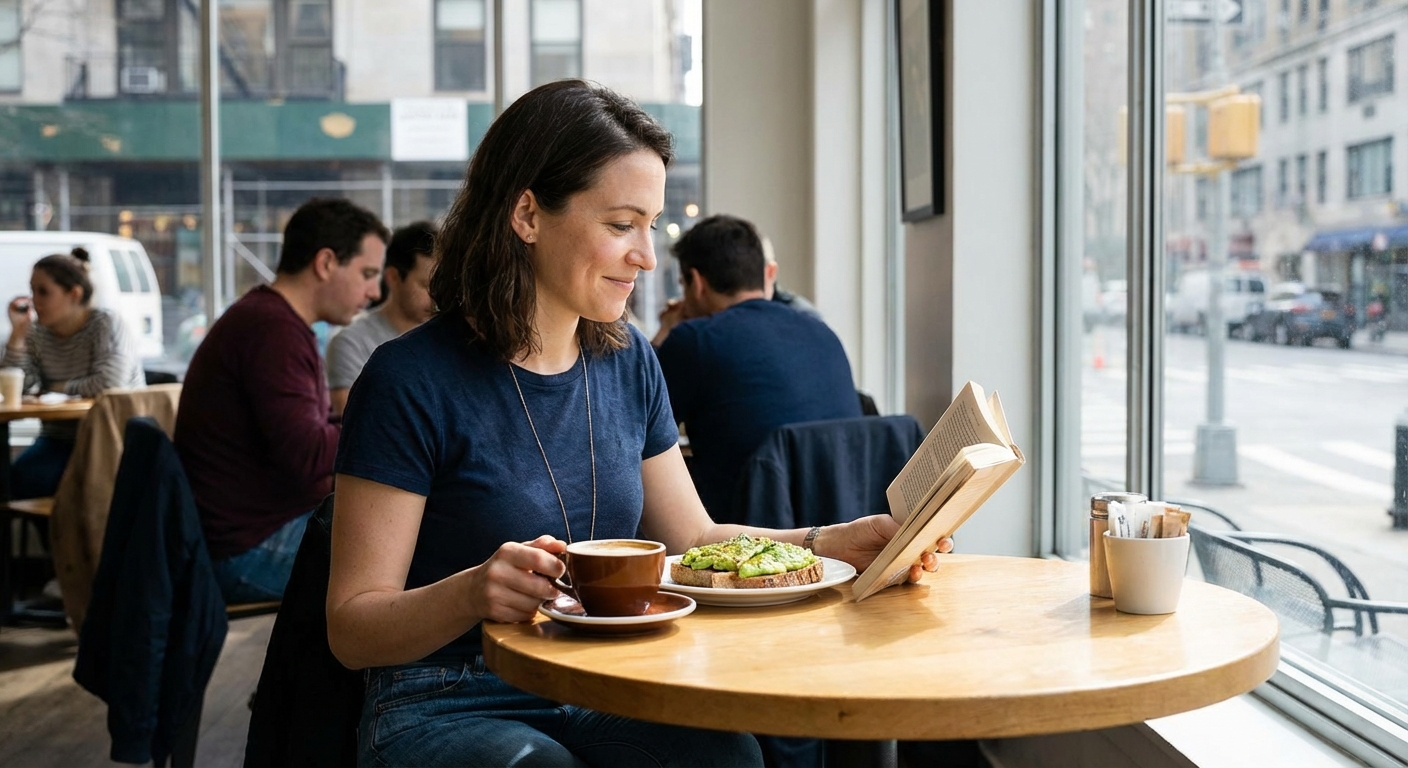
The host usually asks this with a slight tilt of the head, a gesture that hovers somewhere between pity and logistical confusion. For decades, the phrase "table for one" has carried a heavy stigma. It implied you had no one to share bread with, that you were socially adrift, or that you had simply failed at the game of popularity. We have been conditioned to believe that food is communal and that eating alone is a sign of defeat.
But that narrative is collapsing.
We are seeing a massive cultural shift in how we view solitude. It is no longer about isolation; it is about agency. We are moving past the awkwardness of the solo diner and entering an era where reclaiming your time is the ultimate form of self-possession. In a world that demands your constant attention—from your boss, your spouse, your kids, and the relentless pinging of your digital devices—a meal eaten in silence is not a tragedy. It is a sanctuary.
This isn't just a feeling; the data backs it up. We are currently navigating a fascinating shift in consumer behavior. According to the Yum! Brands 2026 Food Trends Report, solo orders now account for approximately 47% of all dining moments, a massive jump from where we were just five years ago. This suggests that nearly half of us are choosing to sit down with ourselves, not because we have to, but because we want to.
The Psychology of Choice
The mental health impact of eating alone hinges on a single, critical variable: choice.
Psychologists distinguish between loneliness and solitude. Loneliness is the pain of being alone when you crave connection. It is depleting. It feels like rejection. Solitude, however, is the glory of being alone. It is the state of being alone without being lonely. It is restorative.
When you are forced into isolation by circumstance, it negatively impacts your life satisfaction. But when you actively choose to step away from the herd to nourish yourself, the dynamic flips. You are engaging in "positive solitude." This is "choice therapy" in action.
Think about your average day. How much of it is spent performing? When you are at lunch with colleagues, you are navigating office politics. When you are at dinner with family, you are managing emotions and logistics. You are "on."
Dining alone removes the need for performance. You don't have to smile when you aren't happy. You don't have to make small talk about the weather. You don't have to compromise on which appetizer to order. You simply exist. This shift allows for a mental reset that is difficult to achieve when you are mirroring the emotions of the people across the table. It turns a basic biological necessity into an act of quiet rebellion against a noisy world.
The Biological Connection
Beyond the psychological benefits, there is a profound physiological argument for eating in silence. It connects directly to the gut-brain axis, the communication highway between your central nervous system and your enteric nervous system (often called your "second brain").
Most of us eat in a state of low-grade stress. We inhale our food while driving, scrolling through emails, or debating with a partner. When your brain is distracted or stressed, your body activates the sympathetic nervous system—the "fight or flight" response. This diverts blood flow away from your digestive system and toward your extremities. The result is poor digestion, bloating, and a nutrient absorption rate that hits rock bottom.
When you eat alone and remove the social and digital noise, you have the opportunity to shift into the parasympathetic state—the "rest and digest" mode.
This is where the concept of sensory awareness comes in. I am not talking about some mystical practice. I am talking about the practical discipline of paying attention to what you are doing. When you are alone, you can actually taste your food. You notice the texture. You chew more thoroughly.
A 2025 study published in the South Eastern European Journal of Public Health found that eating practices focused on sensory awareness are directly associated with improved emotional regulation. By focusing on the physical act of eating, you strengthen the prefrontal networks in your brain that handle emotion. You are essentially training your brain to calm down.
This creates a positive feedback loop. You eat in peace, your nervous system regulates, your digestion improves, and your brain receives a signal of safety rather than stress. You walk away from the table feeling fueled rather than drained.
Practical Steps to Dine for Thriving
Transitioning from "scrolling to survive" to "dining to thrive" requires a change in habits. It is easy to sit alone and still be mentally chaotic. If you are sitting at a table for one but doom-scrolling through social media the entire time, you aren't practicing solitude; you are just distracting yourself in a different location.
To truly reap the benefits of this practice, you need a strategy. Here is how to do it:
Choose the "Bar Seat" Strategy.
If the idea of sitting at a lonely table in the middle of a dining room feels too exposing, start with the bar or a communal counter. This is the perfect middle ground. It provides what I call "ambient connection." You are surrounded by the hum of humanity—the clinking of glasses, the murmur of other conversations—but you are under no obligation to participate. You get the comfort of the "company of the room" without the drain of forced interaction. It is a powerfully restorative space where you can be anonymous but included.Ditch the "Phone Armor."
This is the hardest step, but the most necessary. When we feel awkward, we reach for our phones. It is our shield. We pretend to be busy so no one thinks we are losers. But using your screen as armor robs you of the experience. You cannot regulate your nervous system if you are spiking your cortisol with news headlines or comparison traps on social media.I know this struggle personally. When I was losing 110 pounds and fighting my way out of binge eating habits, food was a source of shame for me. I used to eat alone in my car, hiding wrappers, purely so no one would see me. When I finally started getting healthy, I had to learn to eat alone in public without the shame. I had to put the phone down and just look at the food. It was terrifying at first. But eventually, that silence became the only time in my day where I wasn't judging myself. It wasn't about hiding anymore; it was about respecting the meal. Instead of scrolling, bring a physical notebook. Write down your thoughts, or simply observe the room. Transform the meal into a ritual of presence.
Practice "Choice Therapy."
Use the menu as a tool for emotional independence. When we eat in groups, we often suffer from "menu mimicry." We order what others order to fit in, or we skip the dessert we really want because no one else is having one. When you are alone, the menu is yours. Ask yourself: "What do I actually want right now?" Not what is cheapest, not what is trendiest, not what is easiest to share. What does your body crave? Making these small, low-stakes decisions based purely on your own internal cues strengthens your sense of self. It reminds you that your needs are valid and that you are capable of satisfying them.
Conclusion
We live in an economy of attention, where everyone wants a piece of you. Your time is a commodity that is constantly being traded, sold, and stolen. Eating alone is one of the few remaining ways to buy your time back.
It is not about being anti-social. It is about being pro-you. It is about recognizing that you cannot be a good friend, partner, or employee if you are running on empty. By reclaiming the table for one, you are declaring that your company is worth keeping. You are practicing the discipline of silence in a noisy world.
So, the next time the host tilts their head and asks, "Just one?" look them in the eye and say, "Yes." Do not apologize. Take your seat, put away your phone, and enjoy the quiet. You have earned it.