

It seems like everywhere you look these days, the world is looking backward. You walk into a coffee shop and see teenagers snapping photos on "vintage" digital cameras from 2010. Vinyl sales are outpacing streaming growth. We are collectively obsessing over the aesthetics of the mid-2000s.
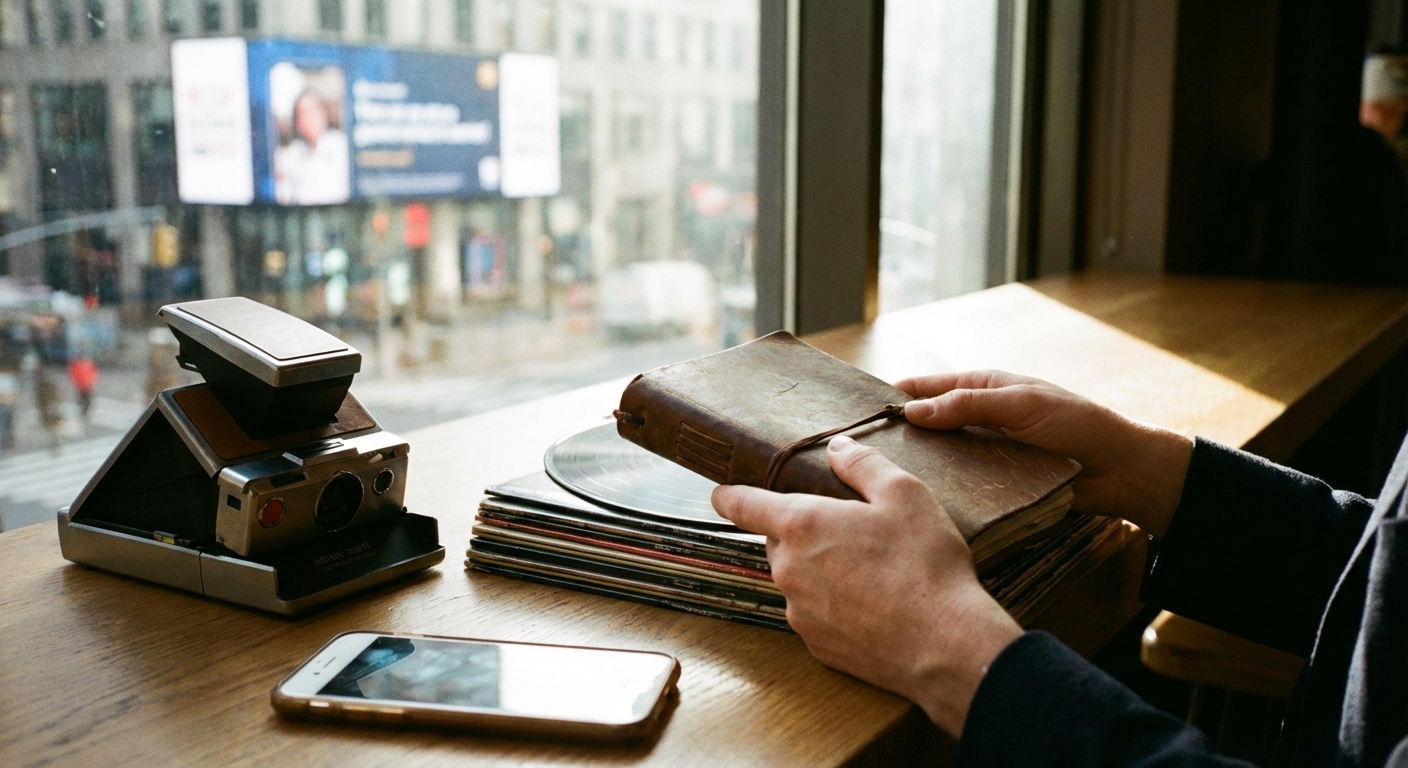
It’s easy to dismiss this as just another trend or a hipster phase, but psychology suggests something much deeper is happening. We aren’t just buying old stuff because it looks cool. We are reaching for a safety line.
In a world that feels like it’s spinning faster every day—with AI reshaping our jobs and screens dominating our attention—we are subconsciously trying to anchor ourselves. This is the "Analog Resurgence," and it turns out, it’s exactly what our brains need right now.
From Malady to Medicine
For a long time, feeling nostalgic was considered a bad thing. In fact, if you went back a few centuries, doctors would have diagnosed you with a literal disease.
The term "nostalgia" was coined in the late 1600s by a Swiss doctor to describe the intense homesickness of Swiss mercenaries fighting abroad. It was viewed as a psychiatric disorder, a "cerebral disease" that caused irregular heartbeats, weeping, and anxiety. For hundreds of years, the consensus was that looking backward was a sign of depression or an inability to cope with the present.
That perspective has shifted dramatically in the last two decades. Modern psychology no longer views nostalgia as a trap. Instead, researchers like Dr. Constantine Sedikides have identified it as a vital psychological resource. It is not a weakness; it is a tool.
Think of nostalgia less like a disease and more like a psychological immune system. When the outside world feels chaotic or threatening, your mind retreats to a "home base" of safe, cherished memories to regulate your emotions. It is a natural defense mechanism against the uncertainty of the future.
The Emotional Anchor
One of the scariest feelings in the modern world is a sense of fragmentation. We play so many roles—parent, employee, partner, digital avatar—that it’s easy to lose the thread of who we actually are.
This is where the concept of "self-continuity" comes in. It’s the psychological bridge that connects your past self to your present self. Without it, life feels like a series of disconnected events rather than a coherent story.
When you engage in nostalgic reflection, you are reinforcing that bridge. You are reminding yourself that the person who survived high school, the person who got that first job, and the person reading this article are all the same resilient individual.
I know this feeling well. I work as a web developer and marketer, juggling multiple projects that often feel like they are spiraling out of control. When the deadlines pile up and the code just won't work, I get a very specific kind of tunnel vision. I start to feel like a machine, just outputting tasks. To snap out of it, I have a habit of putting on a specific playlist from my college years. It’s not just about enjoying the music; it’s about remembering the version of me that existed then. That young guy had drive, he had dreams, and he could handle late nights. Connecting with him grounds me. It reminds me that I have handled pressure before, and I can handle it again.
This is the power of self-continuity. It provides a stable foundation when the ground beneath you feels shaky. It tells your brain, "You have been here before, and you survived."
Social Glue
Nostalgia isn’t just a solo act. While it helps us connect with ourselves, it is also one of the most powerful tools we have for connecting with others.
We have all experienced this. You are at a dinner party, the conversation is lagging, and then someone says, "Hey, do you remember that old cartoon…" Suddenly, the energy in the room shifts. Everyone leans in. The barriers come down.
Psychologists call this "social connectedness." Shared memories act as a social glue. When we reminisce with friends or family, we aren’t just recounting facts; we are validating our shared identity. We are saying, "We belong to the same tribe. We have walked the same path."
This is particularly important in an era of loneliness. Despite being more "connected" than ever digitally, many of us feel isolated. Engaging in collective nostalgia—whether it’s discussing old movies, shared struggles, or family traditions—has been shown to lower cortisol levels (the stress hormone) and increase feelings of belonging.
It transforms a group of individuals into a community. It reminds us that we are not alone in our experiences.
The Science of "The Glow"
So, why does looking at an old photo or smelling a familiar meal feel so good? It’s not magic; it’s biology.
When you experience nostalgia, your brain lights up in very specific ways. Neuroimaging studies using fMRI scans have shown that nostalgic thoughts activate the brain's reward system. specifically the ventral striatum and the medial prefrontal cortex.
These are the same areas of the brain that light up when you eat delicious food or win money. In a very real physiological sense, nostalgia is "food" for the brain. It triggers the release of feel-good neurotransmitters like dopamine.
This is why nostalgia is so effective at combating existential dread or boredom. When the brain feels starved for meaning or pleasure, a hit of nostalgia provides a quick, safe dose of reward. It "medicates" the brain against feelings of isolation and anxiety.
This biological reaction is likely why we are seeing such a massive return to physical media and "retro" tech right now. In a digital world that often feels cold and abstract, holding a physical vinyl record or using a clunky old camera provides a tangible sensory trigger that digital files just can’t match. We are hunting for that "glow."
Practical Applications
You don’t have to wait for nostalgia to hit you by accident. You can—and should—intentionally harness it as part of your mental health toolkit. Here is how you can use the past to stabilize your present.
1. Build an "Emergency Kit"
Create a physical or digital archive specifically designed to trigger positive memories. This isn’t just a photo dump on your phone. It should be a curated collection of items that spark joy.
Think of it like a first-aid kit for a bad day. When you are feeling overwhelmed or low, spend ten minutes looking through this specific collection. It forces your brain to shift gears from "threat mode" to "safety mode."
2. Practice Social Reminiscing
Make it a habit to bring up positive shared memories with your friends or partner. Instead of just complaining about work or politics, ask, "Do you remember that trip we took five years ago?"
It might feel forced at first, but watch what happens to the conversation. You will likely find that the tension drops and the connection deepens almost immediately.
3. Use Your Senses
Visuals are great, but smells and tastes are even more powerful. The olfactory bulb (which processes smell) is directly linked to the amygdala and hippocampus, the parts of the brain that handle emotion and memory.
This is why the smell of your grandmother’s cooking or a specific perfume can transport you back in time instantly. If you are feeling ungrounded, try to recreate a specific taste or smell from a happier time in your life. It acts as a shortcut to emotional regulation.
Conclusion: The Bittersweet Balance
There is a catch, of course. Like any powerful medicine, the dosage matters.
Psychologists distinguish between two types of nostalgia: "reflective" and "restorative."
Restorative nostalgia is the dangerous kind. It’s the desire to rebuild the past because you refuse to accept the present. It’s the feeling of "I wish I could go back and stay there." This can lead to getting stuck, unable to move forward because you are too busy looking in the rearview mirror.
Reflective nostalgia is the healthy sweet spot. It’s the ability to look back with fondness, cherish the memory, but accept that it is over. It’s bittersweet, yes, but it’s grounded in reality.
The goal isn’t to live in the past. It’s to visit the past to retrieve the strength, identity, and warmth you need to face the future.
So, go ahead and buy that vintage camera. Listen to the music you loved in high school. talk about the "good old days" with your friends. It’s not a waste of time. It’s a vital way to remind yourself of who you are, so you can handle whatever comes next.

See also in Mindset
Stop Comparing Yourself to Others Today
How Awe Experiences in Nature Literally Alter Your Perception of Time
How the ‘Negativity Bias’ Makes You Remember Insults More Than Compliments
10 Mindset Shifts for a Joyful Christmas Season
The Paradox of Choice: When More Options Mean Less Happiness
10 Mindset Tricks for Thanksgiving Peace