We used to treat the ability to "drink everyone under the table" as a badge of honor, but biologically, it is actually a flashing red warning light on your dashboard.
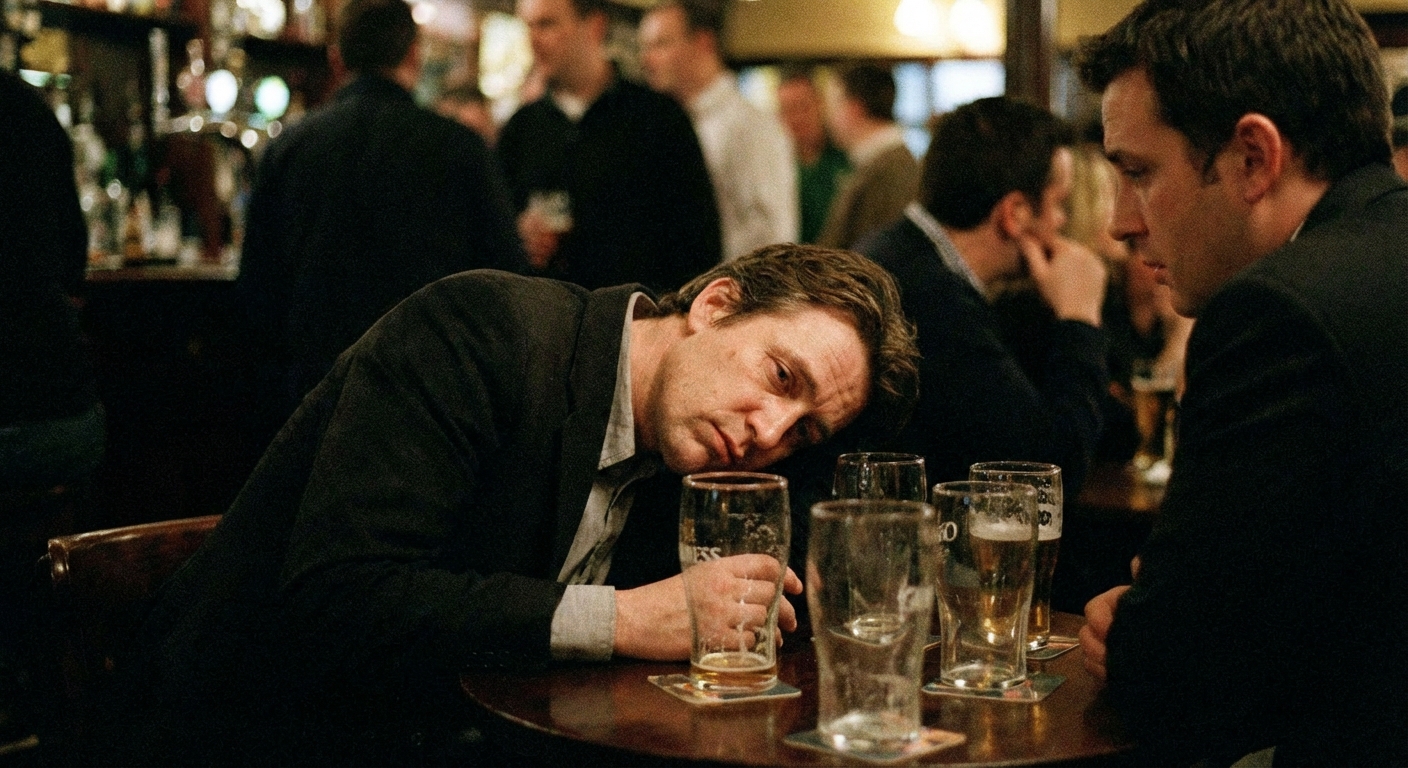
For decades, culture taught us that having a "hollow leg" or an "iron stomach" was a sign of strength. It implied you were tough, seasoned, and in control. But as we move further into 2026, the data tells us a different story. We are seeing a massive shift in how we view consumption, with only 54% of adults now reporting that they drink alcohol at all. This drop isn't just a trend; it is a collective realization that "deliberate wellness" matters more than fitting in at happy hour.
The reality is that high tolerance isn't a superpower. It is a physiological adaptation that signals your body is under significant stress. When you can drink three or four cocktails without feeling a buzz, it doesn't mean you are handling the alcohol better than your friends. It means your body is working overtime to fight against the toxin you are introducing. It is a sign of a system that has been forced to recalibrate to survive, and understanding this mechanism is the first step toward better health.
The Biology of the "High Floor"
To understand tolerance, you have to stop thinking of it as "strength" and start viewing it as "homeostasis." Your body loves stability. It wants to keep your temperature, your heart rate, and your brain chemistry level. Alcohol is a chaos agent that disrupts this balance, and your body has to work incredibly hard to counter it.
First, let's look at the brain. Alcohol is a depressant. It slows things down by mimicking a neurotransmitter called GABA (which acts like the brakes for your brain) and suppressing glutamate (which acts like the gas pedal). When you drink occasionally, this effect makes you feel relaxed or "buzzed."
However, if you drink regularly, your brain's CEO gets tired of being slowed down. To compensate, the brain changes its architecture. It downregulates those GABA receptors (removing the brakes) and upregulates glutamate (slamming on the gas). It is trying to fight the sedative effect of the alcohol to keep you awake and functional.
This is neuroadaptation. When you have high tolerance, your brain is running in a hyper-active state just to feel "normal" while alcohol is in your system. This is why, when the alcohol wears off, heavy drinkers often feel anxious, shaky, or unable to sleep. The alcohol (the depressant) is gone, but the brain is still pressing the gas pedal to the floor.
Simultaneously, your liver is engaging in metabolic acceleration. Your liver cells contain an organelle called the smooth endoplasmic reticulum, which is responsible for detoxifying chemicals. When you consistently flood your system with ethanol, the liver physically expands this machinery and produces more enzymes, specifically alcohol dehydrogenase.
Think of it like a factory hiring more staff to deal with a sudden influx of orders. Your liver becomes hyper-efficient at clearing alcohol from your bloodstream. While this sounds like a good thing, it means you have to drink significantly more alcohol to get the same effect, leading to a dangerous cycle of increasing consumption.
Why "Holding Your Liquor" Is a Red Flag
There is a dangerous myth that if you don't feel drunk, you aren't doing damage. This could not be further from the truth. In the medical world, specifically within the criteria for Alcohol Use Disorder (AUD), high tolerance is not a safety buffer—it is a primary diagnostic criterion for dependency.
When I look at the landscape of modern health, I see a lot of people confusing "functional" with "healthy." You might be the person who can finish a bottle of wine and still help the kids with their homework or wake up for a 6:00 AM meeting without a hangover. You might pride yourself on this. But this absence of a "buzz" is a clinical signal that your baseline has shifted.
If you don't feel the warning signs—the slurring, the dizziness, the stumbling—you lose the natural "stop" signal that protects you from poisoning yourself. The "buzz" is there for a reason. It is your body saying, "I have had enough, please stop." When you silence that voice through tolerance, you open the door to massive consumption without the immediate feedback loop that tells you to slow down.
Research indicates that individuals who develop tolerance rapidly are at a significantly higher risk for long-term dependency. It becomes a game of chasing a feeling that is harder and harder to catch. You aren't drinking to feel good anymore; you are drinking just to stop the hyper-active glutamate system in your brain from making you feel anxious. You are drinking to feel normal.
The Invisible Toll and the Overdose Paradox
The most terrifying aspect of tolerance is the "Overdose Paradox." This is something that doesn't get discussed enough at the bar.
While your brain's cognitive centers (the parts that think, talk, and make decisions) can build up a massive tolerance to alcohol, your brainstem does not adapt at the same rate. The brainstem, specifically the medulla oblongata, controls your primal functions: your heartbeat and your breathing.
This creates a deadly gap. You might feel "sober" enough to drive or keep drinking because your conscious brain has adapted. But your respiratory system is just as vulnerable as it was when you had your first drink. You can reach a lethal Blood Alcohol Concentration (BAC) where your breathing stops, even if you don't feel "wasted." This is how people die of alcohol poisoning while looking deceptively composed just an hour before.
Furthermore, your organs do not have "tolerance." Your liver, your pancreas, and your heart take the hit regardless of how sober you feel. High tolerance masks the damage. It allows you to pour toxic amounts of ethanol over your cells, accelerating the risk of cirrhosis and at least seven types of cancer.
I know what it’s like to ignore your body’s screaming signals. Back when I was 110 pounds heavier, I had completely broken my "fullness" gauge. I could eat massive quantities of food and never feel satisfied, convinced that because I didn't feel stuffed, I wasn't doing damage. I wore my ability to overeat like armor, but internally, my systems were failing. It took a massive health scare and a long period of discipline to realize that my "capacity" was actually just numbness.
It is the same with alcohol. The silence of your symptoms is not safety; it is silent damage.
Reclaiming Sensitivity
The good news is that biology is forgiving if you act in time. You can reverse tolerance, and you can reset your body's baseline. We are seeing a record number of people in 2026 choosing "deliberate wellness," and that starts with regaining your sensitivity.
1. Monitor Your Subjective Response
Stop counting drinks and start monitoring the effect. If you notice that two drinks used to relax you, but now you need four to feel that same exhale, do not view that as an achievement. View it as a warning. That gap between two and four is where the dependency grows.
2. The Reset Period
You need to implement periods of total stillness and abstinence. This isn't about punishment; it's about physiology. Research shows that abstaining from alcohol for even one month allows your liver enzymes to normalize and gives your brain the space to upregulate GABA receptors again. You need to let the "brakes" grow back.
3. Change Your Environment
Be aware of "learned tolerance." Your brain is smart; if you always drink in the same chair at the same time, your body pre-emptively adjusts its chemistry before the first sip. This is a conditioned response. Changing your setting or your routine can reveal your true level of impairment and help break the psychological loop of consumption.
4. Embrace Discipline Over Numbness
We often drink to numb the noise of the world. Instead of seeking numbness, seek quiet contemplation. Use prayer or silence to address the stress that you are trying to drown. Reclaiming your sensitivity means being willing to feel everything again—the stress, the joy, and the anxiety—without a chemical buffer.
Low tolerance is actually a gift. It is a biological protective mechanism that keeps you safe, keeps your consumption low, and protects your organs from long-term decay. If you have lost that protection, it is time to do the work to get it back.