

Everyone assumes that happiness is the absence of struggle, but the Finnish people prove exactly the opposite. They have built one of the most stable, contented societies on earth not by avoiding hardship, but by mastering the art of staring it down.
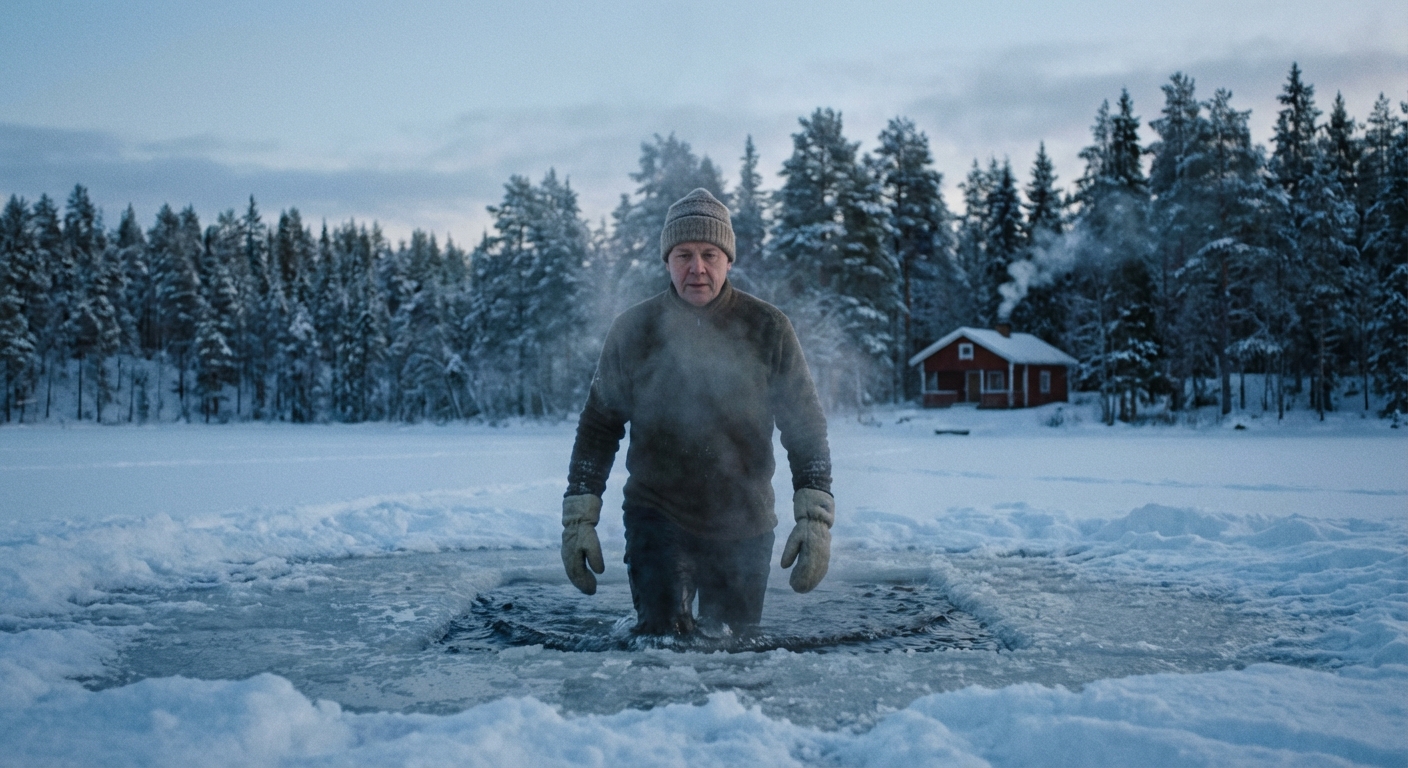
For years, we have looked at Scandinavian countries and wondered what their secret is. Is it the social safety net? The education system? The coffee? While those play a role, the foundation of their resilience is something much older and far more primal. It is a concept called Sisu.
As of March 2026, Finland has been highlighted globally for its citizen preparedness, specifically the "72-hour rule." This isn't just government policy; it is a cultural expectation that you should be able to survive for three days during a storm or power outage without outside help. This culture of self-sufficiency is a modern application of Sisu. It is the understanding that resilience is not a panic reaction you have in an emergency, but a lifestyle you build through routine and foresight.
It is no accident that this mindset has contributed to Finland being named the world's happiest country for eight consecutive years as of the 2025 World Happiness Report. True contentment doesn't come from an easy life. It comes from knowing that when life gets hard—and it always does—you have the inner steel to handle it.
The Anatomy of Sisu
We often use words like "grit" or "perseverance" interchangeably, but Sisu is distinct. In the world of psychology and performance, "grit" usually refers to the long game. It is the ability to stick with a goal for years, like getting a degree or building a business. It is a marathon mindset.
Sisu is different. It is the sprint at the end of the marathon when your legs have already given out. It is a short-term, high-intensity burst of extraordinary determination required to survive a specific "breaking point." It is what happens when you have absolutely nothing left in the tank, yet you take one more step anyway.
Researchers describe Sisu as "embodied fortitude." This means it is not just an intellectual idea or a positive thought. It is a visceral, physical reaction. It is the capacity to access a "second wind" of energy that only becomes available when you are fully exhausted.
Think of it like a reserve fuel tank in a car. You cannot access it while the main tank is full. You only find out it is there when the needle hits empty and the engine starts to sputter. Most of us stop the moment we feel tired or discouraged. Sisu is the practice of realizing that your perceived limit is actually just the entry point to your true potential. It is the refusal to surrender to the odds, even when success seems impossible.
The Practice of Sisu
You might be thinking that this sounds great for people living in the Arctic Circle, but how does it apply to your life? The good news is that Sisu is not a genetic trait exclusive to the Finns. It is a universal human capacity that simply needs to be trained. You do not wait for a crisis to build this strength; you forge it in the fires of your daily life.
Here is how you can start building this unshakeable core today:
1. Embrace Controlled Discomfort
We live in an age of aggressive comfort. We have climate control, food delivery, and infinite entertainment at our fingertips. The problem is that comfort creates atrophy. If you never stress your system, you never learn how to regulate your emotions under pressure.
To build Sisu, you must invite small, controlled doses of adversity into your life. This could be a cold shower in the morning, a workout that pushes you to failure, or simply the act of sitting in silence without reaching for your phone.
I know what it feels like to be trapped under a crushing weight—literally. When I was carrying an extra 110 pounds, the idea of changing my life felt impossible. I didn't stop binge eating because I felt motivated; I stopped because I learned to sit with the discomfort of saying "no" one meal at a time, finding a strength I didn't know I had until I was backed into a corner.
When you voluntarily choose discomfort, you are training your brain. You are teaching yourself that you can feel agitation, fatigue, or frustration and still remain in control. You are proving to yourself that you don't break easily.
2. Master the Micro-Action
When we face a massive crisis—a health scare, a financial collapse, or a broken relationship—the sheer scale of the problem can be paralyzing. Our brains overload, and we shut down.
Sisu demands an "action mindset." The key is to ignore the finish line. If you look at the mountain in its entirety, you will quit. Instead, you focus exclusively on the micro-action immediately in front of you.
This is not about "manifesting" a better future. It is about brutal, practical focus. Can you survive the next ten seconds? Can you send one email? Can you do one dish? Can you take one single breath with deliberate control?
By shrinking your horizon to the immediate moment, you bypass the brain's fear response. You stop negotiating with your feelings and simply execute the next necessary step. Sisu manifests not as a grand heroic leap, but as a series of small, relentless steps taken when you want to lie down.
3. Align with a Purpose Beyond Self
It is a fascinating paradox of human nature: we will endure almost anything for the sake of others, even when we won't do it for ourselves. Research suggests that endurance increases significantly when our goals are prosocial—meaning they benefit a tribe, a family, or a cause.
If your struggle is only about you, it is easy to justify quitting. But if your resilience serves a larger purpose, you tap into a deeper well of energy. Connect your struggle to a "why." Are you staying strong to support your children? Are you enduring a tough project to help your team? When you make your fight about service, you transform suffering into a meaningful mission.
The Science of Transcendence
Why does this framework work so well? It comes down to how we frame adversity. Psychological transcendence occurs when we stop viewing pain as an enemy and start viewing it as information.
Sisu functions as a metacognitive tool. It changes the narrative in your head. When obstacles arise, the average person thinks, "This is unfair; I am a victim of this situation." The person practicing Sisu thinks, "This is the resistance I need to access my latent power."
This shift moves you from a state of victimhood to a state of agency. It gives you cognitive control. Unlike blind stubbornness, which can be reckless, constructive Sisu involves high levels of emotional regulation. It allows you to feel fear and frustration without being ruled by them.
In the Christian Orthodox tradition, there is a deep understanding that struggle produces patience, and patience produces character. Sisu aligns with this wisdom. It accepts that life is difficult, but it refuses to accept that difficulty is the end of the story.
Conclusion
The world is unpredictable. We cannot control the economy, the weather, or the actions of others. But we can control our internal response.
Sisu teaches us that we are stronger than we think. It reminds us that there is a reservoir of power inside us that we rarely touch because we are too afraid to go to the dark places where it is kept.
You don't need to be Finnish to have Sisu. You just need to decide that when the storm comes, you won't run from it. You will stand your ground, take a deep breath, and take the next step.

See also in Mindset
20 Strategies for Attitude Strength
12 Strategies for Enhancing Self-Discipline
Resilient Approaches to Seasonal Mood Dips
What To Do When Things Don’t Go Your Way?
10 Mindset Tricks for Holiday Balance
Why Your Best Ideas Come When You Stop Trying