If you are feeling fried, burnt out, or just incredibly tired of the constant ping of notifications, you aren't alone. We are living in an era where "downtime" usually means scrolling through a feed on a glowing rectangle, which isn't really downtime at all. It is just a different kind of noise. By the time we reach the medical wellness trends predicted for 2026, the global conversation is going to shift aggressively toward "Ultra-Nature" and "longevity." Experts are already signaling that the only real cure for our modern, digital exhaustion isn't an app or a pill—it is a return to the wild. But you don't need to wait for a trend report to tell you that your brain needs a break. You just need to understand an old German concept that turns being alone into a superpower.
The Soul of the Forest
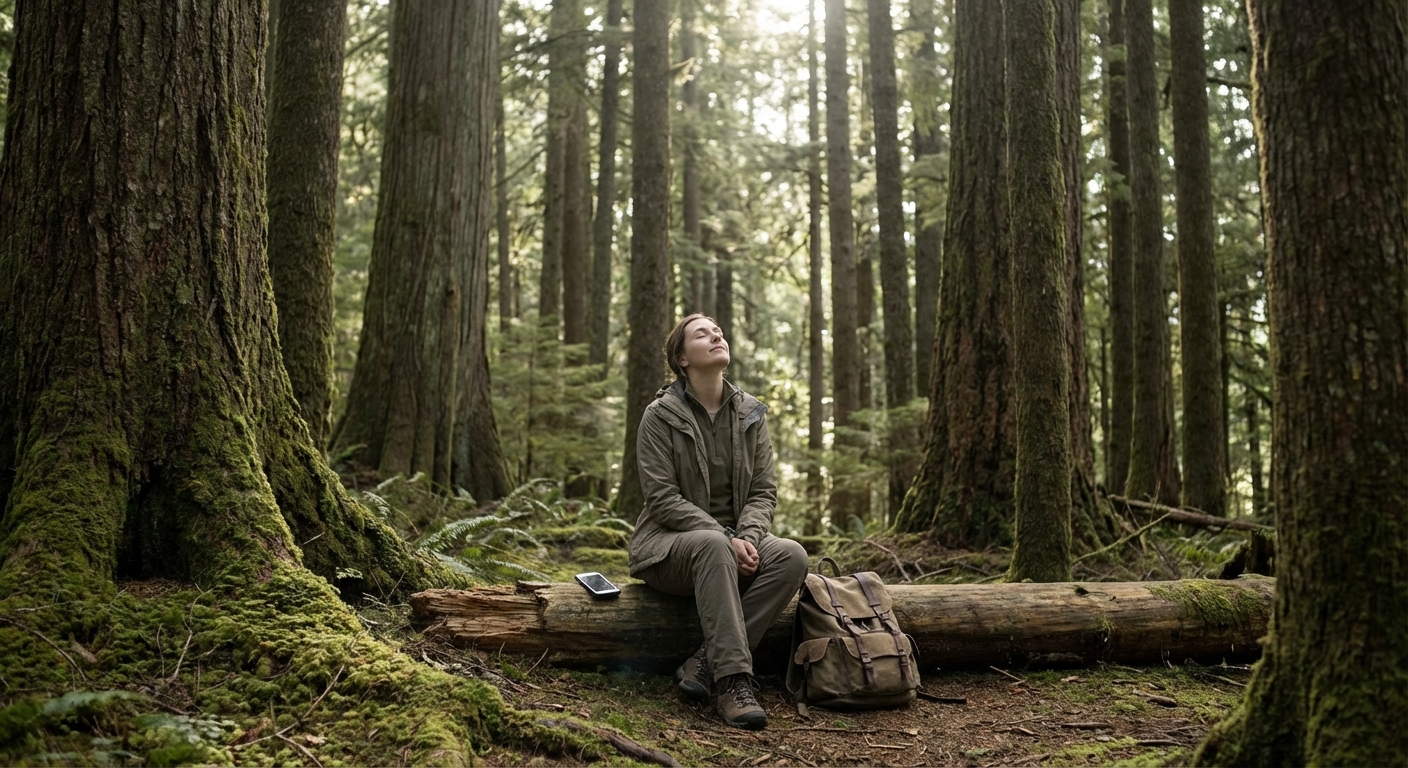
There is a profound difference between being lonely and being in solitude. In English, we often conflate the two, treating any moment of aloneness as a social failure or a sad state of affairs. The Germans, however, have a specific word that captures the magic of being alone among the trees: Waldeinsamkeit.
Broken down, it combines Wald (forest) and Einsamkeit (solitude). But to translate it simply as "forest loneliness" misses the entire point. Waldeinsamkeit describes a specific, sublime state of being. It is the feeling of being alone in the woods, not because you have nowhere else to go, but because you have chosen to be there. It is a "sweet" solitude. It is a deliberate act of stepping away from the crushing expectations of society to find a moment of truth in the silence of nature.
This concept isn't new. It was the heartbeat of German Romanticism in the early 19th century. Poets and thinkers like Ludwig Tieck viewed the forest not as a scary wilderness to be tamed, but as a spiritual sanctuary. They believed that when you strip away the noise of the city and the performance of your public persona, you are finally free to encounter your authentic self.
In our current world, we are constantly "on." We perform for our bosses, we perform for our families, and we perform for strangers on the internet. Waldeinsamkeit offers a remedy. It suggests that the forest is the one place where you don't have to be anyone. You just have to be. It is a return to a primal, quiet contemplation that restores the soul in a way that binge-watching a series never will.
Why It Works
You might think this is just poetic fluff, but there is hard biology backing up the romantic philosophy. Your brain has a limit. In your daily life, you rely heavily on what psychologists call "directed attention." This is the part of your brain that focuses on spreadsheets, writes emails, navigates traffic, and filters out distractions. Think of this part of your brain as the CEO. It is powerful, but it gets exhausted. When the CEO is tired, you get irritable, you make mistakes, and you feel that deep, rattling sense of burnout.
This is where the forest steps in. Nature provides "Soft Fascination," a state where your surroundings hold your attention without you having to force it.
When you look at a sunset, or watch leaves sway in the wind, or stare at a running creek, your brain doesn't have to work. It drifts. This allows your "directed attention" mechanisms to rest and recover. It is the cognitive equivalent of putting your phone on a charger.
Furthermore, the physical environment of the forest actively heals you. Trees release phytoncides—essential oils that protect them from rotting and insects. When you breathe these in, your body responds by increasing the number and activity of natural killer cells, a type of white blood cell that fights tumors and viruses. At the same time, your cortisol levels—the stress hormone that wreaks havoc on your sleep and digestion—drop significantly.
I know this from experience. I rely heavily on the structure of the Christian Orthodox tradition to navigate my life, using prayer and strict discipline to find stillness in a chaotic world. But I have found that the forest offers a physical parallel to that spiritual stillness. When I step into the woods, the mental chatter quiets down, and I can finally hear myself think. It is not just about fresh air; it is about the profound healing that comes from silence.
Practical Steps to Find Yourself
Knowing the concept is one thing; living it is another. You cannot simply walk into a park while listening to a podcast and expect to experience Waldeinsamkeit. You have to curate the experience. Here is how you can practically apply this philosophy to your life, right now.
Deliberate Separation
The first step is the hardest: you must choose to be alone. This means no friends, no dogs, and absolutely no digital tether. If you bring your phone, you are bringing the entire world with you into the woods. You need "societal release." You need to sever the cord that keeps you obligated to respond to others. Find a local trail or a patch of woods. Tell someone where you are going for safety, leave your phone in the car (or turn it off completely if you must carry it), and walk away. The anxiety you feel in the first ten minutes is normal. That is just your brain going through withdrawal from constant stimulation. Keep walking.Sensory Immersion
Once you are in the trees, slow down. Most of us walk for fitness, trying to keep our heart rate up. Waldeinsamkeit requires you to amble. Focus on your senses. Listen to the sound of dry leaves crunching under your boots. Smell the damp earth or the pine needles. touch the rough bark of an oak tree. This isn't some mystical practice; it is a physiological tool to ground you in the present moment. By focusing on sensory input, you stop the loop of worrying about yesterday or planning for tomorrow. You are forcing your brain into that state of soft fascination.Journal the Transition
After you have spent time in silence—whether it is twenty minutes or two hours—take a moment to write before you re-enter the "real world." Bring a physical notebook and a pen. In the silence of the forest, your brain often unlocks problems that seemed unsolvable in the city. Without the noise, patterns emerge. Write down what you felt. Did you feel anxious? peaceful? bored? Boredom is actually good; it means your brain is finally resting. Use this time to capture the thoughts that usually get drowned out by the noise of daily life.Practice "Continuous Care"
Do not treat this as a once-a-year vacation. The trend toward "medical wellness" emphasizes prevention. You don't brush your teeth once a year and expect healthy teeth; you do it every day. Treat forest solitude the same way. It is hygiene for your mind. You don't need a sprawling national park. A quiet corner of a city park, visited with intention and silence, can offer a micro-dose of this recovery. The goal is to build a habit of disconnection so that you don't reach the point of total burnout.
The Sweetness of Solitude
We are often terrified of being alone because we are afraid of what we might find. We fill every second of our day with noise because silence forces us to confront our own thoughts. But the German Romantics were right: there is a sweetness in that confrontation.
Waldeinsamkeit teaches us that we are part of something larger than our to-do lists and our social media profiles. When you stand among trees that have been there for decades, perhaps centuries, your deadline at work suddenly feels very small. That perspective is the ultimate stress relief.
So, the next time you feel the walls closing in, don't reach for the remote. Put on your boots. Go to the woods. Be alone. And in that silence, you might just find the person you have been looking for.