

If you have ever felt your heart hammer against your ribs because of a spider, a crowded room, or the prospect of getting on an airplane, you know that fear is not just a thought. It is a physical event. For a long time, the prevailing wisdom was that we needed to calm down to get better. We were told to breathe deeply, think happy thoughts, and wait for the storm to pass.
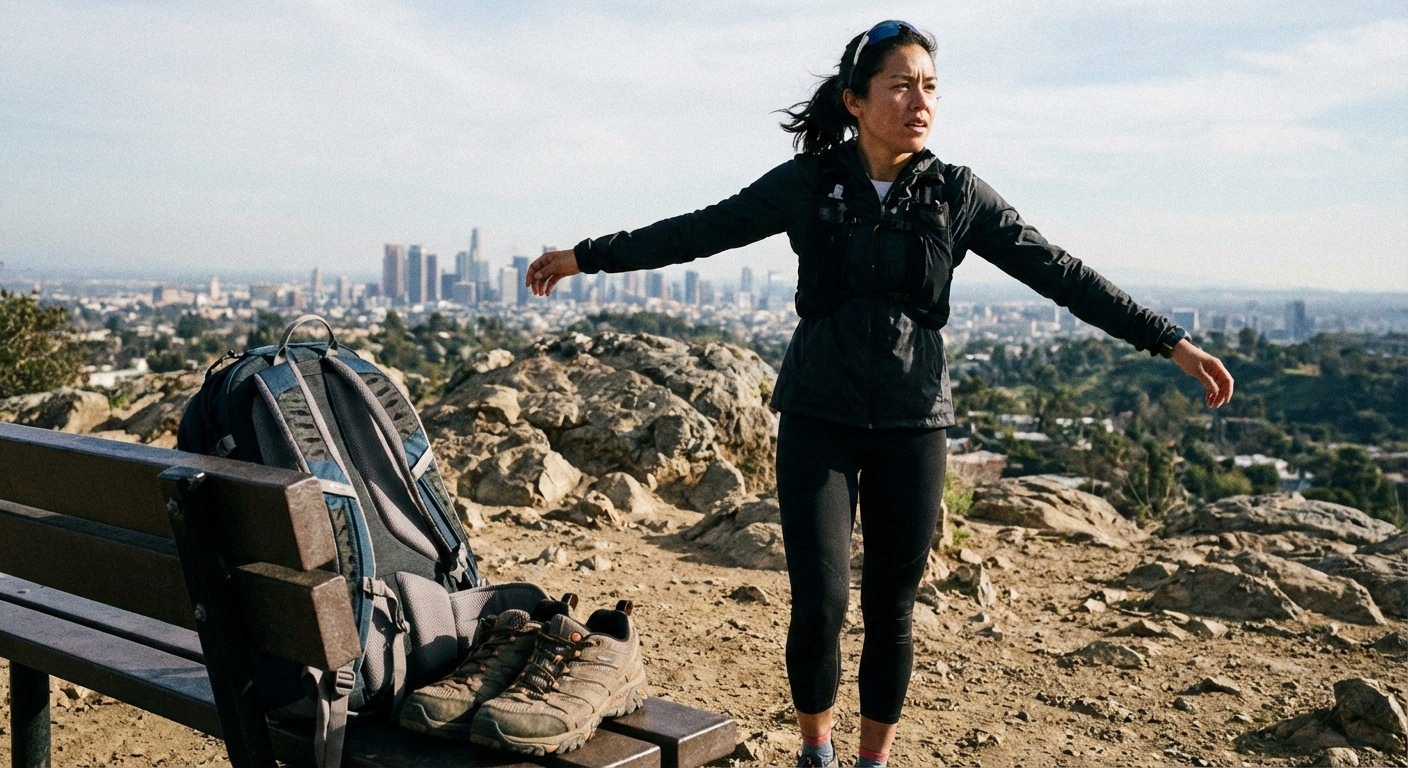
But a major clinical study released just this week, in March 2026, has turned that idea on its head. Researchers found that intense physical exercise can actually function as a form of "interoceptive exposure." In plain English, getting your heart rate up on purpose—running, lifting, moving—can be more effective for treating panic and phobias than traditional relaxation training. This breakthrough tells us something critical: the way out of fear isn't to sedate it. The way out is to walk directly through it.
For the 12.5% of adults globally who are currently wrestling with a specific phobia, this is the reality of exposure therapy. It is the gold standard for a reason. It requires courage, discipline, and a willingness to be uncomfortable, but the payoff is freedom.
The Mechanics of Rewiring Fear
To understand why exposure therapy works, you have to understand how your brain’s "fear center," the amygdala, operates. Think of the amygdala as an overprotective security guard. Its only job is to keep you alive. When you encounter something it perceives as dangerous—let’s say, a dog—it slams the panic button. You sweat, you shake, and you run away.
When you run away, your anxiety drops immediately. That relief feels good. But here is the trap: by running away, you have just taught your security guard that the dog was indeed a mortal threat and that escaping was the only reason you survived. You have reinforced the cycle of avoidance.
For years, therapists relied on a concept called "habituation." The idea was that if you stayed in a room with a dog long enough, your anxiety would naturally run out of gas, like a car idling until the tank is empty. While that can happen, recent research shows it is not the most effective way to learn.
We have now moved toward a model called "inhibitory learning." This is about creating a "prediction error." Your brain predicts: If I stay near this dog, I will be bitten and die. Exposure therapy forces you to stay near the dog until the time passes and… nothing happens. You don't die. You don't get bitten.
This creates a new memory structure. You aren't just erasing the old fear; you are building a new, louder "safety memory" that competes with and overrides the old fear memory. We aren't waiting for you to calm down; we are actively proving your brain wrong. Studies show that focusing on this "disproval" of the fear results in a 43% clinical success rate, compared to just 13% for the old-school method of just waiting for the fear to subside.
The Practitioner’s Framework
You don't just jump into the deep end on day one. If you are terrified of heights, nobody is going to push you out of a plane tomorrow. Effective exposure therapy is built on a structured, logical framework designed to stretch your tolerance without snapping it.
1. Constructing the Fear Hierarchy
This is where the work begins. You and a clinician build a ladder. It is a list of triggers ranked from "slightly annoying" to "absolute terror."
- Level 1: Looking at a cartoon drawing of a spider.
- Level 5: Looking at a high-resolution photo of a tarantula.
- Level 8: Standing five feet away from a spider in a glass tank.
- Level 10: Holding the spider.
You start at the bottom. You do not move up until you have mastered the current step. This builds a sense of competence. You realize you are stronger than you thought.
2. Leveraging Virtual Reality
We live in an era where technology bridges the gap between the clinic and the real world. Sometimes, "in vivo" (real-life) exposure is impossible to set up. We can’t easily put you on a turbulent flight or in front of a hostile audience of 500 people every Tuesday at 2 PM.
This is where Virtual Reality Exposure Therapy (VRET) comes in. It has become a critical tool for these inaccessible triggers. The brain is surprisingly easy to trick; it reacts to the virtual cliff edge almost exactly as it would to a real one. This allows you to practice "bravery" in a controlled environment before taking it out into the world.
3. Measuring Distress with SUDs
We use a tool called Subjective Units of Distress (SUDs). It is a simple scale from 0 to 100. Zero is total peace; 100 is the worst panic attack of your life. During exposure, you rate your number.
The goal isn't to stay at zero. The goal is to feel the distress rise to a 60 or 70 and stay there without engaging in safety behaviors. A safety behavior is anything you do to distract yourself or make the situation "safer," like clutching a water bottle, avoiding eye contact, or reciting a mantra. You have to drop the crutches. You have to let the anxiety hit you, wave after wave, until your brain realizes that the catastrophe isn't coming.
I know how impossible this feels when you are in the thick of it. I used to weigh nearly 300 pounds, and for years, I used food to numb any sense of anxiety or discomfort. When I finally committed to losing the weight—dropping 110 pounds eventually—I had to stop binge eating. That meant when the urge to eat hit me, I couldn't run to the fridge. I had to sit there, in the silence, feeling the physical crawl of the craving and the emotional distress that came with it. I had to let that feeling wash over me and realize that the discomfort wouldn't kill me. That was my own form of exposure, and it was the only way I broke the cycle.
Why It Outperforms Alternatives
You might be wondering why you can't just take a pill or learn some deep breathing techniques to manage this. While those tools have their place, they often fail to address the root cause of phobias.
Medications like SSRIs are common, but they are often a blunt instrument. Statistics suggest they are only about 50% effective for things like social anxiety, and crucially, they don't teach you anything. If you stop the medication, the fear usually comes back because the original "danger" memory in your brain hasn't been challenged. You haven't learned you are safe; you have just chemically dampened the alarm system.
Similarly, while techniques like breath control or prayer are vital for overall well-being and stillness, using them during exposure to "make the fear go away" can actually backfire. If you are frantically deep breathing while looking at a snake, you are teaching your brain: I can only survive this snake if I breathe in this specific way. You are still treating the snake as a monster.
Exposure therapy is superior because it changes the default setting of the brain. It facilitates "emotional processing," retraining the amygdala to distinguish between a perceived threat and actual danger. The effects are often permanent because you aren't masking the symptoms; you are fundamentally altering your relationship with the world.
We are even seeing neuro-innovation on the horizon. New trials are exploring "unconscious exposure" using decoded fMRI information. This technology could potentially reduce fear responses in the brain without the patient even needing to consciously face the terrifying stimulus. While this is exciting for the future, right now, the most powerful tool you have is your own conscious will.
Conclusion
The concept of self-efficacy is the primary predictor of long-term recovery. It is the shift from saying "I cannot handle this" to "I am capable of managing this distress."
Exposure therapy is not torture. It is a structured, scientific, and highly effective method for reclaiming your life. It turns the "monster" in the closet into just a pile of clothes. It proves to you, again and again, that the catastrophe you fear is a lie.
The recent findings on exercise and interoceptive exposure confirm what we are learning about the human mind: we are built for action, not avoidance. If you are tired of shrinking your world to fit your fears, it might be time to stop running and start climbing that ladder. You might find that the view from the top is a lot less scary than you imagined.

See also in Personal Growth
The Actual History of the Enneagram from Ancient Roots to Modern Psychology
12 Tips for Building a Strong Personal Brand
The #1 Mistake People Make When Setting Goals
10 Ways to Stop Comparing Yourself to Others
15 Ways to Build Professional Credibility
The Enneagram Hack That Reveals Your Biggest Blind Spot