Relapse doesn’t happen the moment you pick up a drink or a substance. It happens weeks earlier, usually on a quiet afternoon when you decide you are too tired to handle your emotions honestly.
It is 2026, and the medical world is buzzing with new solutions. We are seeing incredible data on GLP-1 medications like semaglutide and tirzepatide. Originally designed for diabetes and weight loss, these drugs are showing massive promise in quieting the "reward signals" in the brain that drive addiction. It is a technological marvel, and for many, it feels like a miracle cure. The noise in the brain stops. The cravings dial down.
But here is the hard truth that no pill can swallow for you: these medications only address the mental and physical stages of addiction. They fix the hardware, but they don't update the software. There is a massive gap between "not using" and "recovery," and that gap is where most people fall.
You might feel safe because you aren't shaking, and you aren't obsessing over your next fix. But if you don't understand the mechanics of the "Silent Stage," you are walking on a frozen lake that is slowly cracking beneath your feet.
The Three-Stage Trap
Most people view relapse as an event. It’s an explosion. One minute you are sober, the next you aren't. But that is chemically and behaviorally false. Relapse is a process. It is a slow burn that moves through three distinct phases: Emotional, Mental, and finally, Physical.
The tragedy is that we usually only intervene at the Mental stage—when the war in your head has already started. That is when you are white-knuckling it, bargaining with yourself, or romanticizing the "good old days." By the time you are fighting a mental craving, you are already halfway down the slide.
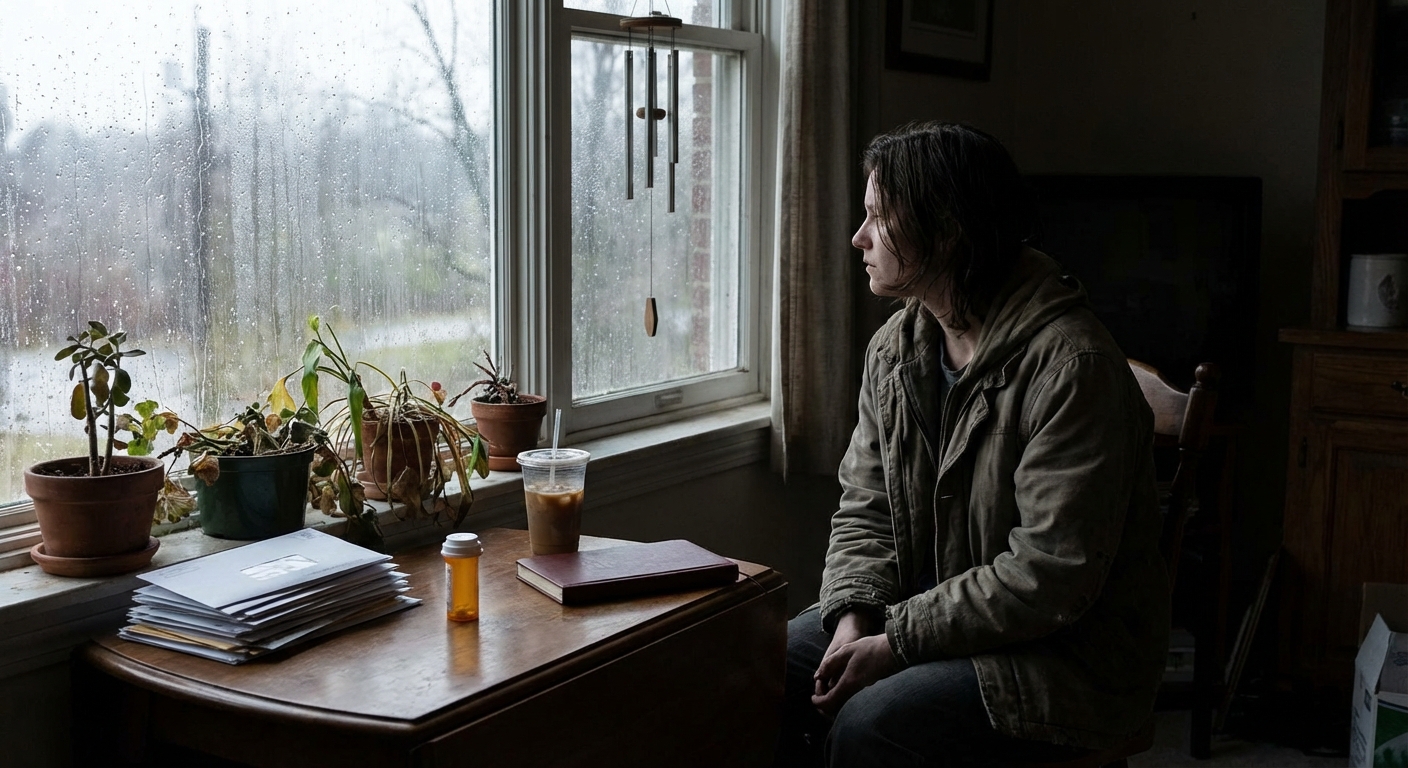
The real battleground is the first stage: Emotional Relapse. This is the phase where you are not thinking about using at all. In fact, if someone asked you if you wanted to use, you would honestly say "no." You remember the pain of your last bottom. You are committed to staying clean.
But while your conscious brain says "no," your subconscious behavior is screaming "yes." You are setting the stage for failure by neglecting the very things that keep you grounded. You are building a house of cards, and all it will take is one stiff wind—one bad day at work, one argument with a spouse—to knock it over.
The Silent Signs of Emotional Decay
I know what this looks like because I have lived it, not just in the context of substances, but in the brutal arena of physical health.
I lost 110 pounds years ago. It took discipline, structure, and a complete overhaul of how I viewed food. But I have had moments where the weight started creeping back. It didn't start because I was suddenly starving or because I forgot that pizza makes me feel sluggish. It started because I stopped doing the small things. I stopped prepping my meals. I stopped going to the gym because I was "too busy" with work. I stopped weighing myself because I didn't want to see the number. I wasn't thinking about binge eating; I was just neglecting the maintenance required to keep the chaos at bay. That neglect is the seed of relapse.
In addiction recovery, Emotional Relapse looks like "abstinence without maintenance." You are technically sober, but you are miserable. You are what the old-timers call a "dry drunk."
The chemicals might be out of your system, but the chaos is still in your mind. During this stage, your emotions start to bottle up. You stop dealing with stress constructively. You might start skipping the meetings or support groups that kept you tethered to reality. You tell yourself you don't need them anymore, or that you've "graduated."
This is often driven by Post-Acute Withdrawal Syndrome (PAWS). Your brain is still healing. It is trying to rebalance its chemistry, leading to mood swings, anxiety, and exhaustion. When you don't have a strategy to handle these aftershocks, you naturally retreat.
The Core Missed Sign: Isolation and Defensiveness
If there is one giant, flashing red light that everyone ignores, it is the combination of Isolation and Defensiveness. This is the specific "stuck point" that signals you are in trouble long before you think about a drink.
Isolation isn't just locking yourself in your room. It’s more subtle. It’s being in a room full of people but refusing to be vulnerable. It’s stopping the honest conversations. You might still be physically present at dinner or even at a support group, but your spirit has left the building. You stop sharing what’s really going on. You start keeping secrets again, even small ones.
Then comes the defensiveness. When a spouse, a friend, or a sponsor asks, "Hey, are you doing okay? You seem a little on edge," how do you react?
If you snap back with, "I'm fine! Why are you always checking on me? worry about yourself," you are in Emotional Relapse.
Defensiveness is a shield. It is your ego trying to protect the fragile state you are in. It allows you to play the victim. You convince yourself that the world is annoying, that people are intrusive, and that you are the only one who knows what you're doing. This creates a loop: you feel bad, so you isolate. People try to help, so you get defensive. This pushes them away, which makes you more isolated and lonely.
Eventually, the pain of this isolation becomes too great. That is when your brain flips the switch to the Mental stage. It starts looking for an escape hatch. And suddenly, using doesn't seem like a bad idea—it seems like the only logical solution to the pain you are feeling.
Practical Steps to Intervene
You cannot rely on willpower alone. Willpower is a finite resource; it’s like a battery that drains throughout the day. By 8:00 PM, your brain’s CEO—the prefrontal cortex—is exhausted. You need protocols, not promises.
Here is how you catch the slide before it turns into a crash.
1. The HALT Protocol
This is old-school wisdom, but it saves lives. When you feel "off," stop and ask yourself if you are:
- Hungry: Low blood sugar spikes adrenaline and cortisol. It makes you jittery and anxious. Eat real food.
- Angry: Are you carrying resentment? Anger is like drinking poison and expecting the other person to die.
- Lonely: Have you had a real connection today? Not a text message, but a human interaction?
- Tired: Fatigue destroys your emotional regulation. If you are sleep-deprived, your defenses are down.
If you identify any of these, fix the physiology first. Eat, breathe, call a friend, or sleep. Do not try to analyze your life while you are hungry or tired.
2. Identify the "Stuck Point"
Be honest with yourself. Is there a problem you are refusing to solve? Maybe it's a debt you're ignoring, a conflict at work you're avoiding, or a resentment you're nursing.
This refusal to cope is a hallmark of the slide. You are waiting for the problem to magically disappear. It won't. Acknowledge it. You don't have to solve it today, but you have to admit it exists.
3. The 24-Hour Rule
If you catch yourself being defensive or isolating, you need a hard rule. You must have one "honest interaction" within 24 hours.
This means calling someone—a mentor, a trusted friend, a priest, or a sponsor—and saying the words: "I am struggling right now. I'm not thinking about using, but I feel irritable and I want to be left alone."
Breaking the silence breaks the power of the secret. Darkness cannot survive in the light.
4. Restore the Routine
Emotional relapse is often a collapse of structure. You stop going to bed on time. You eat junk. You stop your morning prayers or your quiet time.
Force the routine back. Go to bed at the same time. Wake up at the same time. Eat three meals. It sounds boring, but boredom is better than chaos. Routine signals safety to your nervous system.
Why Structure Beats Willpower
The reason these strategies work is that they bypass the need for intense motivation. They rely on "Helper Therapy" principles and basic neurology.
When you engage with others, you spike oxytocin and dopamine in healthy ways. When you maintain a routine, you lower cortisol. You are manually regulating your brain chemistry through action, rather than waiting for a pill to do it for you.
The danger of the modern pharmaceutical approach is that it can make us passive. We wait for the medicine to fix us. But recovery is an active sport. The medicine can clear the fog, but you still have to drive the car.
Conclusion
We are living in an era of quick fixes. We want the injection that kills the craving or the app that solves the depression. But human beings are complex. We are not just chemistry; we are spirit and habit.
If you are in recovery, or if you love someone who is, stop waiting for the craving to appear. Look for the silence. Look for the withdrawal from life. Look for the irritability that snaps at a simple question.
That is the warning sign. It is the check engine light on the dashboard. Don't put a piece of tape over it. Pull over, pop the hood, and do the maintenance. It is much easier to tighten a loose bolt now than to rebuild the engine after it blows up.